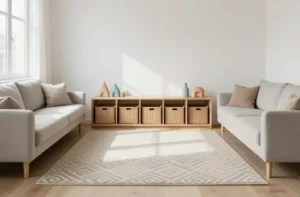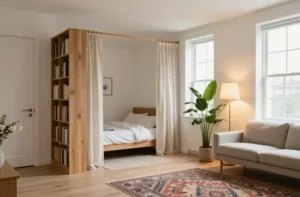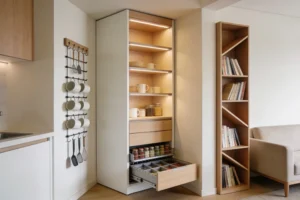
Your small room isn’t the problem—your furniture is just hogging the spotlight. The trick? Make your pieces look like they’re barely there. Once you master visual weight, you can sneak in everything you need without the space feeling crowded. Ready to make your sofa a ninja?
1. Float, Lift, And Lighten: Choose Pieces On Legs
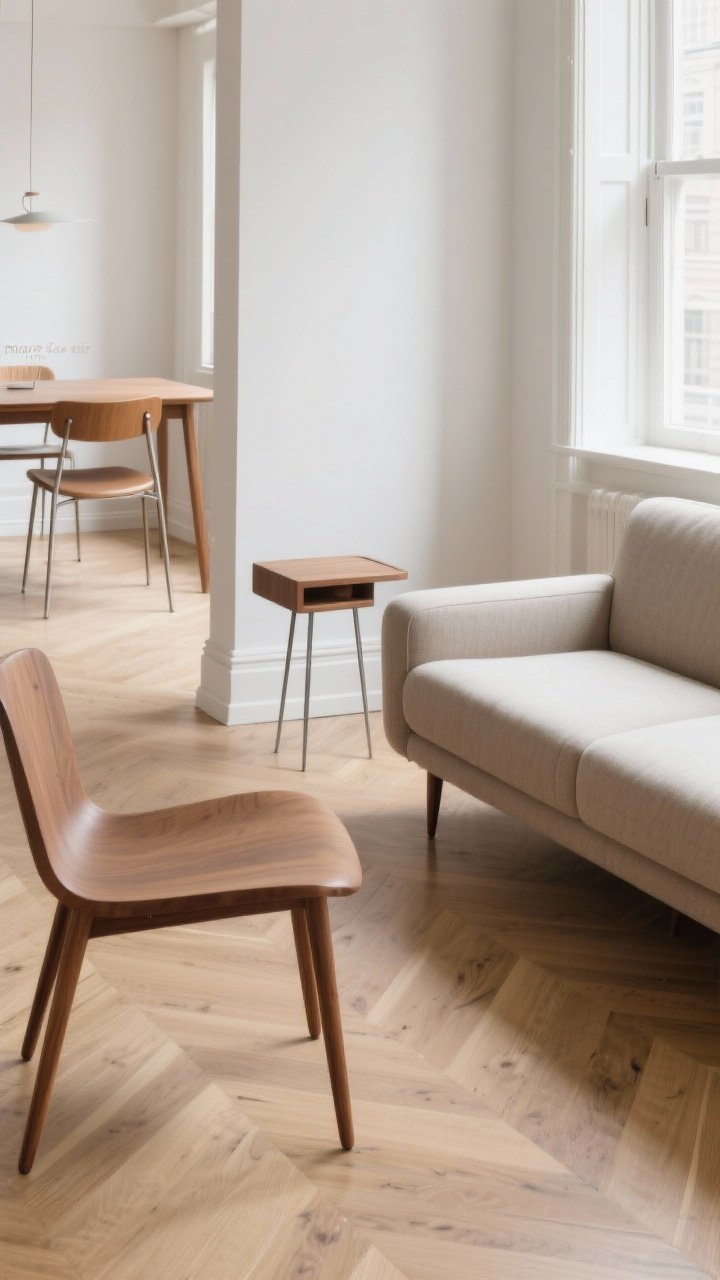
Heavy bases sit like bricks. Furniture with exposed legs lets your eyes see more floor, which makes the entire room feel bigger. It’s like a magic trick—less visual mass, more visual air.
What To Look For
- Sofas and chairs with tapered wood or metal legs (mid-century styles are MVPs).
- Dining tables with slim frames and open bases—no chunky trestle monsters, please.
- Nightstands on legs instead of boxy cubes.
Pro Tip
- Match leg color to your floors for instant camouflage.
- Keep seat height around 16–18 inches for sofas; lower profiles read as lighter.
2. Go Clear Or Go Airy: Materials That “Disappear”
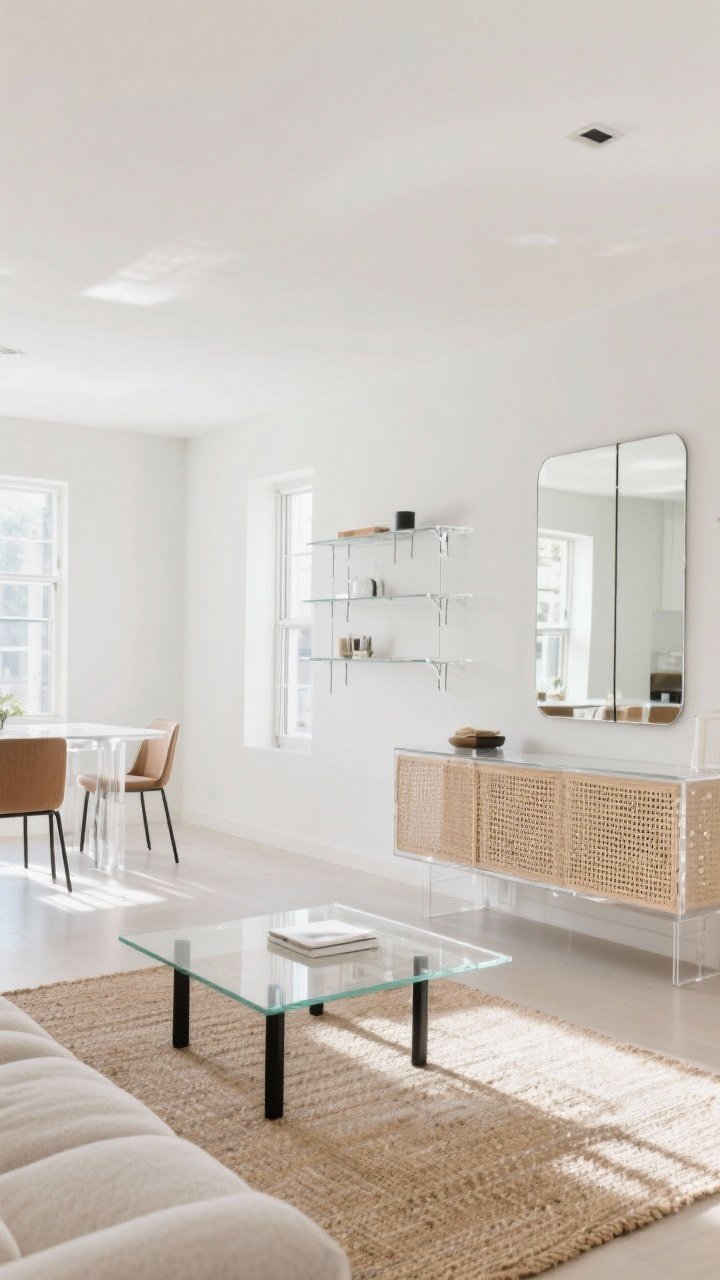
When you can see through a piece, it basically isn’t there—visually, anyway. Choose glass, acrylic, cane, perforated metal, or open-weave rattan to keep the room breathing.
Steal-Worthy Swaps
- Acrylic coffee table instead of marble or oversized wood—same function, zero heaviness.
- Glass dining table with slender legs—your rug gets to be the star.
- Cane or mesh-front storage instead of solid doors to soften bulk.
Bonus
- Use mirror-front cabinets to reflect light (but keep fingerprints in mind, FYI).
- Stick to thin profiles—even with transparent materials, chunky edges add weight.
3. Color Magic: Blend With The Walls (Or Go Tone-On-Tone)
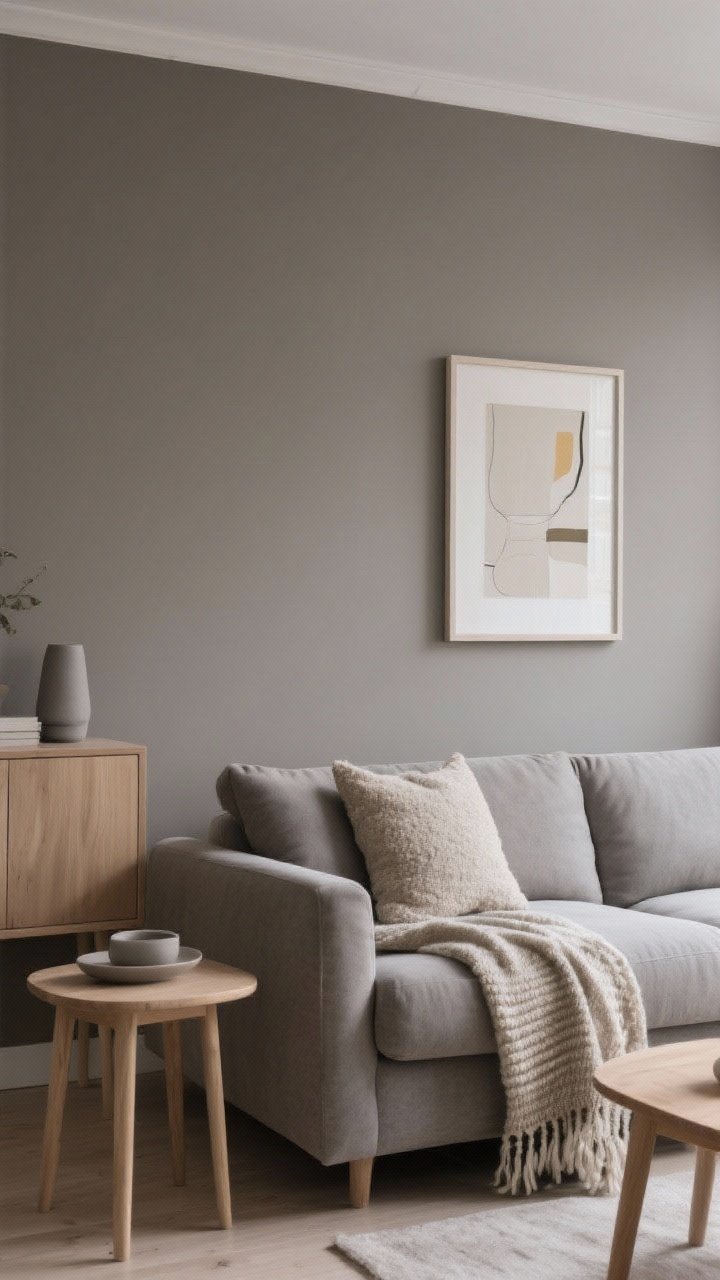
High contrast = high attention. If your sofa is shouting in a room of whispers, it’s eating visual space. Choose tone-on-tone pieces that blend with your wall or rug color to make them visually recede.
Smart Color Moves
- Paint walls and choose a sofa in the same family (e.g., warm gray walls + greige sofa).
- Pick light woods (oak, ash) over dark woods for cabinets and tables.
- Use monochrome accessories—keep pillows within 2–3 tones of your base color.
But Make It Not Boring
- Add texture (bouclé, linen, woven wool) instead of lots of contrast. It keeps things cozy, not flat.
- Aim for one pop in art or a throw—control the drama instead of letting it run the show.
4. Curve Appeal: Soften Lines To Shrink Visual Bulk
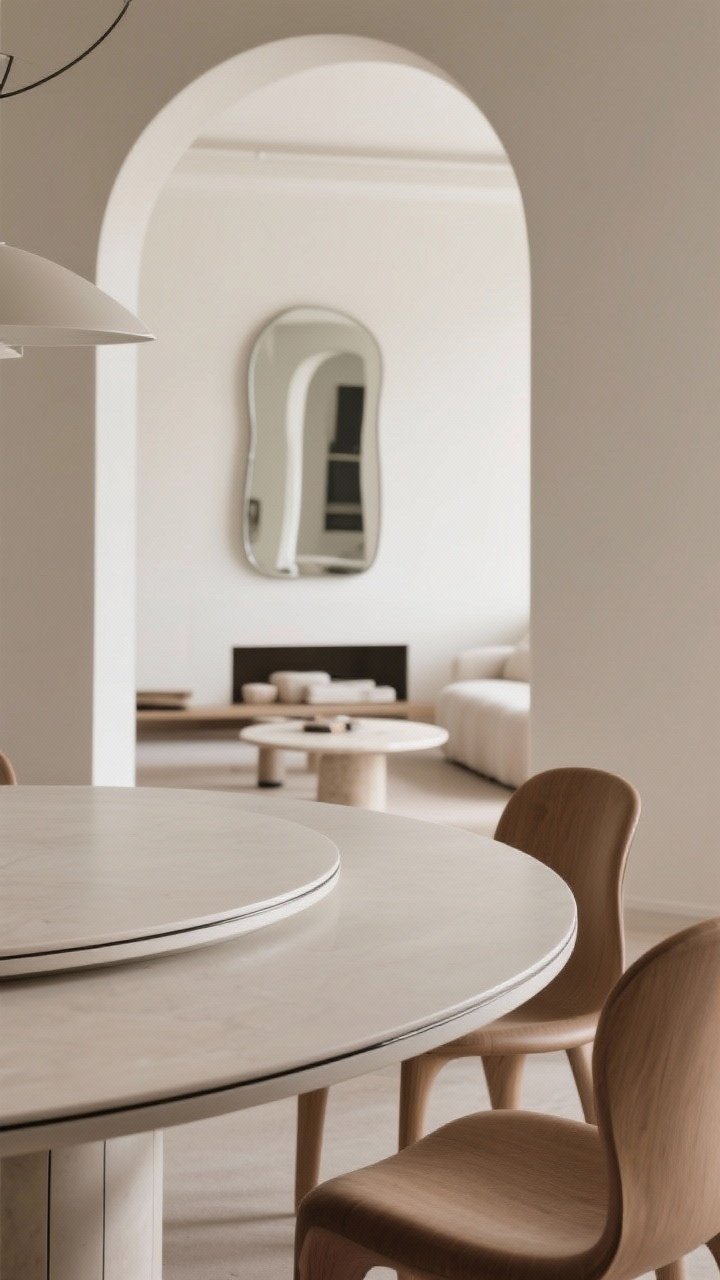
Sharp corners feel boxy and bossy. Rounded silhouettes take up less mental real estate and ease traffic flow. Curves also help your eye glide around the room—no hard stops.
Where Curves Win
- Round coffee table in tight seating areas—no bruised shins, less visual clutter.
- Oval dining tables fit more people without feeling crammed.
- Arched headboards or mirrors to add height without weight.
FYI
- Pair one or two curved pieces with straighter items so the room still feels structured.
- Choose thin edges and gentle radiuses—chunky scallops read heavy.
5. Multi-Taskers Only: Scale Smart And Double The Function
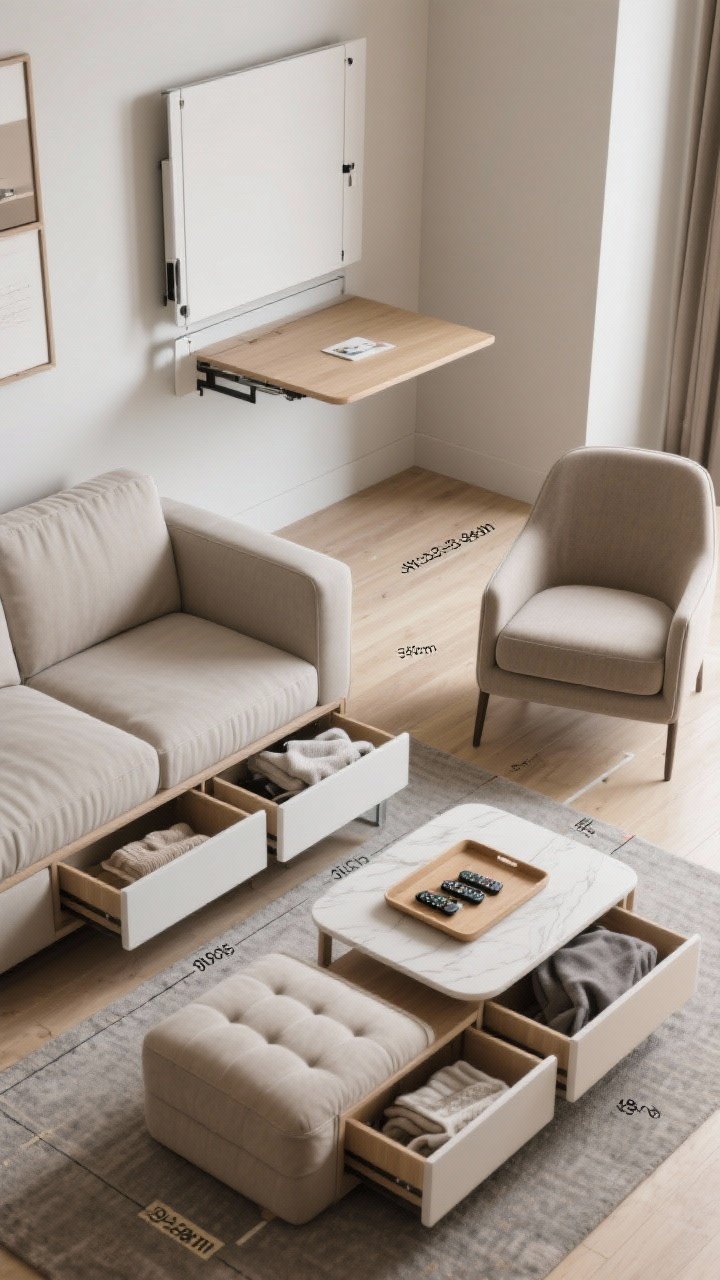
In small rooms, size and function have to be strategic. Pick smaller footprints with smarter storage and pieces that work overtime. IMO, if it can’t pull double duty, it’s just loitering.
Space-Savvy Picks
- Nesting tables instead of one big coffee table—spread out when needed, tuck away when not.
- Storage ottoman as coffee table—stash throws and remotes, top with a tray for drinks.
- Wall-mounted desks or fold-down consoles that disappear when work is done.
- Slim-profile sofas (32–34 inches deep) with tight backs—bulky cushions eat space fast.
Measure Like A Pro
- Allow 30–36 inches for main walkways; 18 inches between sofas and tables.
- Choose armchairs 28–30 inches wide instead of oversized loungers.
6. Vertical > Horizontal: Lift The Eye And Hide The Bulk
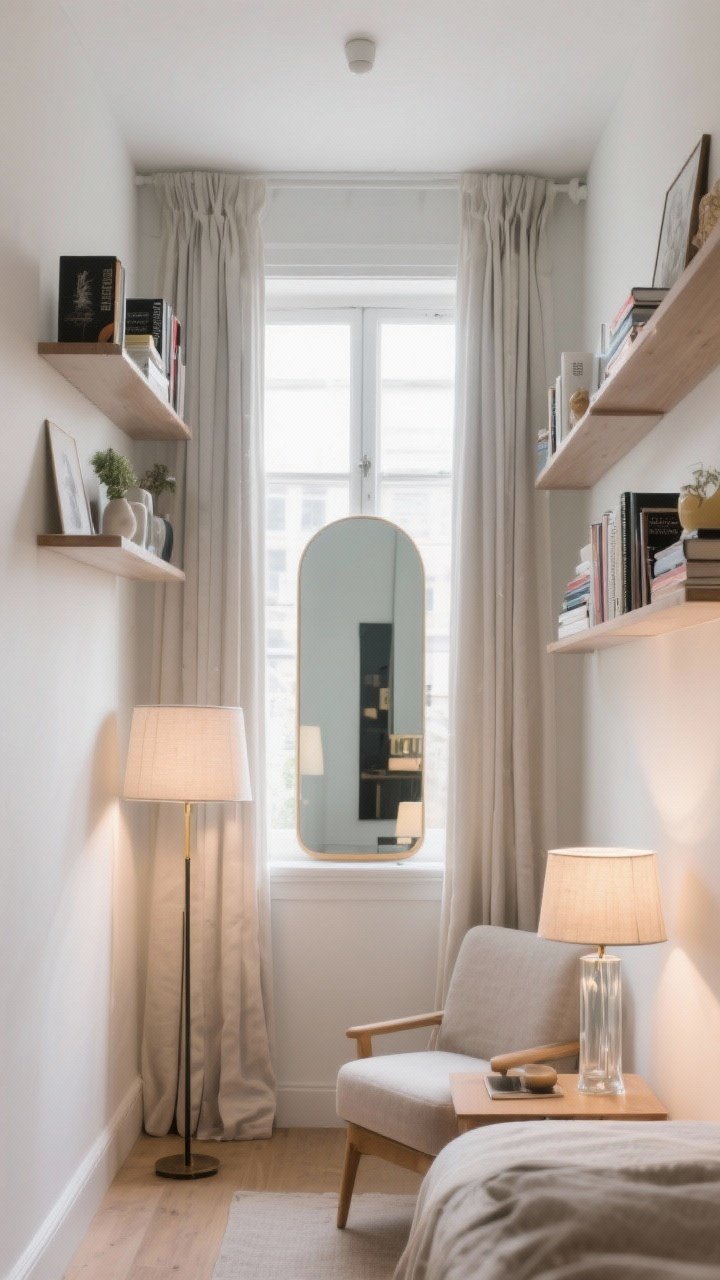
When floor space is tight, go up. Use height to draw eyes away from heavy zones and trick the brain into feeling more room.
Height Hacks
- Wall-mount shelves above eye level—float books and decor instead of adding another cabinet.
- Ceiling-height curtains to elongate walls and shrink the sofa visually.
- Tall, narrow lamps instead of squat table lamps to keep sightlines open.
Mirrors And Light
- Place a large mirror across from a window to double daylight. It’s the oldest trick because it works.
- Use glass or light linen shades to soften light—harsh lighting emphasizes bulk.
7. Edit Ruthlessly: Style Light, Not Bare
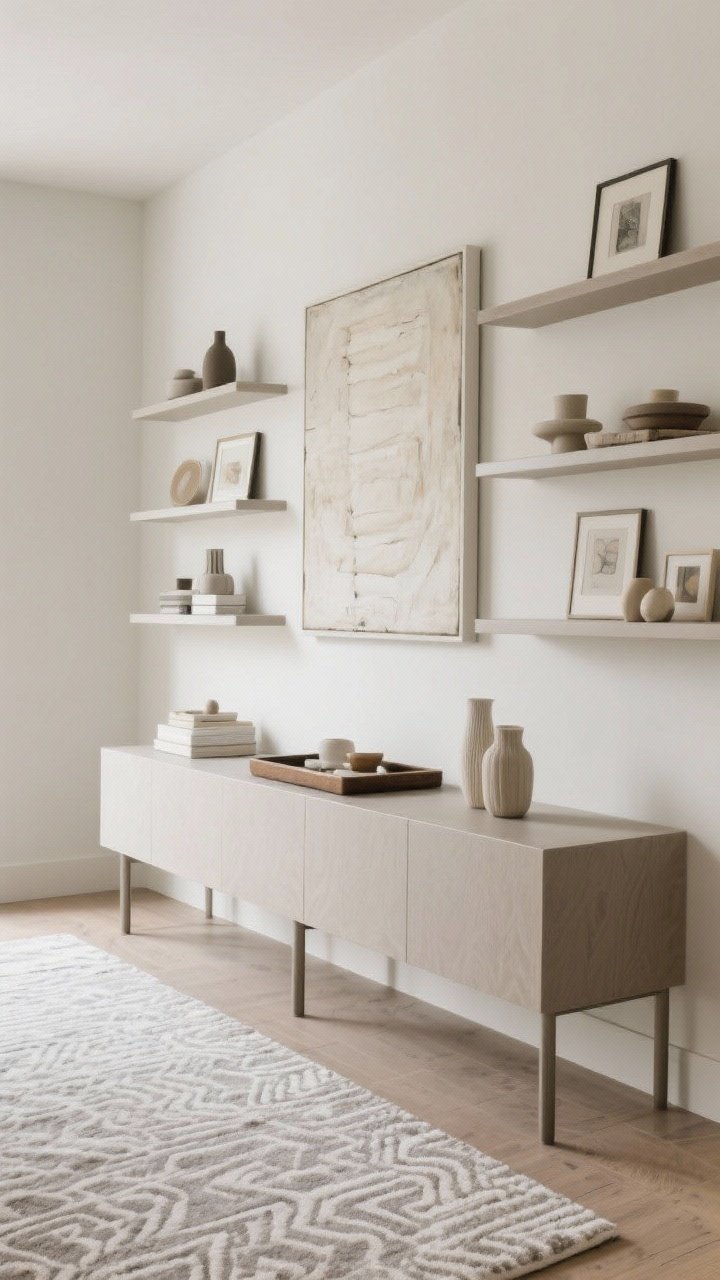
Even airy furniture can feel heavy under a pile of stuff. Styling is where you either win the “disappearing act” or blow it with clutter. Keep the look intentional and selective.
Styling Rules That Don’t Feel Like Rules
- Decorate shelves in odd-number groupings (3s and 5s) with plenty of negative space.
- Pick one large-scale art piece instead of a million small frames—less visual noise.
- Use trays to corral items; the eye reads a tray as one object, not six.
- Limit patterns to one hero, one backup. Competing patterns equal chaos.
Rug Reality Check
- Go larger, not smaller. A bigger rug unifies the furniture and lightens the look.
- Choose low-contrast rugs in solid or subtle patterns to keep the floor feeling open.
Here’s the bottom line: your furniture doesn’t have to be tiny—just visually lighter. Choose pieces with legs, airy materials, and tonal colors. Add curves, go vertical, and edit like a minimalist with great taste. Your small room will finally feel like it can breathe—and yes, your sofa can totally disappear (in the best way).