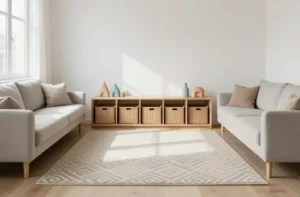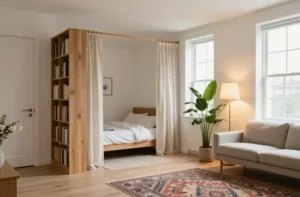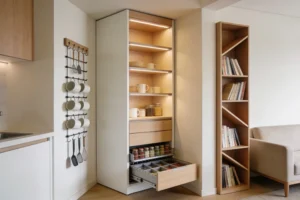
Color can make a tiny room feel like a jewel box… or like a storage closet you forgot to label. If your studio or small bedroom looks busy and stressed out, the 60-30-10 color rule can calm it down in a snap. It gives you a simple blueprint: big color, supporting color, fun accent—nothing fights, everything flows. Ready to resize that rule for small spaces without shrinking your style?
What the 60-30-10 Rule Actually Means (Without the Jargon)
The classic formula breaks your color palette into three slices:
- 60%: Dominant color – walls, large rugs, main upholstery
- 30%: Secondary color – curtains, smaller furniture, bedding
- 10%: Accent color – pillows, art, lamps, accessories
In small spaces, this ratio keeps your eye from ping-ponging all over the place. It creates hierarchy, and hierarchy creates calm. Translation: your space looks intentional, not like a paint store sample wall exploded.
Adapting the Rule for Small Rooms (Because Scale Matters)
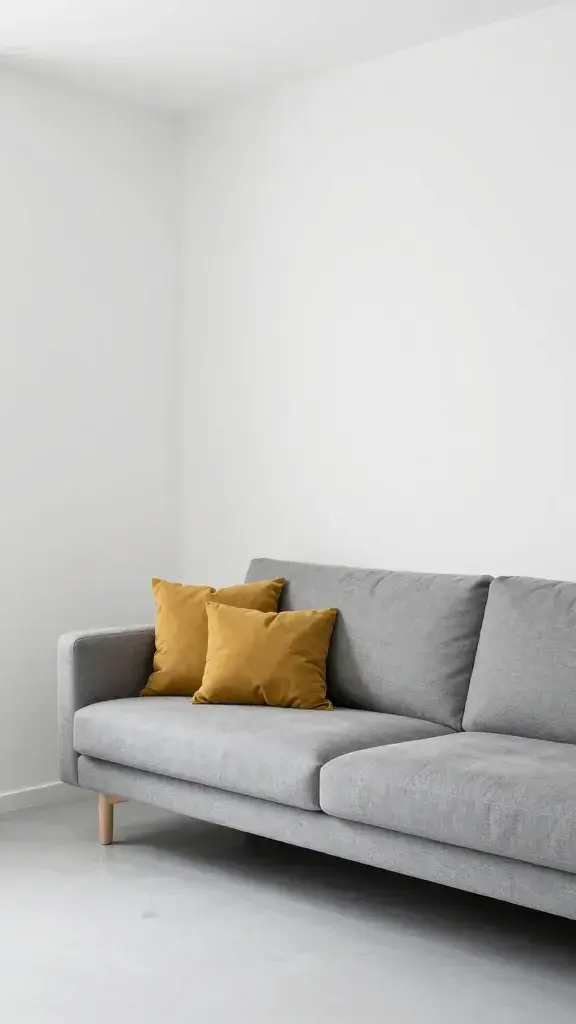
You don’t need to slavishly measure square inches. You just need to calibrate scale and finishes so you don’t overwhelm the room.
- Soften the 60%: Choose light-to-mid tones with a matte or eggshell finish for walls. High contrast can chop up a small room; softer contrast stretches it.
- Quiet the 30%: Keep your secondary color close in value to your dominant. Think cousins, not distant relatives. Beige + mushroom, sage + eucalyptus, navy + denim.
- Pop the 10%: This is where you bring the spice—saturated or metallic accents, but keep them small and repeat them intentionally.
Value, Not Just Hue, Does the Heavy Lifting
Two colors can be different without fighting if they’re similar in lightness. For tiny rooms, tighten the value range for the 60 and 30. Save bigger value jumps for the 10% so your accents actually read as accents, not chaos.
Choosing Your 60%: Set the Base Like a Pro
Your dominant color works like a camera filter—it sets the vibe. In compact spaces, you want it to bounce light and blur edges.
- Whites and near-whites: Warm whites (cream, linen) feel cozy; cool whites (paper, gallery) feel crisp. Pick one based on your light: warm whites for north-facing, cooler for south-facing.
- Low-saturation mid-tones: Greige, putty, soft clay, misty blue-green. They add mood without closing in the walls.
- Depth with limits: Dark walls in a small room can work, IMO, if you keep the rest restrained and reflective. Think inky blue plus pale woods and glossy accents.
Finish Cheat Sheet for Small Spaces
- Walls: Matte/eggshell to hide bumps and reduce glare
- Trim/doors: Satin or semi-gloss to add subtle contrast and reflect light
- Ceiling: Go lighter than the walls to lift the room (unless you want a cozy cocoon)
Dialing in the 30%: Support, Don’t Compete
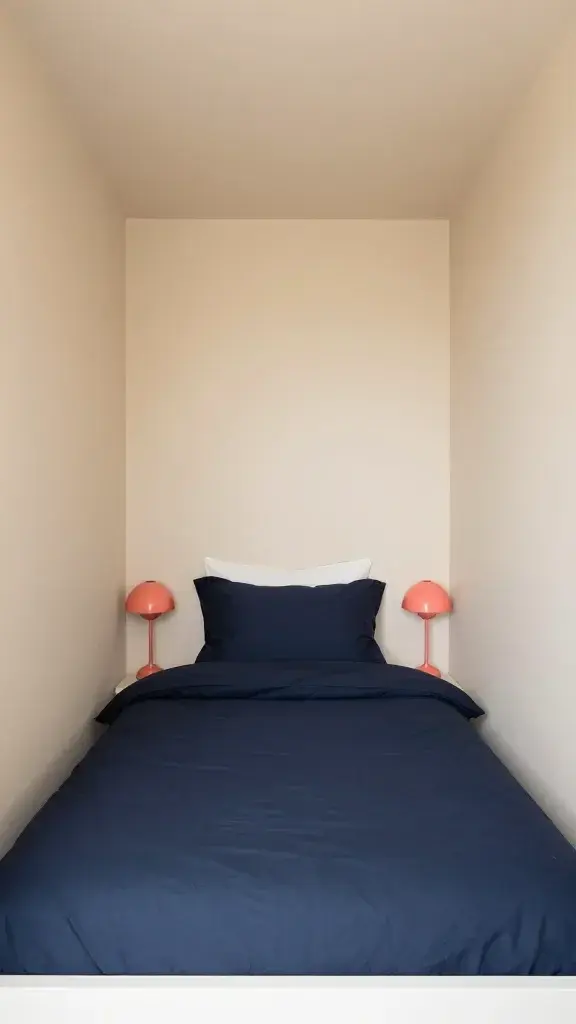
Your secondary color should feel like the best friend who hypes you up quietly. It adds dimension and texture without taking over.
- Textiles do the work: Curtains, bedding, a large blanket, or an upholstered chair can carry the 30% with zero drama.
- Wood counts as color: Oak, walnut, or black-stained wood all read as color. If you’ve got a strong wood tone, include it in your 30% math.
- Keep patterns low-contrast: Pinstripes, micro-checks, tone-on-tone weaves. They add interest without visual noise.
Three Easy 60/30 Combos
- Airy Neutral: 60% warm white, 30% mushroom taupe, 10% matte black
- Cozy Coastal: 60% pale mineral blue, 30% sandy beige, 10% brass
- Moody Modern: 60% charcoal, 30% putty, 10% terracotta
Nailing the 10%: Accent Like You Mean It
This is the fun slice—aka the stuff you change when you get bored. Keep it punchy and consistent.
- Repeat your accent 3 times in small hits: a pillow, a vase, and a print. That repetition tells your eye, “Yes, we did this on purpose.”
- Shine counts: Metallics read as accents. Brass, chrome, or blackened steel each set a different mood.
- Contain the chaos: Group small accents rather than sprinkling them everywhere. Clusters feel curated; scatter feels messy.
Good Accent Candidates
- Throw pillows or a lumbar cushion
- Art frames or a single bold print
- Table lamp or pendant shade
- Books and ceramics (bonus: they’re budget-friendly swaps)
Open-Plan and Studio Tricks: When One Room Is All the Rooms
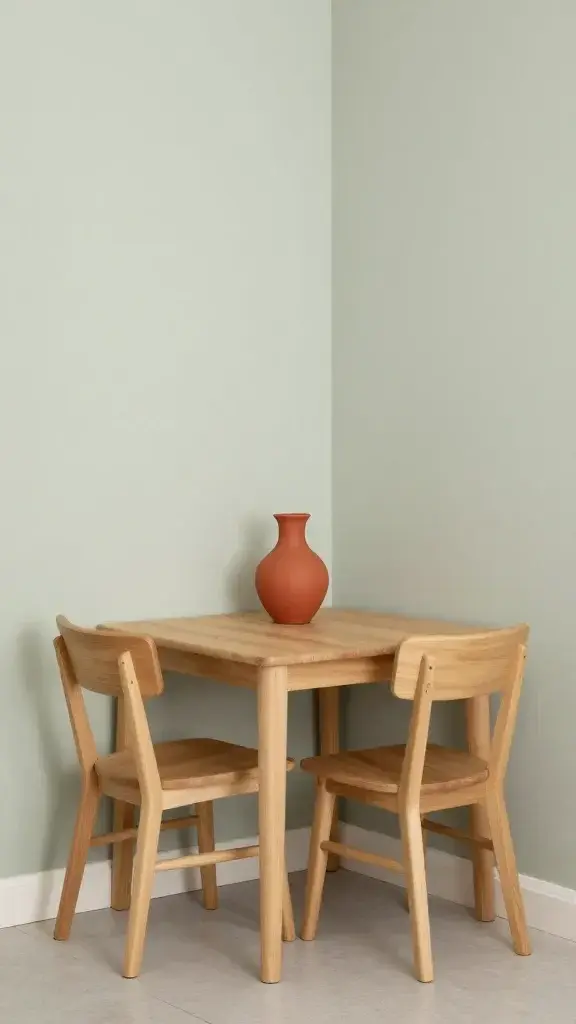
Small spaces often have multitasking zones. You still use 60-30-10—but per “visual zone,” not the entire apartment.
- One dominant flows everywhere (the 60%). Keep wall color consistent to avoid the postage-stamp effect.
- Assign different 30%s by zone: a dusty green for the sleeping nook, a sandy beige for the living corner. Same value range = cohesion.
- Share the 10% accent across zones so the whole space feels related. A touch of rust or matte black in each zone does wonders.
Rugs Are Your Secret Weapon
A rug defines a zone and quietly introduces your 30% color. In studios, pick rugs that talk to each other—similar value, different pattern scale—so the space feels layered, not loud.
Common Pitfalls (And How to Dodge Them)
- Too many accents: If your 10% becomes 25%, everything screams. Edit. Group. Breathe.
- Wild contrast: Avoid black-and-white-everything in tiny rooms unless you love edges. Add a warm mid-tone to soften the jump.
- Ignoring undertones: Warm beige with cool gray can look muddy. Match undertones across your 60 and 30, then let the 10 swing either warmer or cooler.
- Shiny overload: Gloss everywhere equals glare. Mix matte, satin, and a little sheen for balance.
Quick Start: A 10-Minute Color Plan
- Pick a dominant base you won’t hate in six months. Sample two shades on your wall. Live with them 24 hours.
- Choose a secondary textile (curtains or bedding) in a similar value but different hue family for depth.
- Commit to a repeatable accent and buy three small items in that color/finish.
- Audit your room: remove anything that doesn’t serve the palette. FYI, editing is free and instantly effective.
FAQs
Do I have to literally measure 60%, 30%, and 10%?
Nope. Use the rule as a visual guideline, not a math exam. If the big surfaces read as one color, the medium elements echo a second, and a few pieces add a punchy third, you nailed it.
Can I use more than three colors?
Yes, but fold extras into the existing slices. Multiple shades of your dominant can live inside the 60%. Patterns that mix your 60 and 30 still count as supporting players. Keep high-contrast wildcards in the 10% lane.
What if I love bold color in a small space?
Go bold with intention. Choose a saturated 60% (like deep teal), then calm the 30% with low-contrast neutrals (putty, oat). Use a restrained 10%—maybe aged brass and ecru textiles—to avoid visual whiplash. IMO, bold + balanced beats bold + busy every time.
How do I handle existing finishes like wood floors or weird tile?
Treat them as part of your 30%. Sample wall colors against those finishes to align undertones. If the floor skews orange, choose a wall color with a touch of warmth or go neutral with enough depth to buffer the orange.
Is black a good accent in small rooms?
Absolutely. A little black grounds a space and sharpens lines. Think lamp bases, a frame, a small side table. Keep it under control so it feels intentional, not heavy.
What about rental restrictions?
No paint? No problem. Make your 60% a large neutral rug plus a big textile moment (curtains, sofa cover, duvet). Use peel-and-stick for a small accent wall or backsplash, then stack your 10% with art, pillows, and lighting.
Conclusion
The 60-30-10 rule doesn’t box you in; it frees you up. It gives your small space a backbone so your style can show off without shouting. Start with a calm base, layer a close-value support, then sprinkle just enough accent to make it sparkle. Edit, repeat, and enjoy that sweet “wow, this feels bigger” magic—because it will. FYI, your future self with the great lighting and the uncluttered vibe says thanks.