You don’t need a spare room to build a legit workspace. You just need a plan, a few smart upgrades, and the courage to evict your laundry pile from the dining chair. Let’s carve out a home office that actually works—without turning your apartment into a maze of wobbly desks and tangled cables. Tiny place, big productivity. Ready?
Pick a Purposeful Spot (Not Just Any Corner)
You don’t need a whole wall—just a slice of space with intention. Look for a low-traffic zone that doesn’t fight your routine. A nook near a window? Perfect. The dead space behind a couch? Hello, future HQ.
Prioritize these three things:
- Light: Natural light helps your brain. Pair it with a warm desk lamp for evening work.
- Outlets: If you can’t plug in easily, you’ll end up working on the floor. Not cute.
- Boundaries: Face a wall or use furniture to “frame” your spot so your brain knows it’s work time.
Quick zoning tricks
- Use a small rug to define your work area. It’s visual psychology, not witchcraft.
- Put your desk behind a sofa to create a mini “room” without walls.
- Try a foldable screen if you need separation during calls, then tuck it away.
Choose Furniture That Disappears
Go slim, go vertical, go multipurpose. You don’t need a corporate slab of oak. You need something that earns its footprint.
Smart desk ideas:
- Wall-mounted drop-leaf desk: Folds down when you finish. Magic trick for small spaces.
- Console table: Narrow, stylish, and it moonlights as an entry table after hours.
- Rolling cart desk: Add a tabletop to a sturdy bar cart and wheel it into a closet when done.
Chair choices that don’t scream “office”:
- Ergonomic task stool: Tucks under the desk and saves visual clutter.
- Dining chair + lumbar cushion: Works great if you don’t work marathon days.
- Foldable chair with a pad: Hide it behind a bookshelf when you log off.
Small but mighty upgrades
- Monitor arm: Frees up desk space and puts your screen at eye level. Your neck says thanks.
- Under-desk drawer: Stick-on drawers keep basics nearby without a bulky cabinet.
- Laptop stand + compact keyboard: Better posture, less clutter. Win-win.
Conquer Cable Chaos
Cords turn small spaces into spaghetti. Tame them and your whole place looks calmer—like you actually have your life together, FYI.
Here’s the simple setup:
- Mount a cable tray under your desk to hide power strips.
- Use braided sleeves or Velcro ties to bundle cords by device.
- Label at the plug end so you stop yanking the wrong one mid-Zoom.
- Go wireless where possible: keyboard, mouse, earbuds.
The stealth outlet strategy
Place a slim surge protector along the back of the desk or wall. Run one neatly routed cord to the outlet. Everything else disappears. Your future self will feel weirdly proud.
Store Vertically So Surfaces Stay Clear
Flat surfaces invite clutter. Vertical storage politely tells clutter to keep it moving.
Use your walls like this:
- Floating shelves: Two shelves above the desk for books, a plant, and bins for supplies.
- Pegboard or rail system: Hang headphones, cables, notepads, even a small whiteboard.
- Magazine files + labels: Hide papers without the soul-sucking file cabinet.
Drawer-free life hacks:
- Keep a desktop caddy with just the essentials: pens, sticky notes, charger.
- Use a shoebox-sized bin for “active projects” so your desk clears in 10 seconds.
- Adopt a Friday-reset ritual: toss, file, wipe, done. Five minutes, IMO.
Light It Like a Set Designer
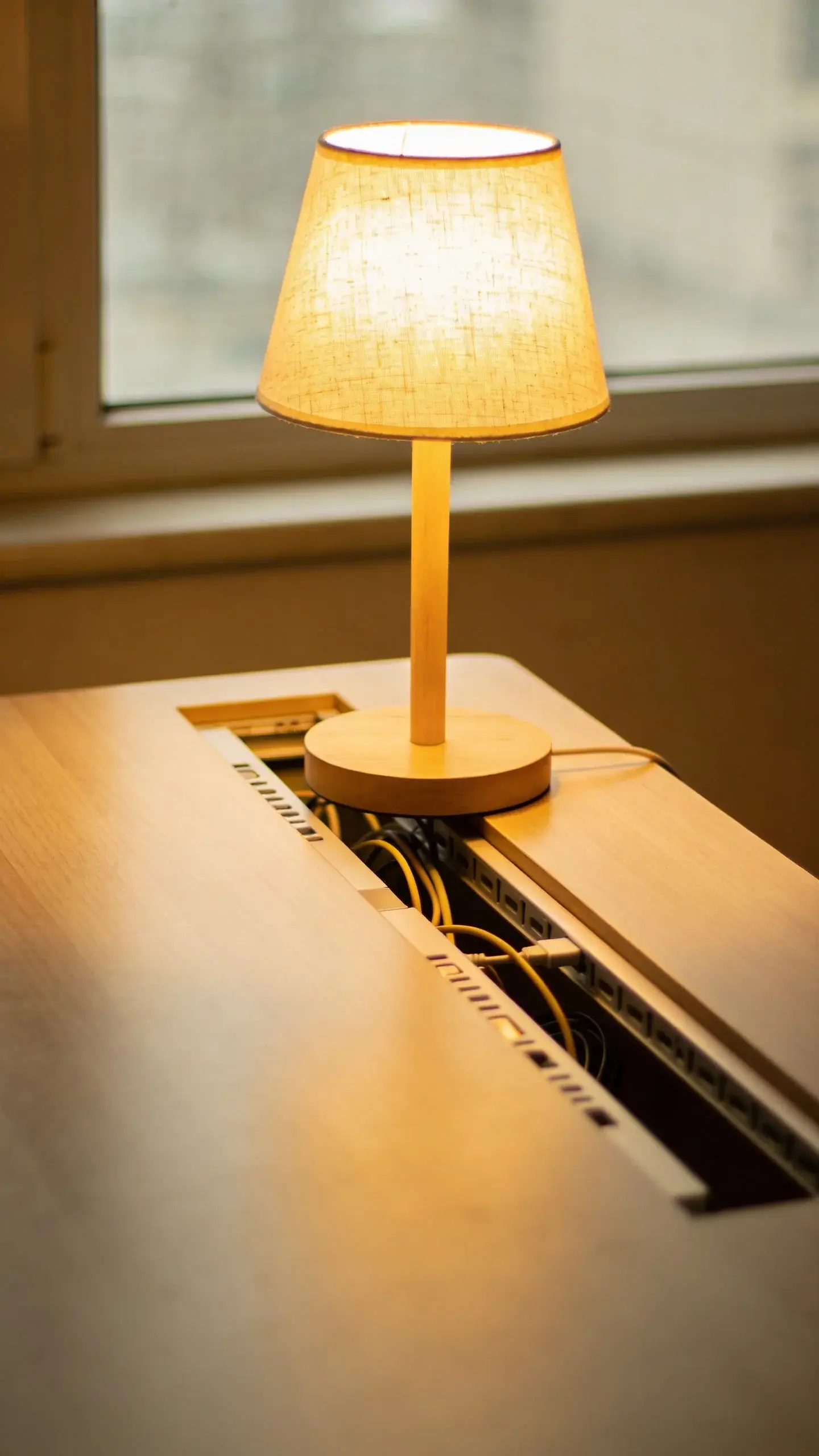
Good lighting equals fewer headaches and more focus. Also you’ll look human on video calls, which is nice.
Layer it up:
- Task light: A pivoting lamp placed opposite your writing hand to reduce shadows.
- Ambient glow: A floor lamp or LED strip behind the monitor for soft bounce lighting.
- Color temperature: 4000–5000K for work focus; dim warmer light after hours.
Video-call face upgrade
No ring light? Place a lamp behind your monitor and bounce it off the wall. Instant softbox. Tilt the camera slightly down, frame from chest up, and you’re golden.
Design for Focus (and Sanity)
Make it pretty enough that you want to sit there—and simple enough that you don’t get distracted by your own vibe.
Keep a tight palette:
- Pick two neutrals + one accent color. Cohesion makes small spaces feel larger.
- Repeat materials—wood, matte black, linen—to streamline the look.
Bring life, not clutter:
- One small plant boosts mood. Two if you’re showing off.
- One framed print or inspiration board above the desk. Keep it clean, not chaotic.
Sound matters too
Hard surfaces bounce noise. Add a small rug, fabric chair pad, or curtains to soften echo. If neighbors practice tap dancing, try foam strips behind picture frames to reduce wall vibrations. Not kidding—it helps.
Work-Life Separation When Your Kitchen Is the Break Room
Your brain needs an “off switch,” especially when your bed sits five steps away.
Build shut-down rituals:
- Pack it up: Close the laptop, drop gear into a bin, and slide it onto a shelf.
- Change the lighting: Switch from bright task light to warm ambient.
- Physical cue: Fold the desk, draw the screen, or flip a “done for today” coaster. Cheesy? Maybe. Effective? Yep.
Schedule your distractions
Use the tiniest timer (Pomodoro works) and give yourself planned breaks in the living room, not at your desk. Your workspace stays for work, not doomscrolling. FYI, this saves your attention span.
Tech That Shrinks Your Footprint
You can stay compact without sacrificing power.
- Ultrawide monitor or a 24-inch slim bezel: More screen, less hardware clutter.
- USB-C hub mounted under the desk: One cable to rule them all.
- Noise-canceling earbuds: Tiny, stashable, apartment-saving.
- Portable laptop stand: Folds flat, travels to cafes, lives in a drawer.
Printer dilemma solved
If you must print, stash a compact printer in a cabinet with a cable passthrough. Open door, hit print, close door. Out of sight, out of mind (and out of dust).
FAQ
How do I create a home office if I only have a tiny living room?
Claim a single wall segment or the space behind your sofa. Use a narrow console table, a wall-mounted lamp, and floating shelves. Add a small rug to mark the zone. When you log off, tuck the chair away and your living room still looks like, well, a living room.
What’s the best small-desk size for tight spaces?
Aim for 30–40 inches wide and about 18–22 inches deep. That fits a laptop, a lamp, and a notebook without dominating the room. If you need a monitor, use an arm to free desk depth.
How can I keep my workspace from feeling cluttered?
Limit your desktop to five items max: laptop/monitor, lamp, keyboard, mouse, and one caddy. Move everything else up (shelves) or down (under-desk tray). Use matching bins so your eyes see “one thing,” not chaos. IMO, the bins matter more than people admit.
Is a standing desk worth it in a small apartment?
A full standing desk can feel bulky, but a desk converter or mini riser gives you movement without the footprint. Pair it with a foldable balance board or just do a stretch break. Movement beats perfection.
What about working at the dining table?
It’s fine if you set rules. Keep a dedicated work caddy and a laptop stand so setup takes 30 seconds. At the end of the day, clear everything into the caddy and restore the table. The ritual helps your brain switch modes fast.
How do I improve video call quality without buying fancy gear?
Face a window, bounce a lamp off a wall, and raise your laptop to eye level with books. Use headphones to cut echo. Clean your camera lens. Small tweaks beat expensive gadgets most days.
Conclusion
You don’t need more square footage—you need smarter moves. Pick a focused spot, choose furniture that hides when you’re done, light it well, and store up, not out. Add a shutdown ritual and your apartment stays calm while your to-do list gets wrecked. Small space, big energy. Go build your corner of greatness.