Let’s be honest: the “dining area” in a small apartment often becomes a shoe drop zone, mail sorter, or the place where plants go to thrive. But you deserve a cozy spot to eat something that didn’t come from a takeout box. Good news—you can carve out a dining nook you’ll actually use without moving walls or selling a kidney for custom built-ins.
Here’s the game plan—seven smart, stylish moves to turn any awkward corner into a legit dining vibe.
1. Claim Your Zone With Anchors (No Renovation Required)
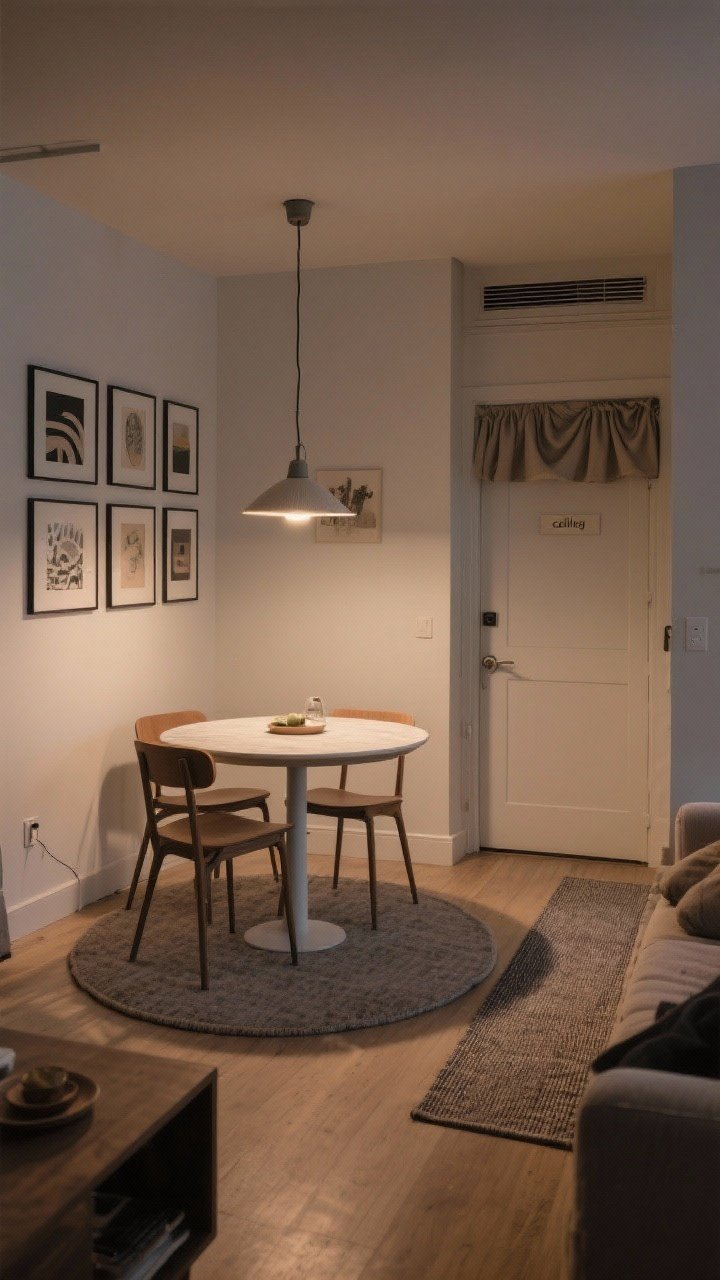
Step one: make your dining area feel like its own little moment. You’re not building a room—you’re creating a zone. That means clear visual boundaries that say, “This spot is for meals and good company.”
Smart Anchors That Work
- Rug it up: A low-pile, easy-clean rug frames the area and warms it up. Go slightly larger than the table so chairs stay on the rug even when pulled out.
- Lighting = instant room: A small pendant or plug-in swag light centered over your table creates a “ceiling” for your dining zone. Dimmers are your best friend.
- Art as a boundary: A vertical gallery or one oversized piece makes the wall feel intentional—bonus points if it’s placed at eye level when seated.
Pro tip: If your table lives near the entry, use a slim runner rug as the walkway, and a round rug to carve out the dining area. Visual lanes = less chaos.
2. Pick the Right Table (Spoiler: Round Wins A Lot)
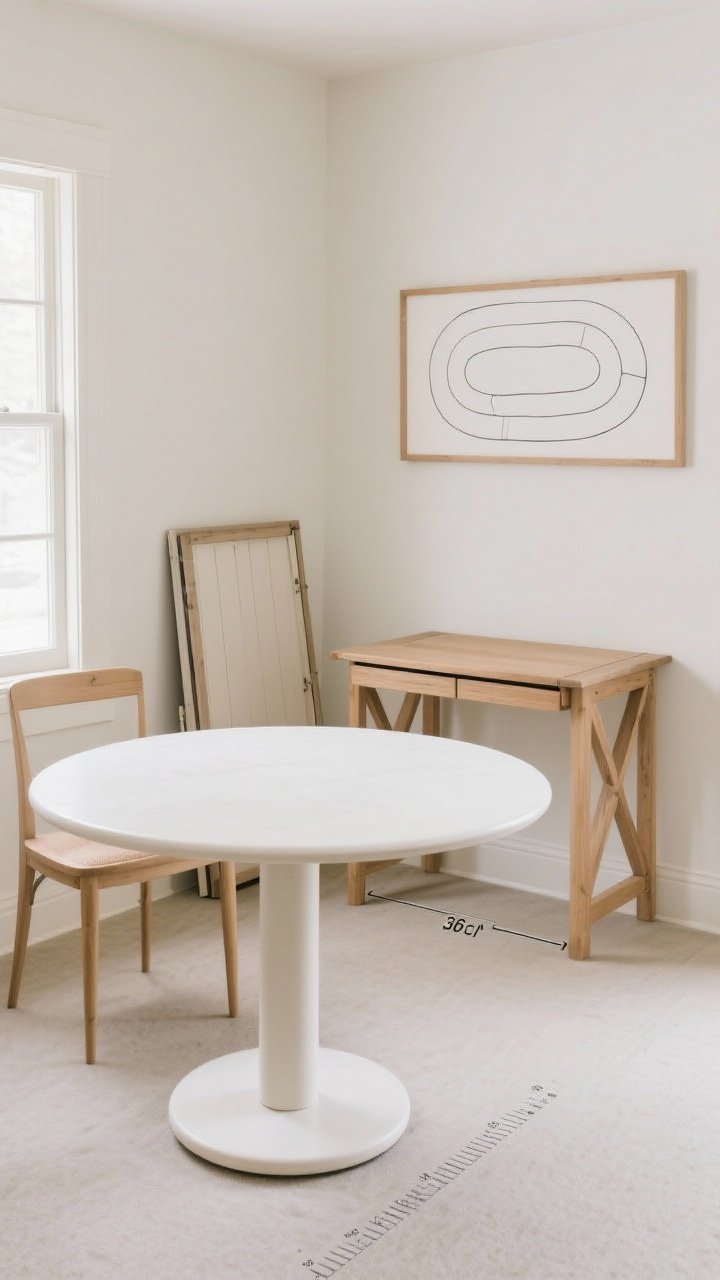
Small spaces need smart silhouettes. The wrong table can make the whole room feel cramped, while the right one makes everything flow. FYI: Leg style matters more than you think.
Best Table Shapes For Tiny Spots
- Round pedestal: No corner pokes, no leg wars. Seats more people comfortably in less space.
- Oval or racetrack: Same smooth edges, just a touch more surface. Great near walkways.
- Drop-leaf or gateleg: Everyday narrow, dinner party ready. Fold up when not in use.
- Wall-mounted flip-down: The ultimate space saver if you’re committed to minimal footprint.
Size cheat sheet: For a small apartment, 30–36 inches round is perfect for two, 38–44 inches for four. Keep at least 30 inches of clearance around your table so chairs can breathe.
3. Choose Seating That Pulls Double Duty (And Looks Good Doing It)
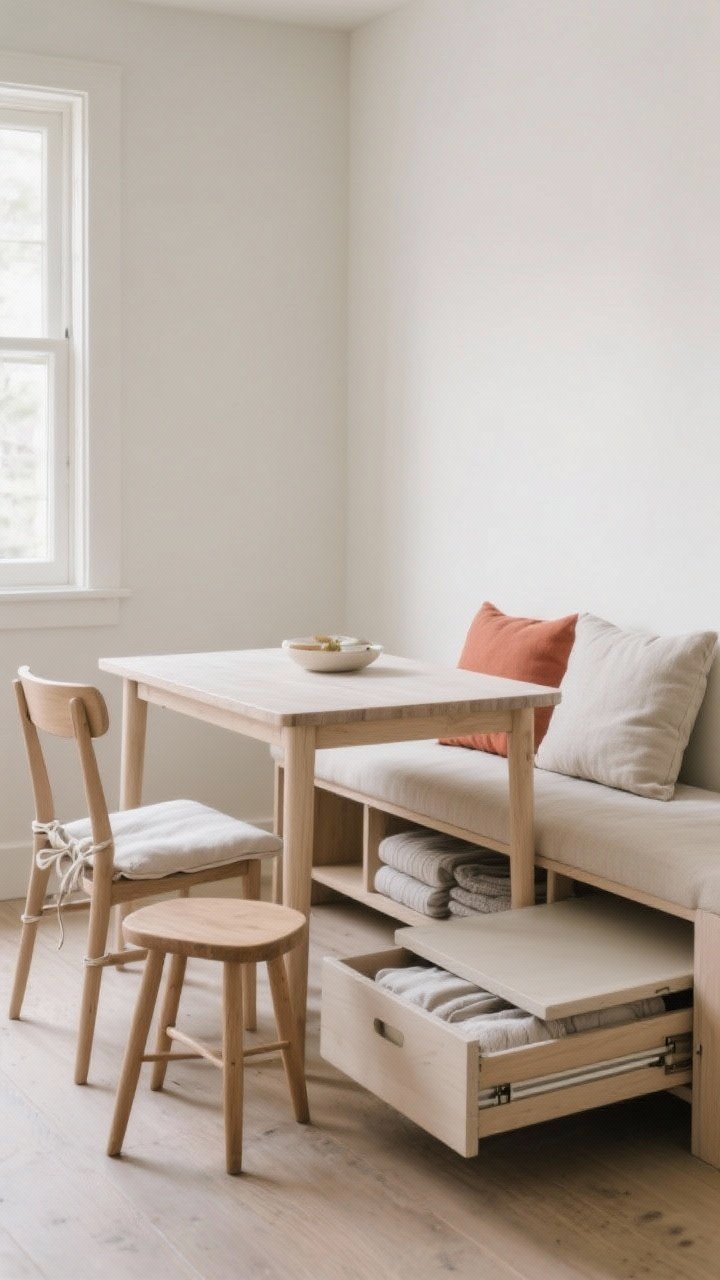
Chairs take up more visual space than tables. Keep them light, slim, and useful beyond dinner. IMO, this is where small-space magic happens.
Seating You’ll Actually Use
- Low-back or open-back chairs: They keep sightlines open and make the room feel larger.
- Bench + chairs combo: Slide a bench fully under the table when not in use. Great for narrow areas or under windows.
- Storage seating: A lidded bench or banquette hides linens, board games, or that air fryer you swear you use.
- Stools that tuck: Backless stools disappear under drop-leaf tables. Clean and compact.
Comfort hack: Add slim seat cushions with ties in a fabric you can machine wash. If it’s comfy, you’ll linger longer.
4. Let Lighting Do The Heavy Lifting
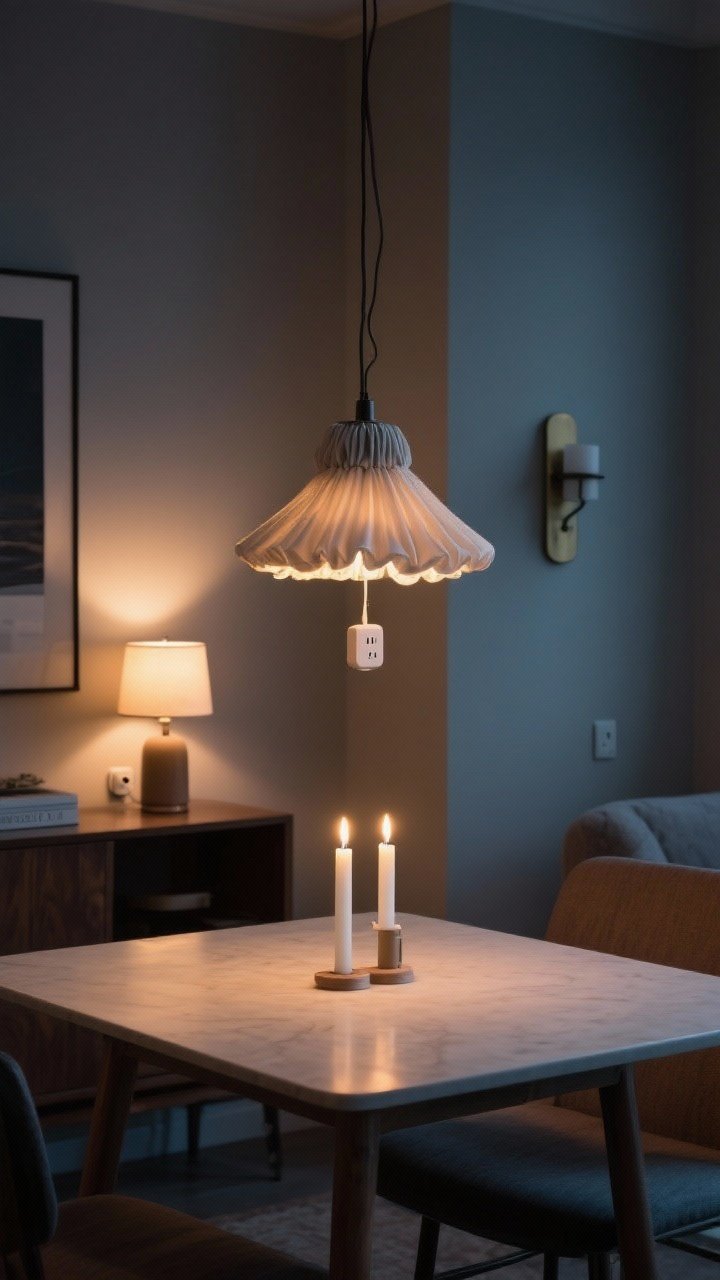
The right lighting makes a folding table feel like a destination. Think layers: overhead, task, and a little glow.
Lighting Layers That Sell The Mood
- Overhead: A plug-in pendant swagged over the table looks custom without wiring. Aim the bottom at about 30–34 inches above the tabletop.
- Accent: A mini lamp on a nearby console or a wall sconce adds depth and coziness.
- Candles or LED tapers: Instant mood, zero commitment. Especially good for tiny tables.
Bulb basics: Choose warm white (2700–3000K) for dinner-friendly light. Dimmable bulbs + a smart plug = ambience on command.
5. Style It Simple: Small Surfaces, Big Payoff
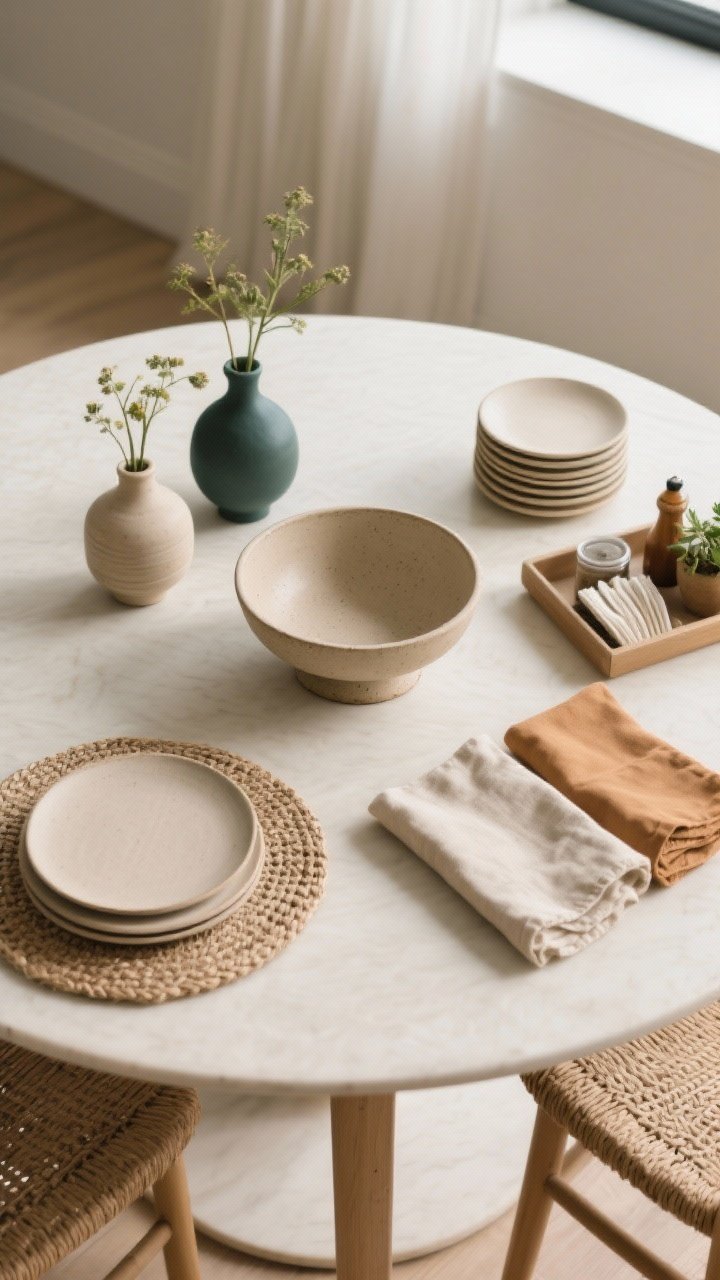
Clutter kills small dining areas fast. Keep decor edited, but make it intentional. The goal: a table that’s “set-ish” but not precious.
Effortless Styling Formula
- Centerpiece that moves: A shallow bowl, footed compote, or bud vase trio—easy to shift when plates arrive.
- Stackable basics: A set of neutral plates and linen napkins in two colors. Mix, match, never overthink.
- One tactile element: Woven placemats, a stoneware pitcher, or a linen runner adds texture without crowding.
- Tray for catch-all: Keep condiments, napkins, and a small plant on a tray so cleanup is one-and-done.
Color tip: If your space is tiny, go tonal. Layer shades of the same hue (sand, camel, oat) for a calm, luxe look. Then add one pop—olive, navy, or rust—to keep it interesting.
6. Build Storage Into The Perimeter
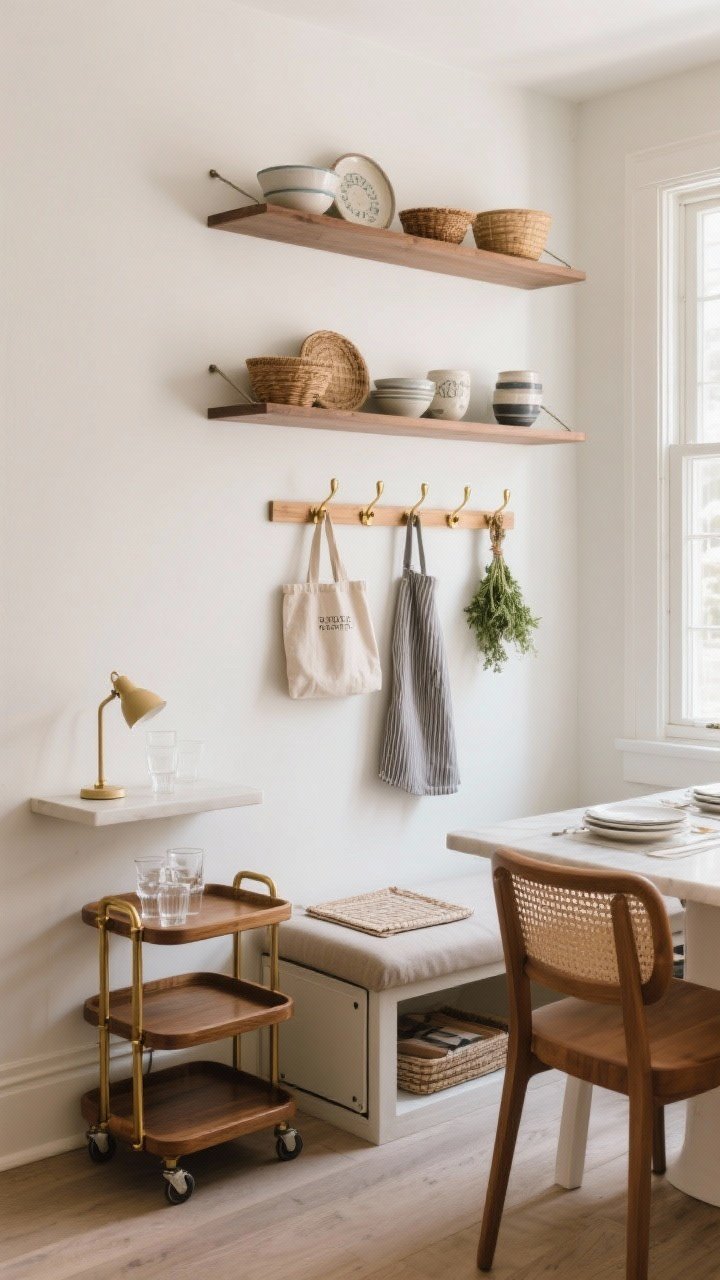
You don’t need a big buffet to stash dining things. Use vertical space and slender pieces to keep everything within reach—but out of sight when you want it to be.
Space-Savvy Storage Ideas
- Slim console or bar cart: Park it behind the table or against a wall for glasses, extra plates, and a tiny lamp. Wheels = flexible floor plan.
- Wall shelves or ledges: Mount two or three wide shelves for pretty bowls and baskets. Keep the bottom shelf at seated eye level and style it like a café.
- Hidden heroes: Store napkins and placemats in a bench, or hang a pocket organizer inside a nearby closet door.
- Hooks, but make it chic: A row of wood or brass pegs for tote bags, aprons, and a hanging herb bundle. Elevated utility = chef’s kiss.
Editing rule: Keep only your everyday dining gear in the zone. Seasonal or rarely used items can live elsewhere. Less in the orbit = more calm.
7. Train The Space With Rituals (So You Actually Use It)
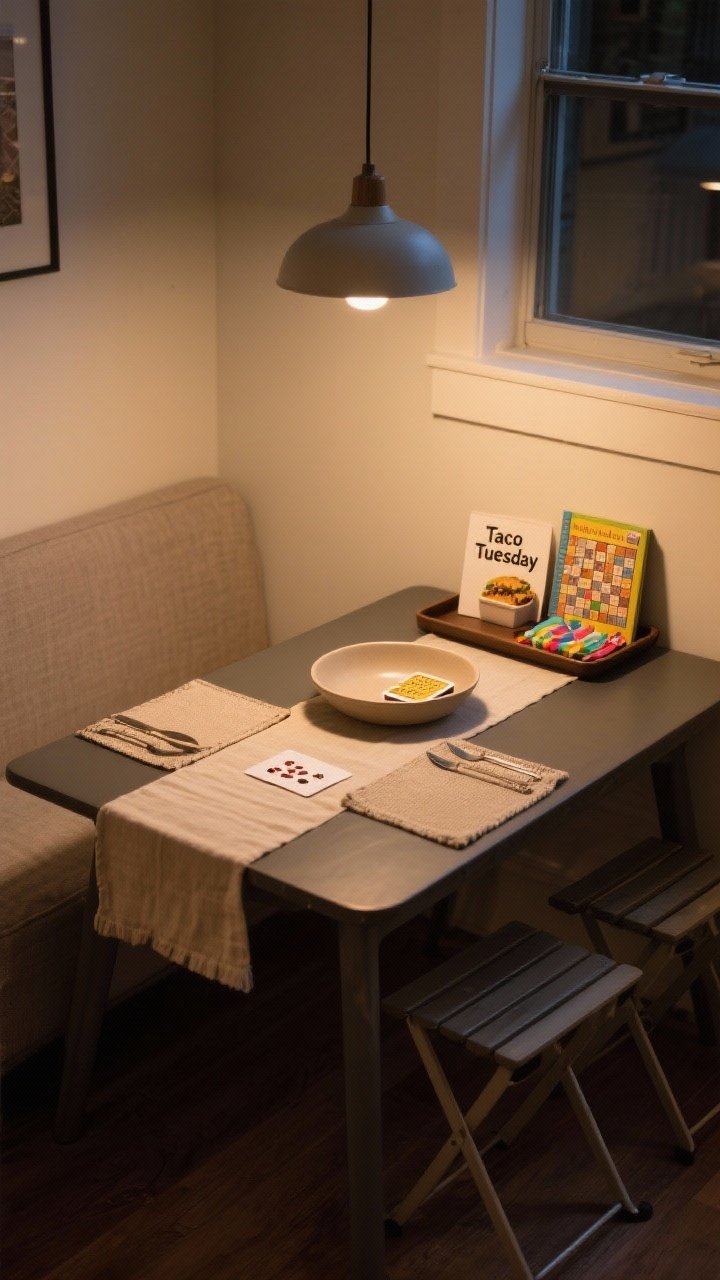
Design sets the stage; habits fill the seats. A few tiny routines will turn this spot from “cute corner” into “oh wow, we actually eat here.” FYI, this is the secret sauce.
Rituals That Stick
- Set it light: Leave a runner and two placemats out. When the table looks ready, you’ll sit there more.
- Weeknight theme: Taco Tuesdays or pasta Thursdays—make the table the star even for simple meals.
- Tech swap: Keep a tiny deck of cards or a crossword book on the tray. Nudge conversation, not scrolling.
- Five-minute reset: After dinner, wipe, fold, center the bowl, lights to 20%. Done. Tomorrow-you will be thrilled.
Hosting without panic: Keep two extra foldable stools in a closet. Pull them up to a round table and you’re suddenly “the friend who hosts.”
Quick Mini Mood Boards
- Modern Cozy: Round white pedestal table, oak chairs with linen cushions, oatmeal rug, milky glass pendant, stoneware bowl centerpiece.
- Scandi Warm: Birch drop-leaf, woven bench, paper lantern pendant, striped runner, ceramic bud vases.
- Eclectic Cafe: Marble bistro table, black bentwood chairs, gingham cushions, brass plug-in sconce, gallery wall of thrifted art.
Scale Check (Trust This):
- Table clearance: 30–36 inches around is ideal; minimum 24 if space is tight.
- Chair seat height: 17–19 inches pairs with a standard 29–30 inch table.
- Pendant drop: 30–34 inches above the table surface for flattering light.
Bottom line: You don’t need a separate dining room to dine well. With a few clever anchors, a right-sized table, and rituals that make the space feel special, you’ll actually sit down to eat—and maybe even linger for dessert. Your future self, sipping tea under that soft pendant glow, says thanks.