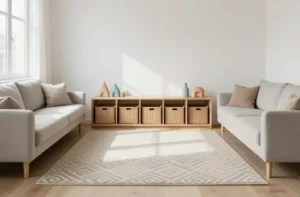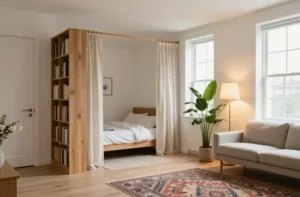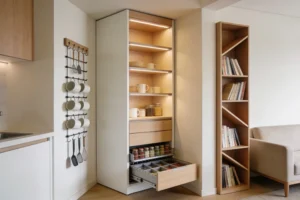
You can turn one room into two vibes—no drywall required. With a few smart moves, your bed can feel like a tucked-away retreat while your living area stays open and airy. You’ll carve out privacy, ditch visual clutter, and still keep the studio’s light and flow. Ready to make your “bedroom” feel like a room? Let’s pull the curtain—literally.
Start with a Floor Plan (Yes, Sketch It)
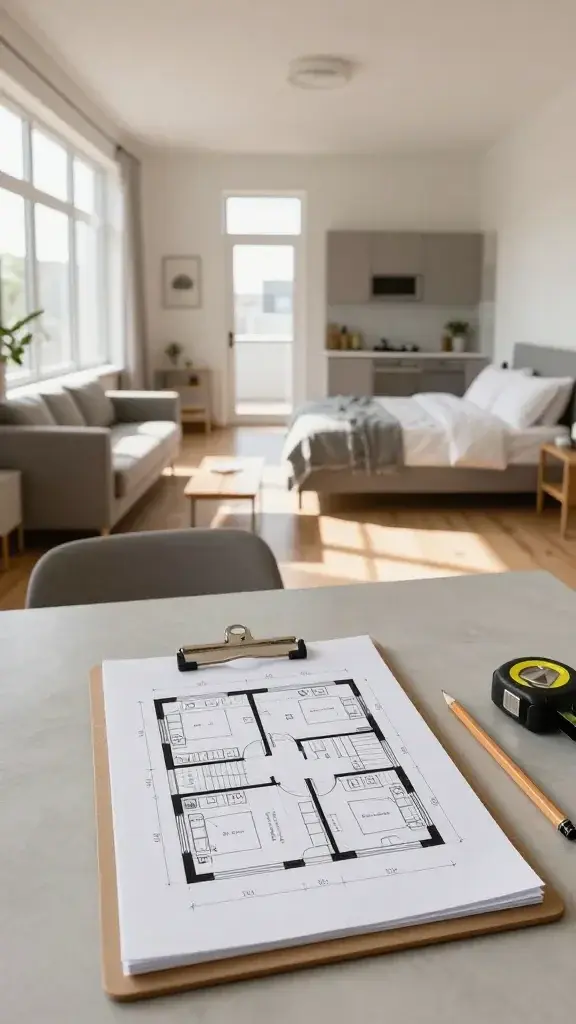
You need a game plan before furniture Tetris happens. Sketch your layout and decide where your “bedroom” will live. Ideally, push the bed to a corner or along a wall, away from the entry and kitchen.
Key move: Create a clean path from the front door to the seating area. If people walk through your “bedroom” just to sit, the vibe screams dorm room, not grown-up studio.
Anchor Zones with Rugs
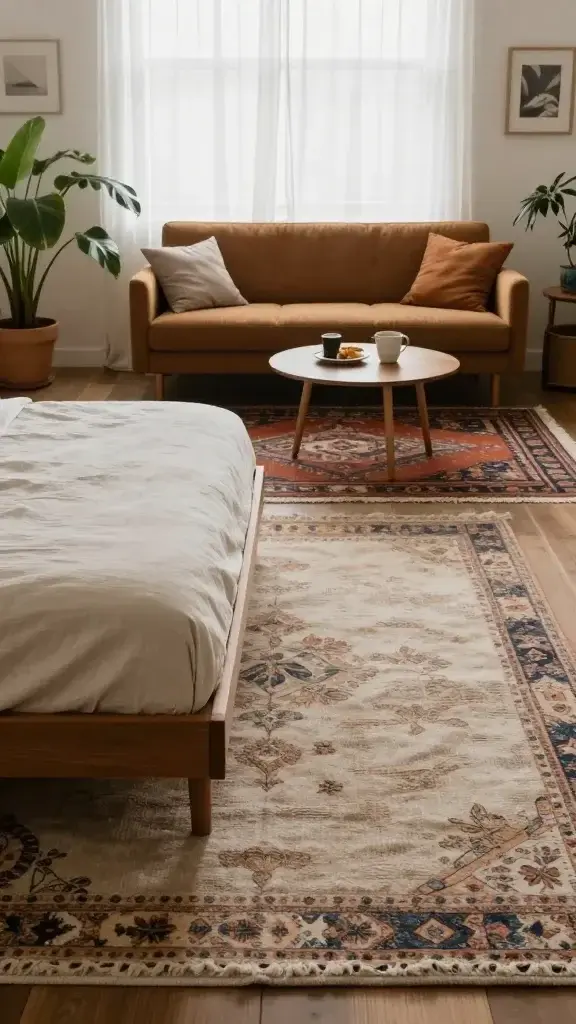
Rugs do heavy lifting. Place one under the bed to frame the sleeping zone, and another under the sofa to frame the living area. Instant psychological wall.
- Size matters: A 5×8 under a queen bed works; go 8×10 if the bed floats.
- Pattern play: Keep the bedroom rug calmer and the living rug bolder so the rooms read differently.
Use Vertical Dividers That Don’t Block Light
You want separation without turning the space into a cave. Think see-through, movable, and stylish.
- Open shelving: A tall bookcase like the IKEA Kallax creates a wall and holds storage. Style both sides so it looks good from every angle.
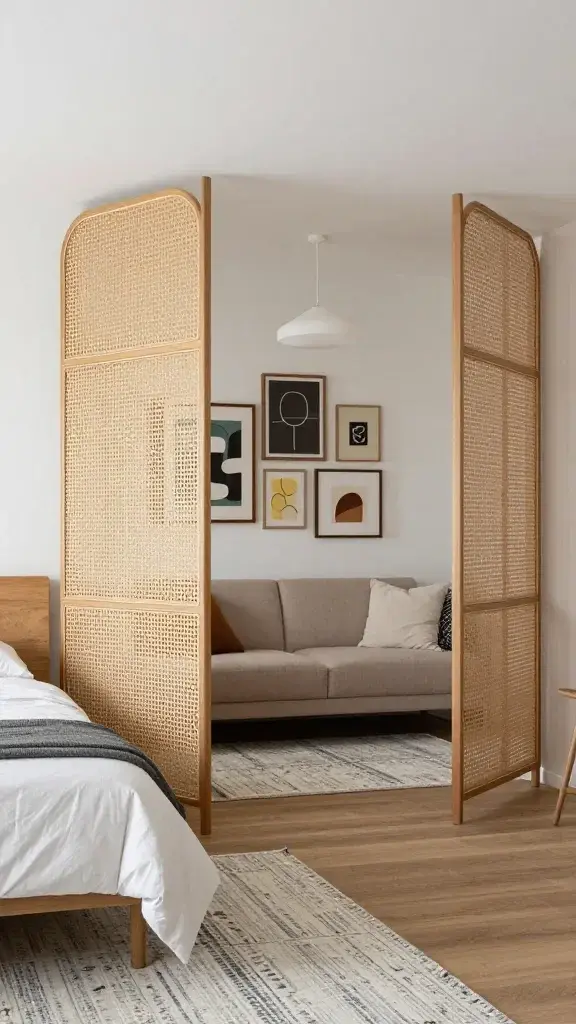
- Slatted screens or folding room dividers: They filter views, not sunlight. Bonus: you can fold them away for parties.
- Glass or acrylic panels: If you can splurge, a translucent panel keeps light flowing while blurring the bed.
- Plants as partitions: A row of tall plants on a console or bench = privacy with oxygen.
Proportion Check
Got 9-foot ceilings? Go tall with shelving. Lower ceilings? Use lower dividers (like 48–60 inches) so the room breathes. IMO, knee-high “walls” just look confused—aim mid-height or higher.
Hang Curtains Like a Stage Set
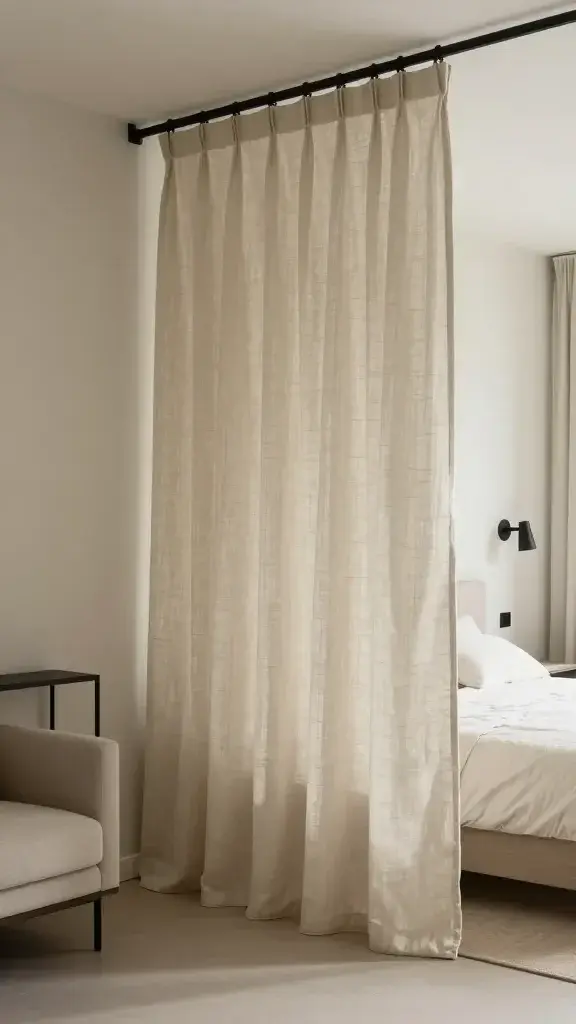
Curtains bring drama—and actual separation. Run a ceiling-mounted track to wrap the bed on two sides. You’ll get the bedroom cocoon, and you can pull them back during the day.
- Sheers for daylight, blackout panels for sleep. Layer them if you want options.
- Keep them wide: Oversize the width so they look full, not skimpy.
- Color cue: Match curtain tone to your bedding so it reads as one “room.”
Ceiling Tracks That Don’t Wreck Your Security Deposit
If drilling feels risky, use spring-tension rods or a wall-to-wall cable system. FYI, adhesive hooks won’t hold heavy curtains—you’ll cry when they fall at 2 a.m.
Build a Headboard Wall (No Tools Degree Required)
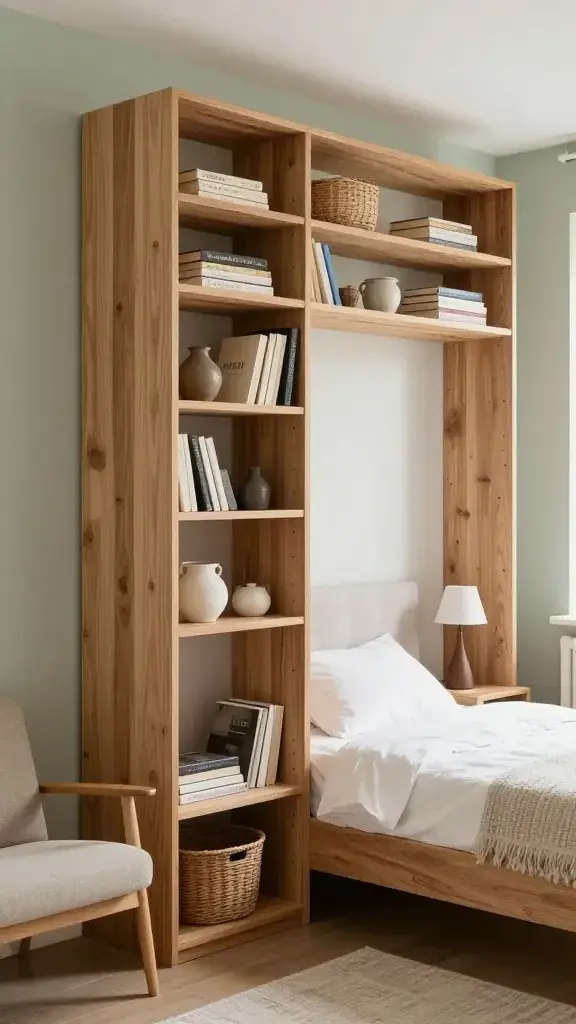
Create a faux headboard wall to signal “this is the bedroom.” Your bed will feel grounded and private.
- Room divider as headboard: Place a folding screen behind your bed—instant structure.
- Half-height bookcase: Position a 30–36-inch-tall unit behind the headboard for storage and a visual stop.
- Peel-and-stick wallpaper: Do one wall or a large panel behind the bed. Visual boundary achieved.
Color-Zoning Trick
Paint or wallpaper your “bedroom” wall a deeper tone than the living area. Darker hues recede and feel cozy; lighter colors keep the rest fresh. Think deep olive in the bed nook, soft greige out front.
Use Lighting to Draw the Line
Lighting separates zones without lifting a hammer. You want different light temperatures and layers for each zone.
- Bedroom: Warm, dimmable lighting with bedside sconces or plug-in pendants. Aim for 2700K bulbs.
- Living: Brighter, layered lighting: a floor lamp plus a table lamp. 3000K bulbs help tasks without feeling like a dentist’s office.
- Task glow: Add a clip light behind the headboard or under a shelf for night reading.
One Smart Switch
Put the bed lights on a smart plug or dimmer remote. You’ll set the mood without getting up, and the living area stays lit for guests while your bed tucks into twilight.
Furniture Placement That Cheats a Wall
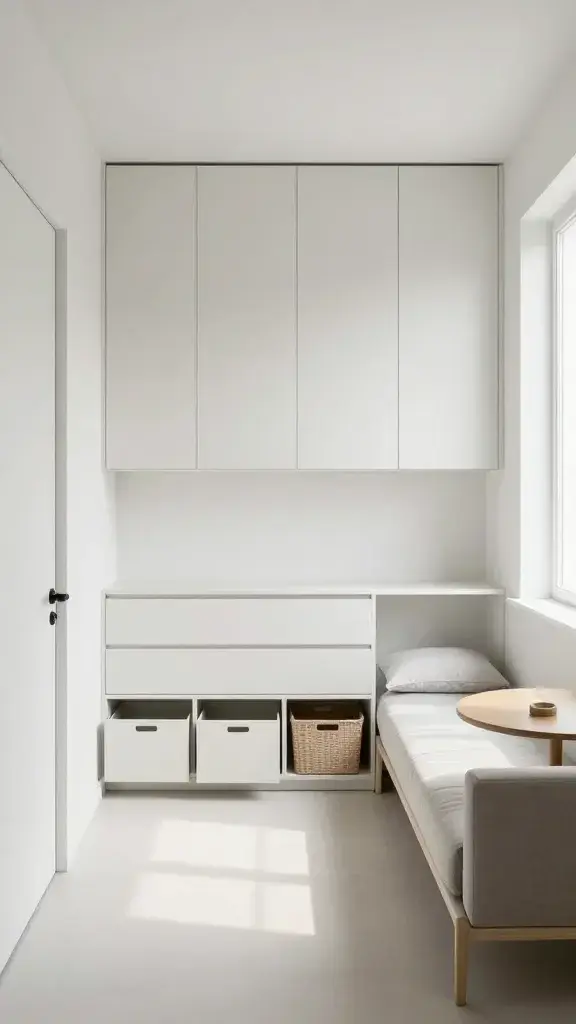
You can “block” sightlines with furniture and keep the room open.
- Float the sofa: Turn the sofa so its back faces the bed. Add a narrow console behind it for storage and to heighten the divide.
- End-to-end storage: Two short dressers or a low media console placed behind the sofa = extra drawers + fake wall.
- Use the foot of the bed: A storage bench or trunk visually caps the sleeping zone and adds hidden stash space.
Mind the Sightline
Stand at your entry. Can you see the pillows? If yes, bump up the height behind the headboard or sofa by a few inches until the bed reads “tucked away.”
Style Cues That Say ‘Bedroom Lives Here’
Details matter. You can lean hard on textiles and textures to differentiate zones.
- Textile story: Bedroom gets plush (velvet, knits, higher-pile rug). Living area stays tailored (linen, flatweave, leather).
- Color palette: Share 2–3 colors across both zones but change dominance. Example: blue accents in living, blue bedding in bedroom.
- Art strategy: Hang calming art above the bed and bolder, larger pieces in the living area.
Clutter Control = Instant Calm
Nothing ruins a faux bedroom like a pile of shoes. Add under-bed storage bins, a lidded hamper, and a nightstand with drawers. If everything has a home, your bed zone stays chill.
Small Space Ninja Moves
These quick wins max out function without eating square footage.
- Murphy or daybed: If your studio moonlights as a WFH cave, consider a wall bed or a daybed with bolsters. It flips from lounge to bedroom in seconds.
- Ceiling hooks for plants or drapes: Suspend a few planters or a curtain panel to frame the bed without blocking floorspace.
- Symmetry: Two small sconces and matching pillows make the bed feel intentional, not “mattress-in-a-living-room.”
- Mirrors, but smart: Place a mirror opposite a window in the living zone, not the bed. You’ll bounce light without staring at yourself at 6 a.m. Scary.
FAQ
How do I divide a studio without losing natural light?
Use see-through dividers: open shelves, slatted screens, or sheer curtains on a ceiling track. Keep anything solid low or narrow. Also, park the tallest divider perpendicular to the window, not blocking it.
What’s the best budget-friendly divider?
Open shelving wins for function and price. You get storage, a visual wall, and a styling moment. Pair it with a rug under the bed and boom—your zones read separate for under a few hundred bucks, IMO.
Can I put the bed by the window?
Yes, if the window doesn’t create drafts or brutal morning sun. Use blackout shades and a headboard to shield light. If the window is your only big light source, angle the bed so you don’t block too much of it.
What size rug should I use under the bed in a studio?
For a full or queen, 5×8 works if you slide the rug two-thirds under the bed. If the bed floats, go 8×10 so nightstands sit on the rug too. You want enough rug peeking out to define the zone clearly.
Is it okay to face the sofa back toward the bed?
Totally. That move actually helps create separation. Just add a console or bench behind the sofa so the backside looks finished and your living zone feels intentional, not like furniture exile.
How do I make it feel like a real bedroom at night?
Dimmers, curtains, and texture. Close the drapes, switch to warm bedside lights, and layer a throw or quilt. A subtle linen spray or candle cue also tells your brain, “Hey, we sleep here.”
Wrap-Up: Two Vibes, One Room
You don’t need drywall to create privacy. Use rugs to anchor, vertical dividers to filter, and lighting to set the mood. Then finish with a few styling cues so your bed zone feels cozy and intentional. With a couple of smart tweaks—FYI, curtains and a floating sofa do wonders—you’ll live large in your little space.