Small room, big energy. That’s the vibe we’re going for. Mirrors are basically interior design cheat codes—light-bending, space-stretching, drama-making wonders that can turn a cramped corner into a chic oasis. Ready to make your place feel twice the size without knocking down a single wall?
1. Go Big Or Go Gallery: Choose Mirrors With Intention
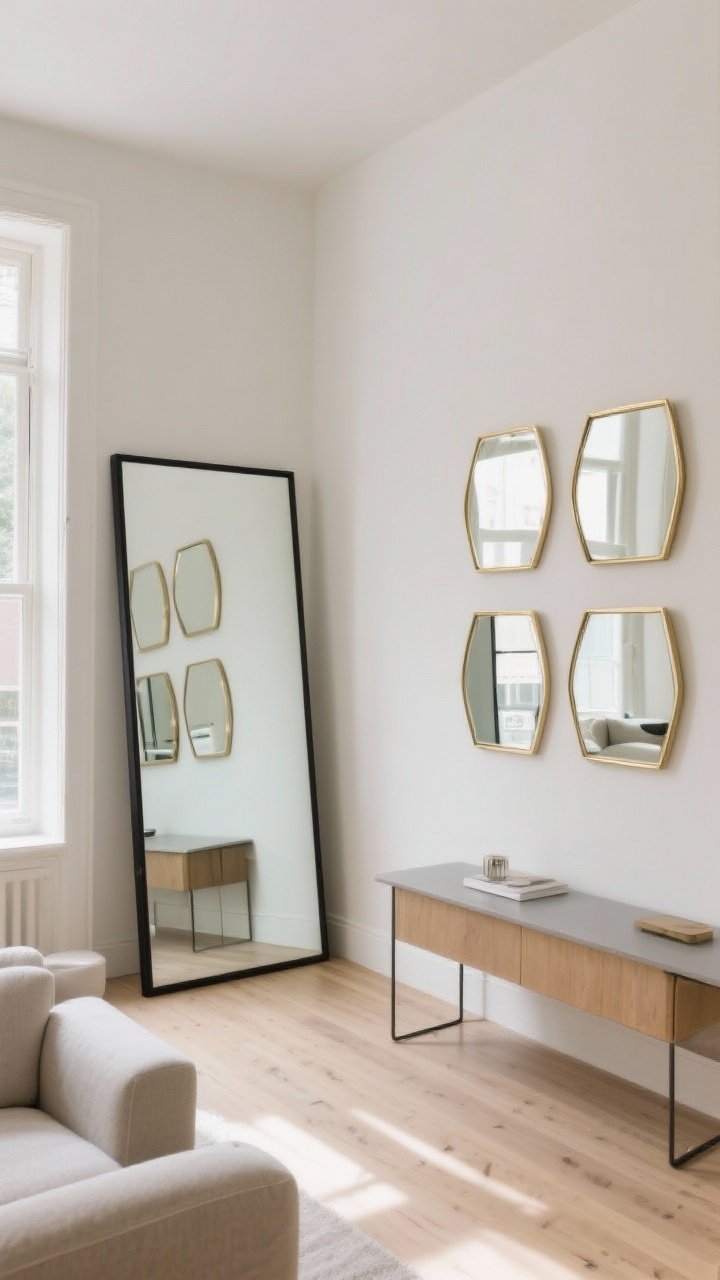
Small mirrors can feel like cute accessories. Big mirrors feel like architecture. If you want that instant “whoa,” pick a full-length mirror or an oversized wall mirror that commands attention.
Why Size Matters
- Large mirrors visually double what they reflect—more floor, more windows, more breathing room.
- Tall mirrors make ceilings feel higher. Vertical lines = vertical drama.
- A gallery wall of mirrors can be great, but keep frames cohesive for a clean, airy look.
FYI: If you’re nervous about one giant mirror, try two medium ones side by side. Symmetry = calm, and calm feels spacious.
2. Mirror The Light: Position Opposite Windows And Lamps
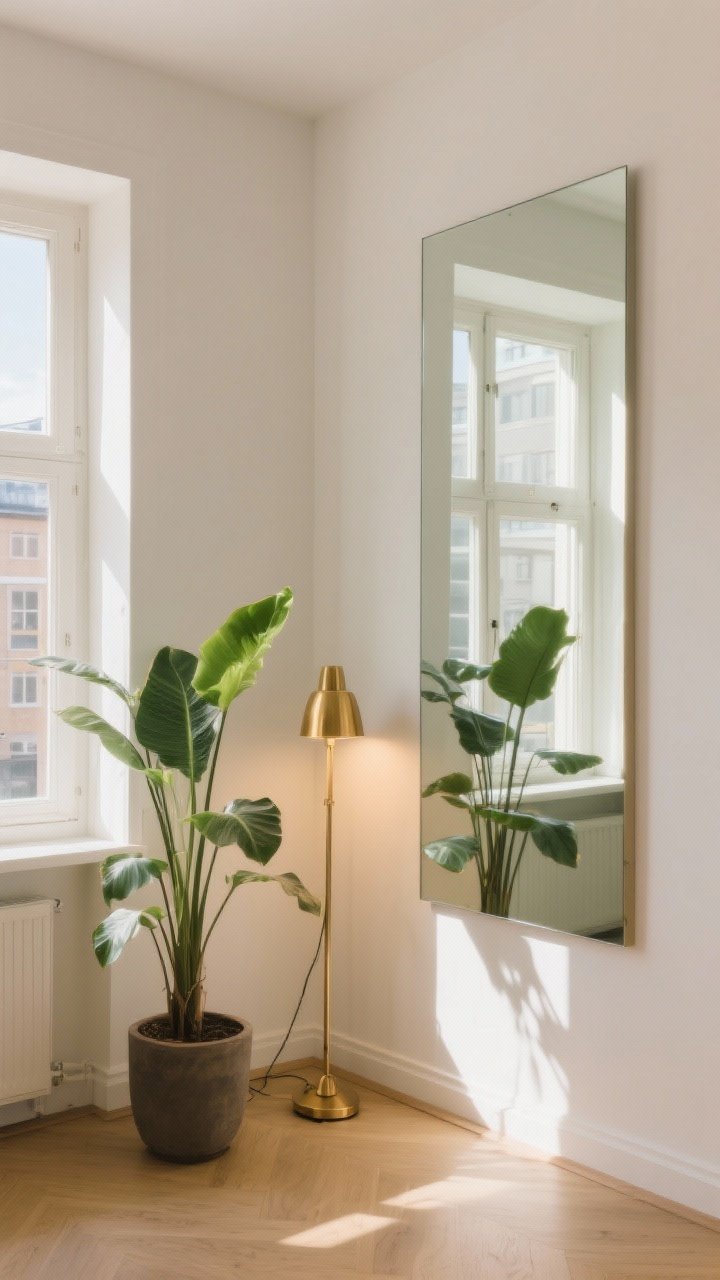
Mirrors don’t just reflect stuff—they bounce light. Place one opposite a window and watch your room glow like it finally had its coffee.
Placement Tips That Actually Work
- Opposite windows: Doubles the daylight and extends the view. Instant square footage vibes.
- Next to lamps: A mirror behind or beside a floor lamp amplifies the light and softens shadows.
- Across from greenery: Reflect plants to bring the outdoors in—fresh and airy, minus the allergies.
Pro move: Angle your mirror a smidge to avoid reflecting a blank wall. Make it catch something interesting—like art, a window, or your best shelfie.
3. Float The Furniture: Create Depth With Strategic Reflections

Mirrors can fake depth like a pro illusionist. Use them to reflect the open parts of your room, not the cluttered ones.
Where To Aim That Reflection
- Behind a sofa: A wide mirror above the sofa visually pushes the wall back.
- At the end of a hallway: Makes the corridor feel longer and less “tunnel-y.”
- Behind open shelving: Adds dimension and makes your styling look elevated.
IMO, mirrors shouldn’t reflect messy zones. If your entry table collects chaos, don’t mirror it—no one needs double the mail pile.
4. Frame Game: Pick Finishes That Blend, Not Bully
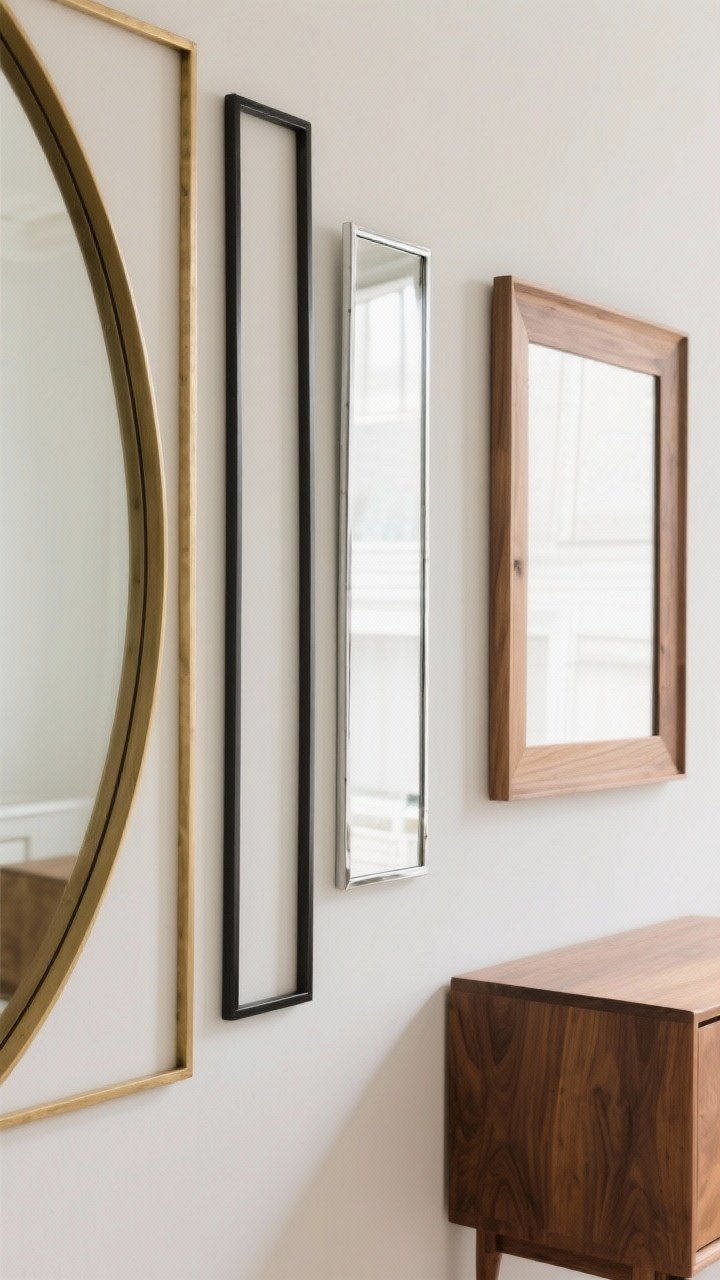
The frame is the outfit. You want something chic that doesn’t steal the show. In small spaces, slim frames and light finishes keep the look airy.
Smart Frame Choices
- Metal frames in brass, black, or chrome add polish without bulk.
- Frameless or beveled mirrors disappear nicely into the wall—clean and modern.
- Wood tones warm things up; match your existing woods to keep it cohesive.
Skip heavy, ornate frames unless you’re doing one hero piece. Too many chunky frames can shrink a room visually, fast.
5. Mirror The Architecture: Built-Ins, Backsplashes, And Doors
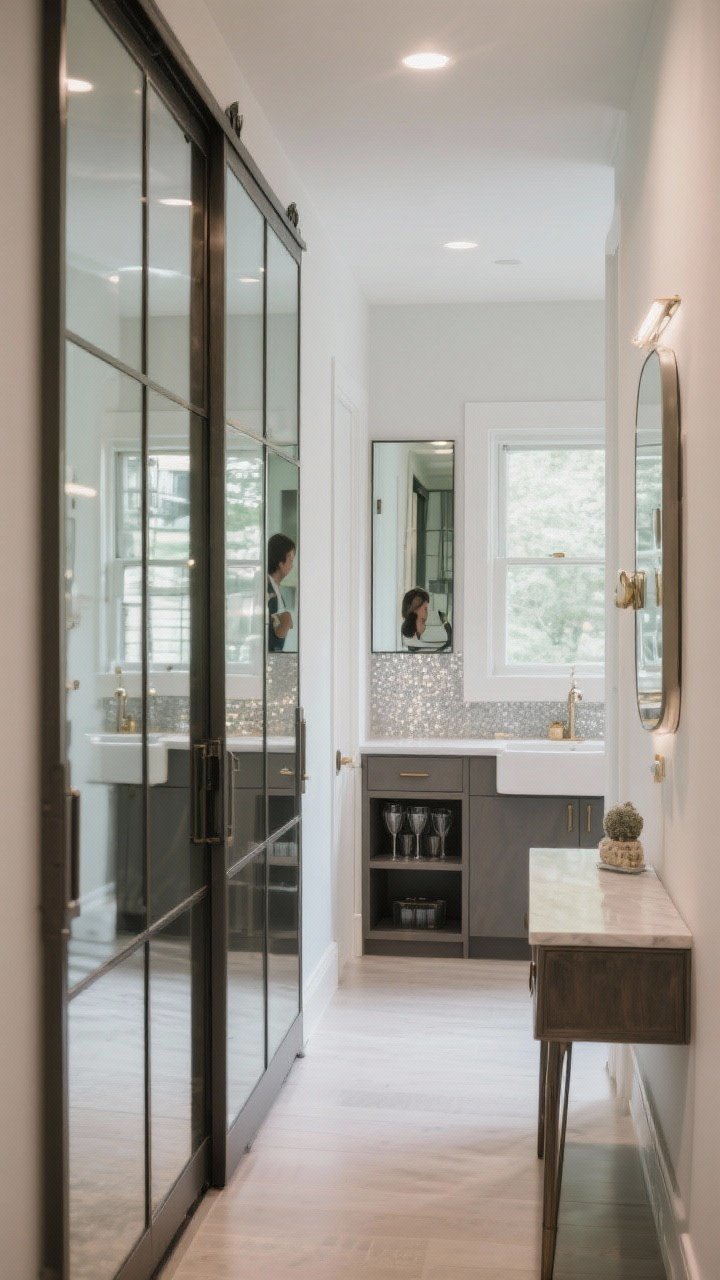
Want your place to look fancy without a contractor? Integrate mirrors into the bones of your space. Subtle, sleek, and so effective.
High-Impact Ideas
- Closet doors: Swap in mirrored panels to bounce light down hallways and give you a full-length check before leaving.
- Mirrored backsplashes: In tiny kitchens, they reflect countertops and windows, doubling the vibe.
- Built-in nooks: Add a mirror at the back of a bar nook or bookshelf for depth and sparkle.
- Console stations: A mirror above an entry table opens up a tight foyer and gives that last-minute hair check.
Bonus: Antique or smoked finishes keep reflections soft if you want more mood than mirror-glare.
6. Shape Shifter: Use Curves And Grids To Trick The Eye
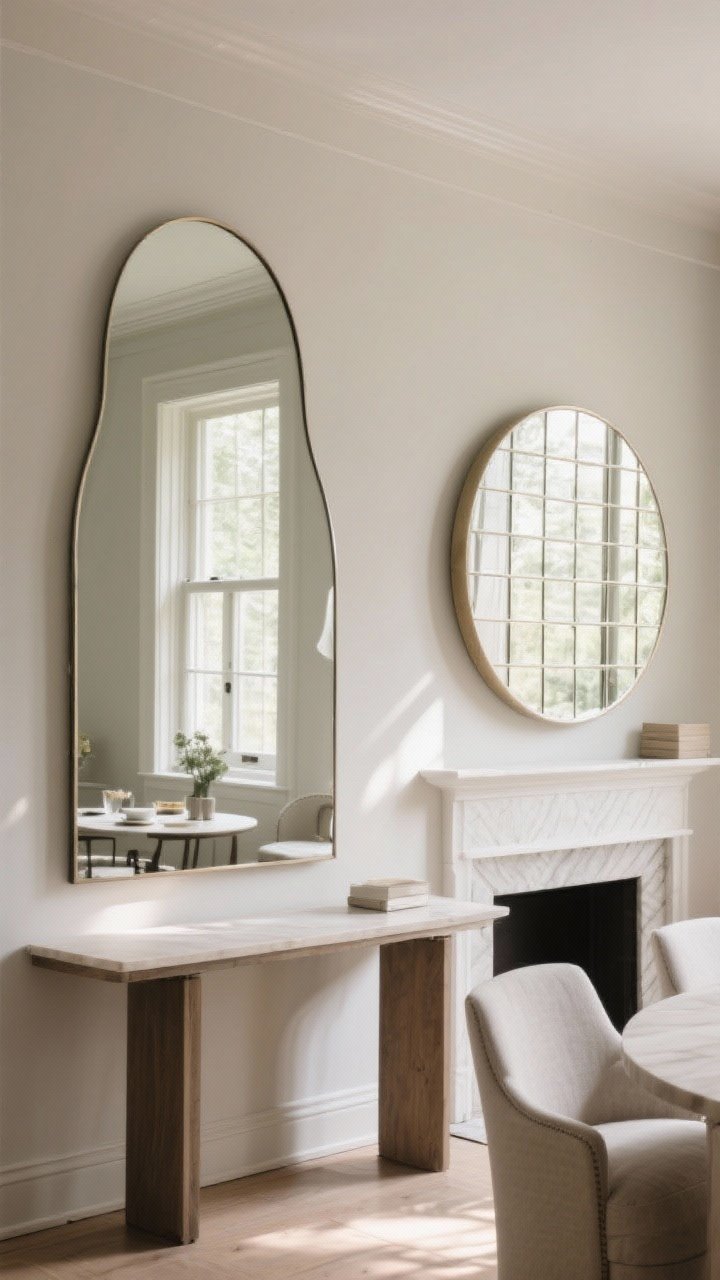
Not all mirrors are rectangles just trying their best. Play with shape to change how your eye reads the room.
Shapes That Stretch Space
- Arch mirrors: Pull the eye up and mimic a window. Great behind a console or sofa.
- Round mirrors: Soften boxy rooms and bounce light in all directions—perfect over a mantle or dresser.
- Grid mirrors: Windowpane styles add structure and feel like architecture, especially in small dining rooms.
Mixing shapes is fine, but keep the palette tight. Think: one hero shape plus supporting acts, not a circus of geometry.
7. Safety, Glare, And Maintenance: Keep It Cute And Practical
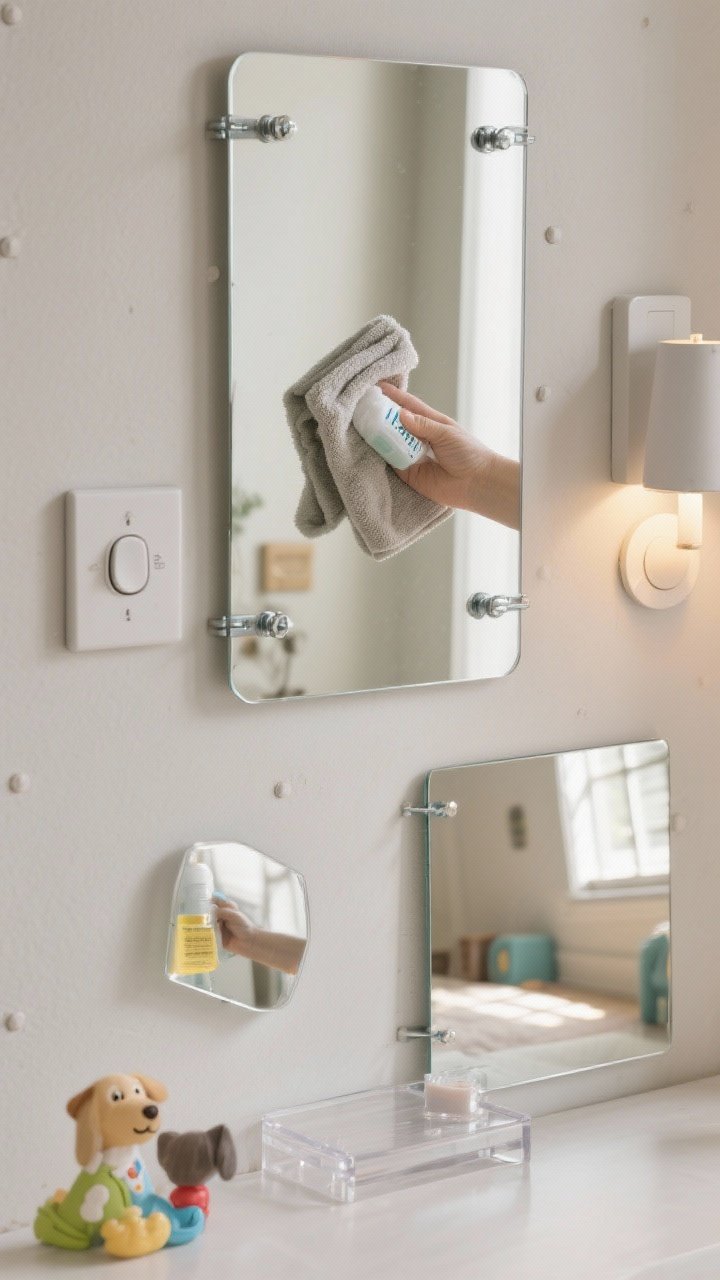
A beautiful mirror is great. A safe, non-blinding, easy-to-clean mirror? Even better. Let’s make sure your glow-up lasts.
Do The Boring (But Crucial) Stuff
- Mount securely: Use wall anchors or studs—mirrors are heavy. Check weight ratings before you hang.
- Mind the glare: If a mirror reflects direct sun into your face at 3 p.m., adjust the angle or placement.
- Avoid clutter reflections: If a mirror doubles a mess, you just made your room look smaller. Edit first, then mirror.
- Clean like a pro: Microfiber cloth + glass cleaner on the cloth (not the mirror) to avoid drips behind the frame.
- Kid/pet zones: Consider acrylic or safety-backed mirrors for lower placements. Looks chic, less stress.
FYI: A dimmer on nearby lamps means you can control reflections at night, so your space looks cozy, not like a lighthouse.
Quick Styling Wins
- Layer a mirror behind a table lamp for dreamy ambient light.
- Pair a tall mirror with a narrow plant stand to draw the eye up.
- Lean a full-length mirror instead of hanging if you rent—add anti-tip hardware for safety.
Final vibe check: Mirrors should reflect the best parts of your room—light, art, plants, and open space. If it doesn’t add brightness or depth, move it until it does. The right mirror in the right spot is like magic. No sledgehammer required.