You don’t need a trust fund to have chic dinnerware. You just need a plan (and a little restraint in the clearance aisle). Let’s build a set that looks custom, feels expensive, and costs way less than your last delivery order spree.
1. Start With A Neutral Base That Does The Heavy Lifting
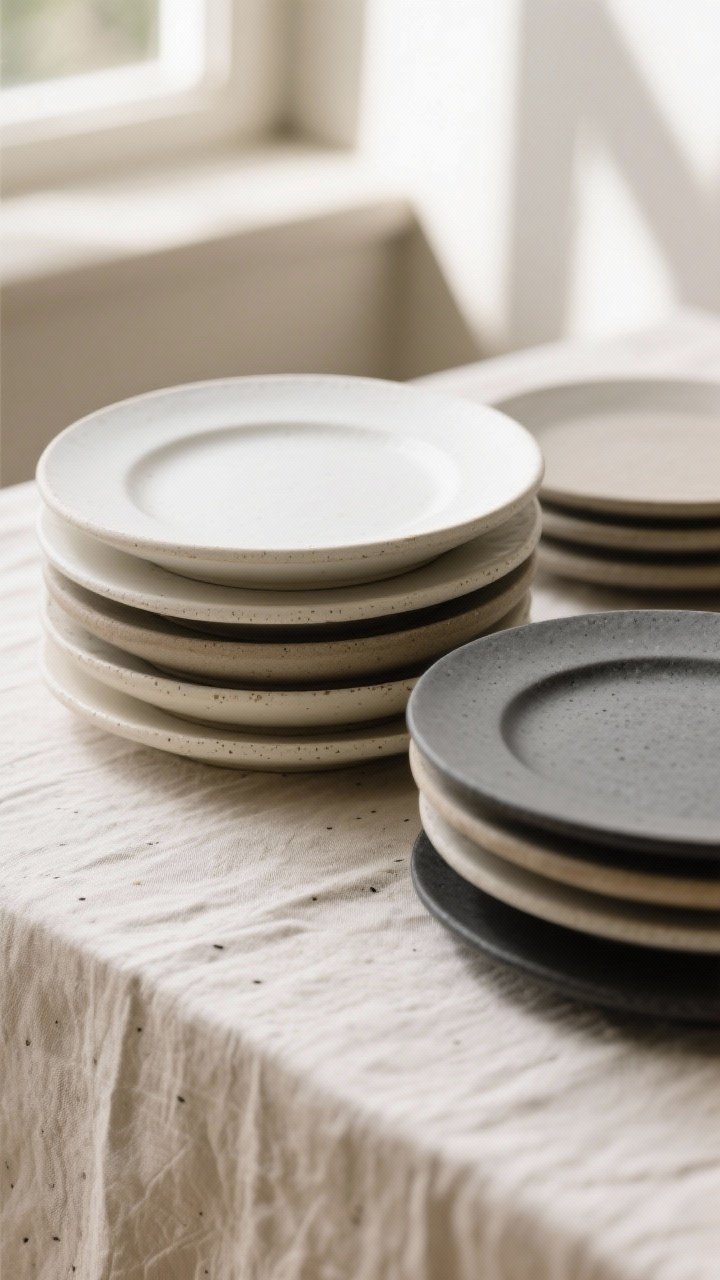
Your base plates are the foundation—like great jeans that go with everything. Choose a neutral, matte or satin-finish stoneware in white, cream, greige, or soft black. It instantly reads elevated and doesn’t compete with food.
What to Look For
- Simple silhouettes: Slightly coupe (gently curved edges) feels modern and stacks nicely.
- Subtle speckle or reactive glaze: Adds texture without shouting.
- Mixable tones: Warm whites with warm grays; cool whites with slate or charcoal.
Pro tip: Skip shiny, ultra-bright white if you want a designer vibe—matte = money (not literally, sadly).
2. Mix High-Low: Splurge Smart, Save Big
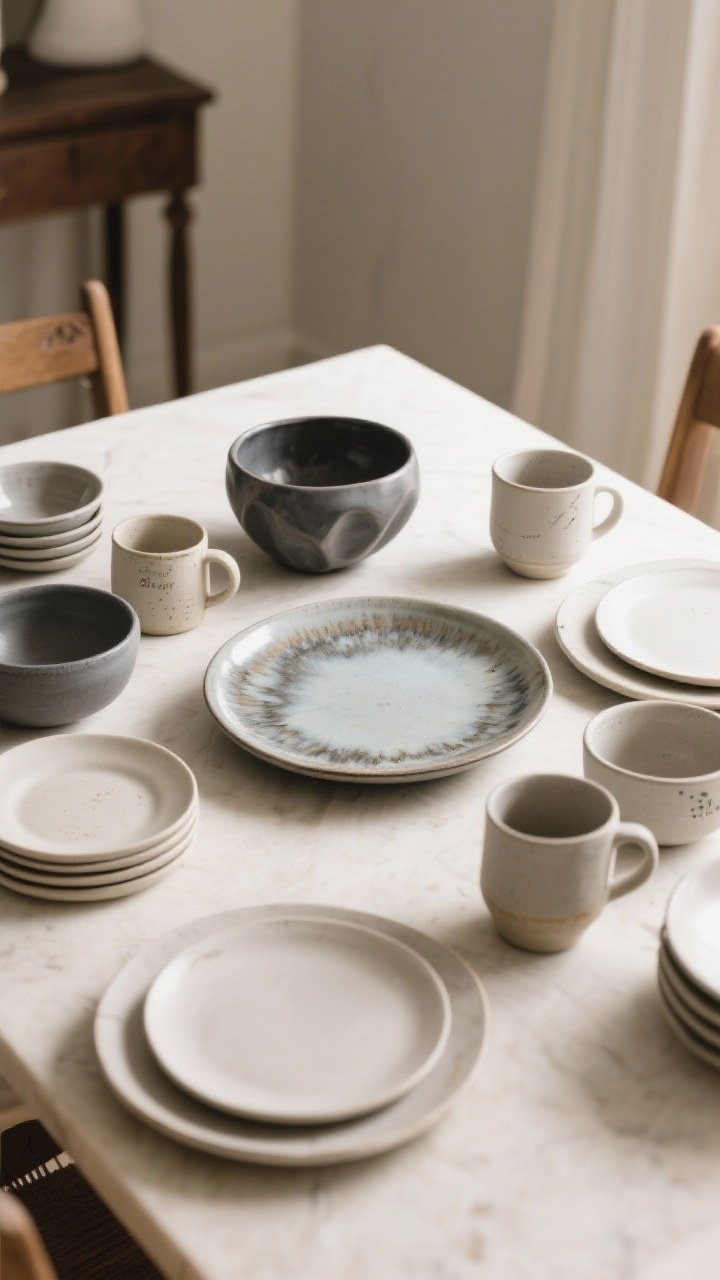
Designers never buy everything from one place (boring). Create balance by investing where it shows and saving where it doesn’t.
Spend Here
- Dinner plates: They’re the backdrop for every meal and set the tone.
- Serving pieces: One showstopper platter or bowl upgrades the entire table.
Save Here
- Side plates and bowls: Affordable sets mix in easily and are used constantly.
- Mugs: Cute and cheap is fine—bonus points for a handmade look.
FYI: Outlet stores, “open box” deals, and secondhand finds are your secret weapons. A $9 clearance platter can look like gallery merch with the right styling.
3. Embrace The Mismatch (But Make It Intentional)
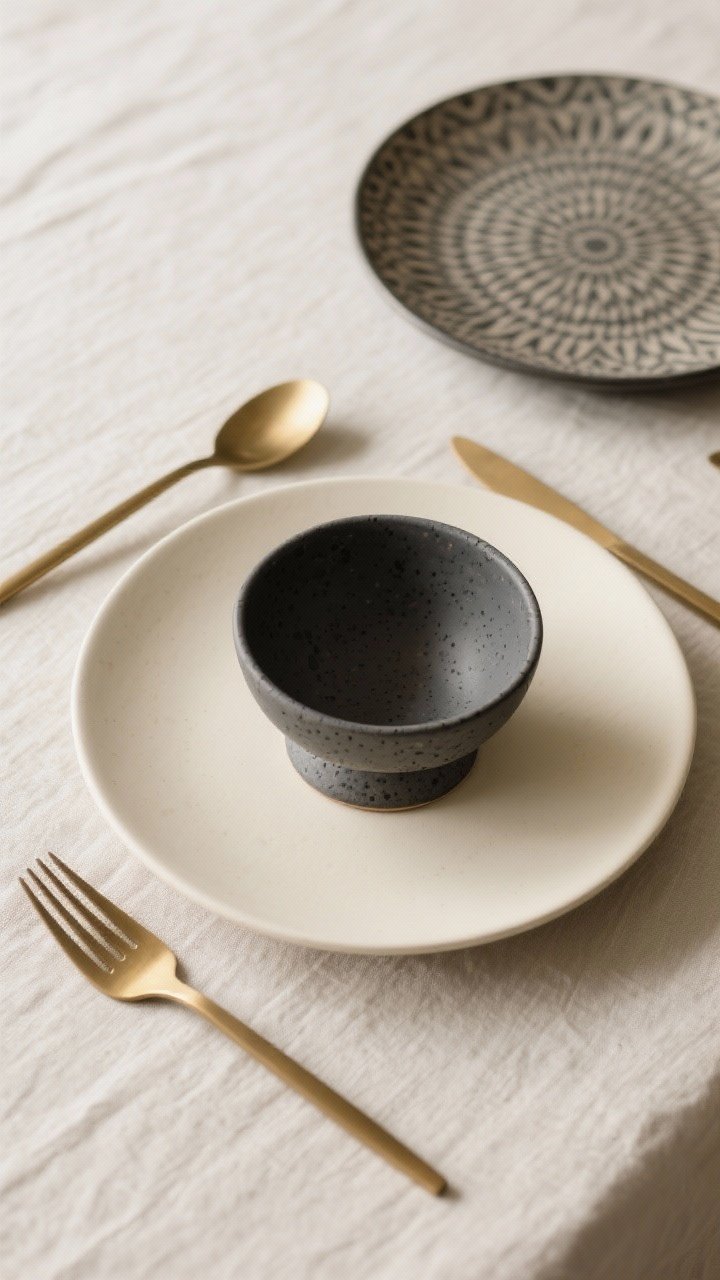
Nothing screams “designer” like a collected-over-time look. The trick is to mix textures, not chaos.
How To Mix Like A Pro
- Keep one element consistent: Same color family or same finish (all matte, all speckled).
- Vary shapes slightly: Round dinner plates, slightly oval salad plates, and footed bowls add depth.
- Cap it at three finishes: Example: cream stoneware + charcoal matte + brushed brass flatware.
Pattern lovers, listen up: one patterned salad plate per setting on a clean base? Chef’s kiss. It reads curated, not busy.
4. Layer With Accent Pieces That Feel Custom
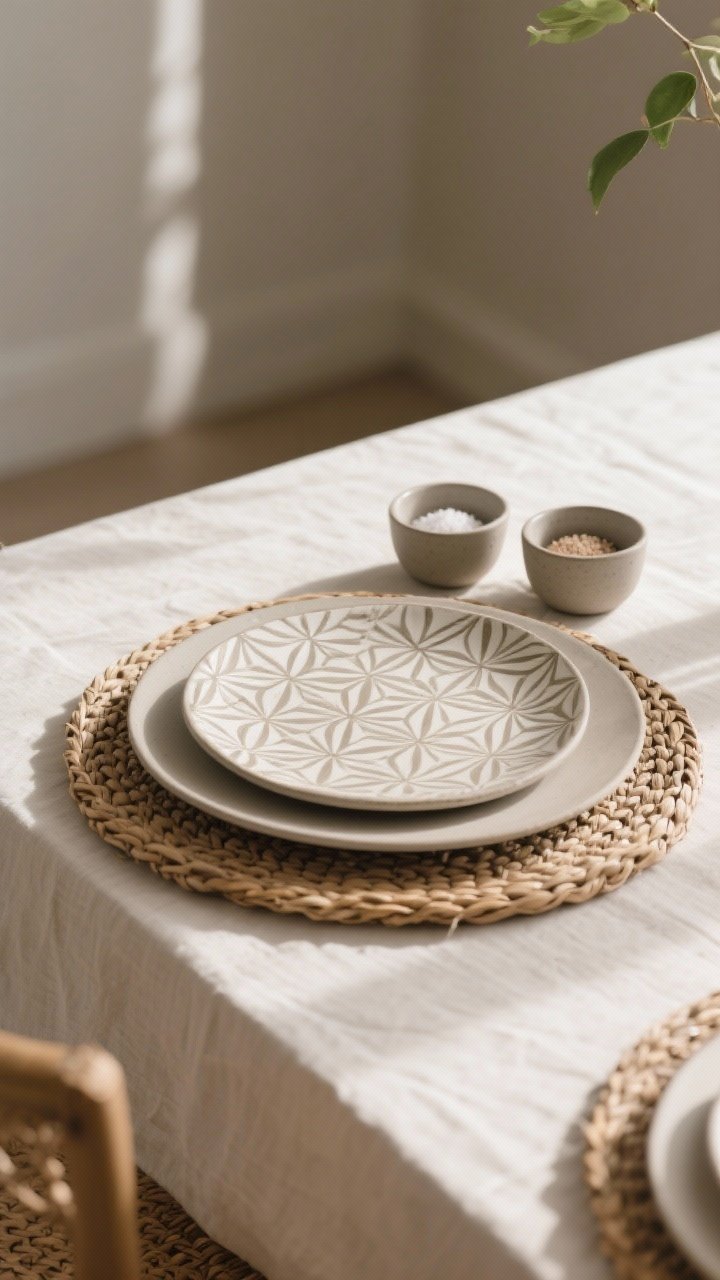
Want instant designer vibes? Add two or three strategically chosen accents. They don’t have to match—just harmonize.
Accent Ideas
- Statement salad plate: Marbled, hand-painted, or a subtle geometric. Use it as the second layer.
- Textured charger or placemat: Woven rattan, linen, or slate slabs elevate instantly.
- Tiny sauce bowls: For dips, salt, or olive pits. Practical and photogenic.
Keep the accents small so they’re affordable. One standout piece per place setting makes everything else look more luxe, IMO.
5. Choose The Right Materials (And Mix Them)
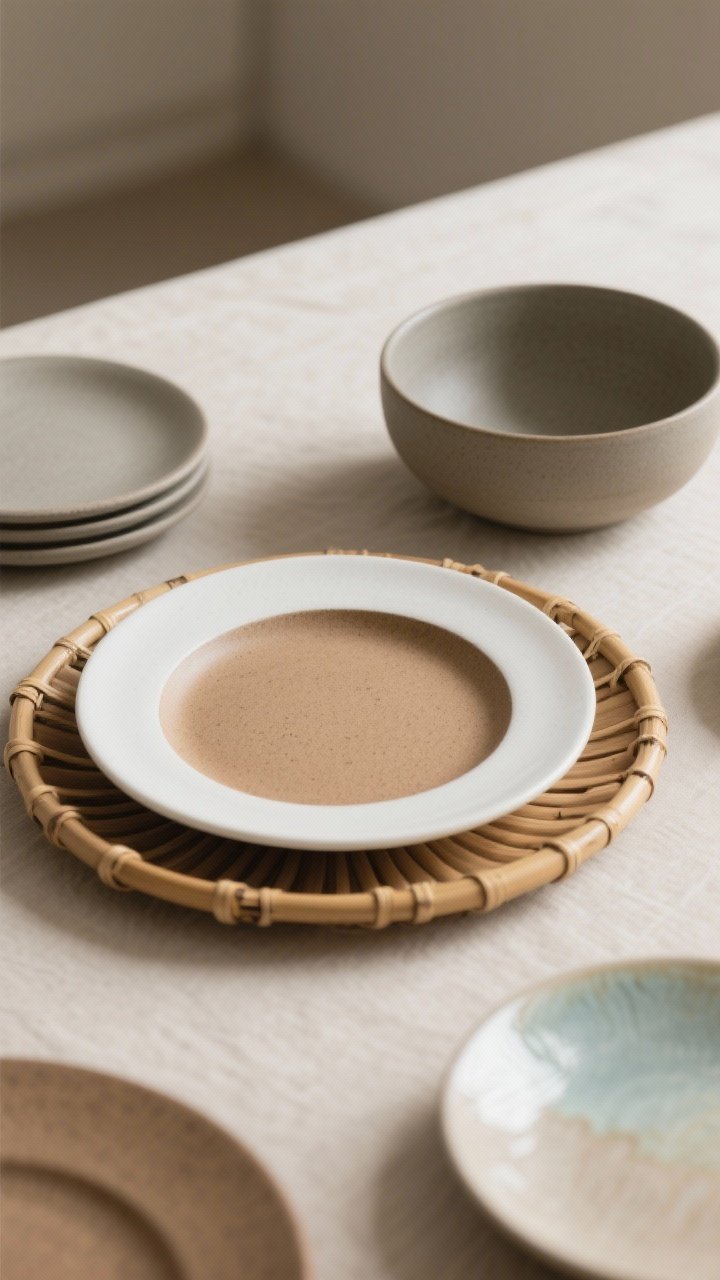
Material matters. Combine a couple of finishes to look collected—but keep the palette tight.
Material Mix Cheat Sheet
- Stoneware + Porcelain: Stoneware brings warmth; porcelain adds crisp edges. Great balance.
- Bamboo/Wood + Matte Ceramic: Natural textures + matte = restaurant chic.
- Reactive Glaze + Solid Matte: One piece with organic variation, the rest sleek.
Also, durability check: microwave and dishwasher safe unless you love hand-washing (who does?). If a piece is delicate but stunning, reserve it as an accent or serving piece.
6. Color Strategy: Keep It Calm, Then Add A Pop

Color is where budget sets can go from “fine” to “fire.” Stick to a 2-3 color palette and play within it.
Foolproof Palettes
- Warm Neutrals: Cream, sand, caramel wood. Cozy and timeless.
- Cool Minimal: Soft white, dove gray, charcoal. Gallery vibes.
- Earthy Organic: Mushroom, olive, terracotta. Food looks amazing on these.
Want a pop? Do it in salad plates, napkins, or glassware. A muted sage or inky navy won’t fight your food. Neon? Save it for your sneakers.
7. Style It Like A Designer: The Final 10%
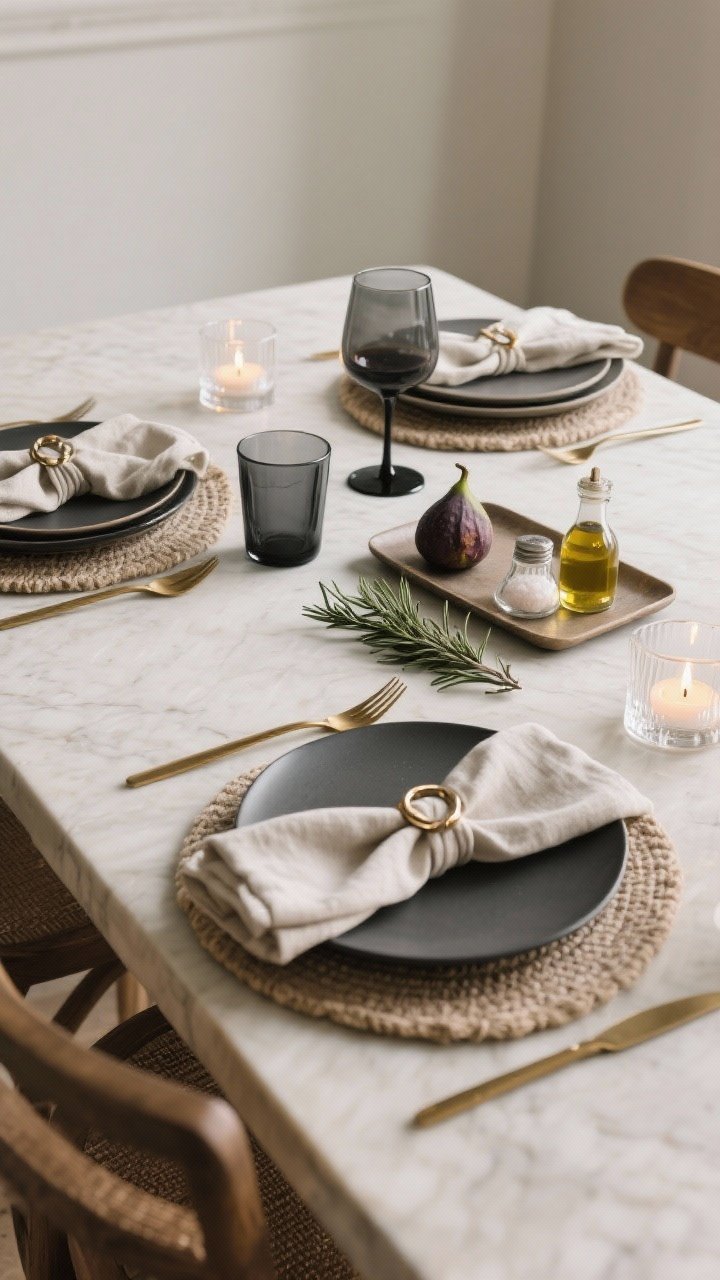
This is where budget pieces look boutique. Layer thoughtfully and add tactile elements.
Set The Scene
- Stack with intention: Charger or placemat + dinner plate + accent plate + napkin. Keep heights varied.
- Cloth napkins: Washed linen in a neutral, knotted or looped through a simple ring.
- Flatware as jewelry: Brushed gold or matte black instantly feels elevated (affordable sets exist!).
- One organic moment: A sprig of rosemary, a fig, or a citrus slice on each setting—tiny, chic, practically free.
Budget Styling Extras
- Mix glassware heights: A short tumbler + a taller stemless wine glass feels intentional.
- Use trays: Corralling oils, salts, and a candle on a small board = instant vignette.
- Good lighting: Tea lights in clear holders or recycled jars. Mood is everything.
FYI: Take a quick photo of your table. If something feels off, the camera will rat it out. Adjust spacing and color balance until it looks cohesive.
Quick Shopping Checklist
- 4–8 neutral dinner plates (matte or satin finish)
- 4–8 salad or side plates (patterned or tonal for layering)
- 4–8 bowls (wide and low looks modern)
- 1–2 serving bowls + 1 platter (your statement piece)
- 4–8 cloth napkins + simple rings
- Affordable flatware in a brushed finish
- Placements or chargers in a natural texture
Now you’ve got the blueprint: choose a low-key base, mix textures and materials, add one or two accents, and style it with intention. Your table will look designer without the designer price tag. Dinner at yours? I’ll bring the wine.