Ready to ditch the matchy-matchy set and build a table that actually looks like you? Good. Mixing dinnerware isn’t chaos—it’s chemistry. With a few clever moves, your table will feel curated, collected, and insanely chic. Let’s play.
1. Start With A Chill Base, Then Go Wild
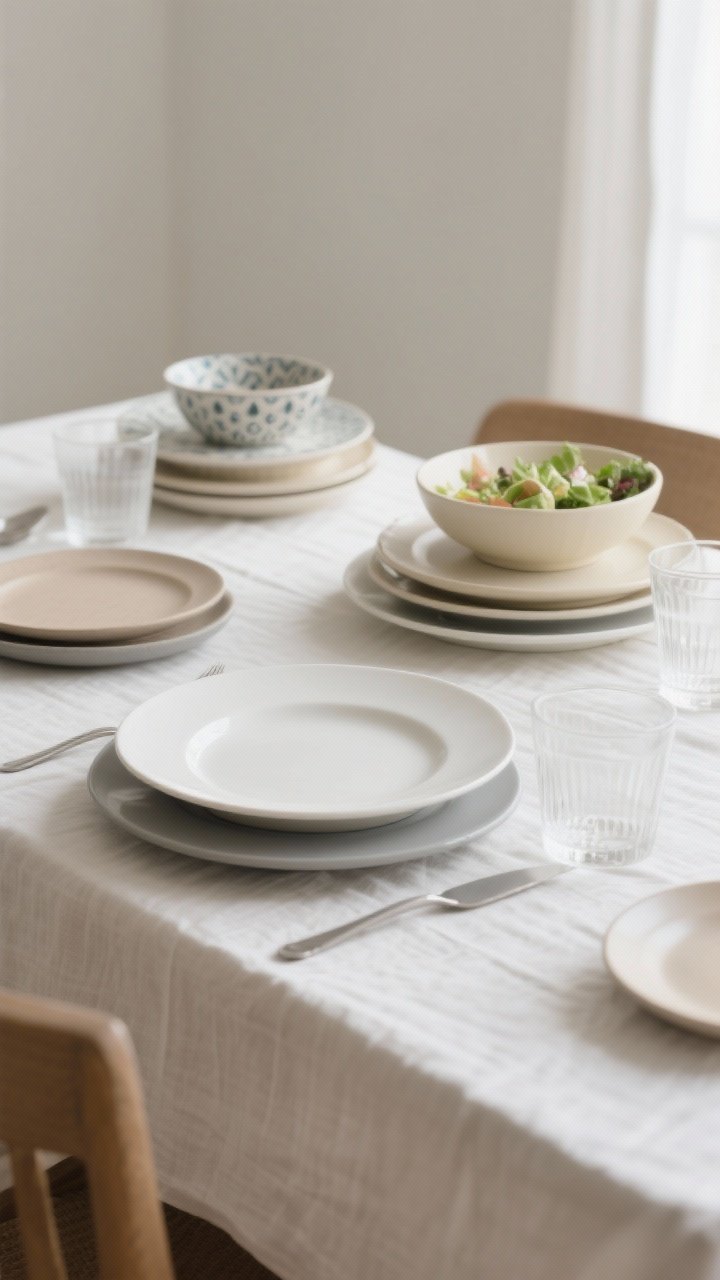
Think of your table like a great outfit: basics first, then the fun stuff. A simple, neutral base keeps everything grounded so your pattern play doesn’t spiral into visual noise.
Pick Your Base
- White or cream plates are the ultimate blank canvas. Matte or glossy? Both work.
- Soft greys, clay, or sand tones add warmth without stealing the show.
- Choose one consistent element: the same dinner plate shape or rim style.
Once the base is set, bring in the personality with salad plates, bowls, and accents. FYI: keeping one “quiet” layer makes everything else look intentional, not accidental.
2. Mix Patterns With A Simple 1-1-1 Formula
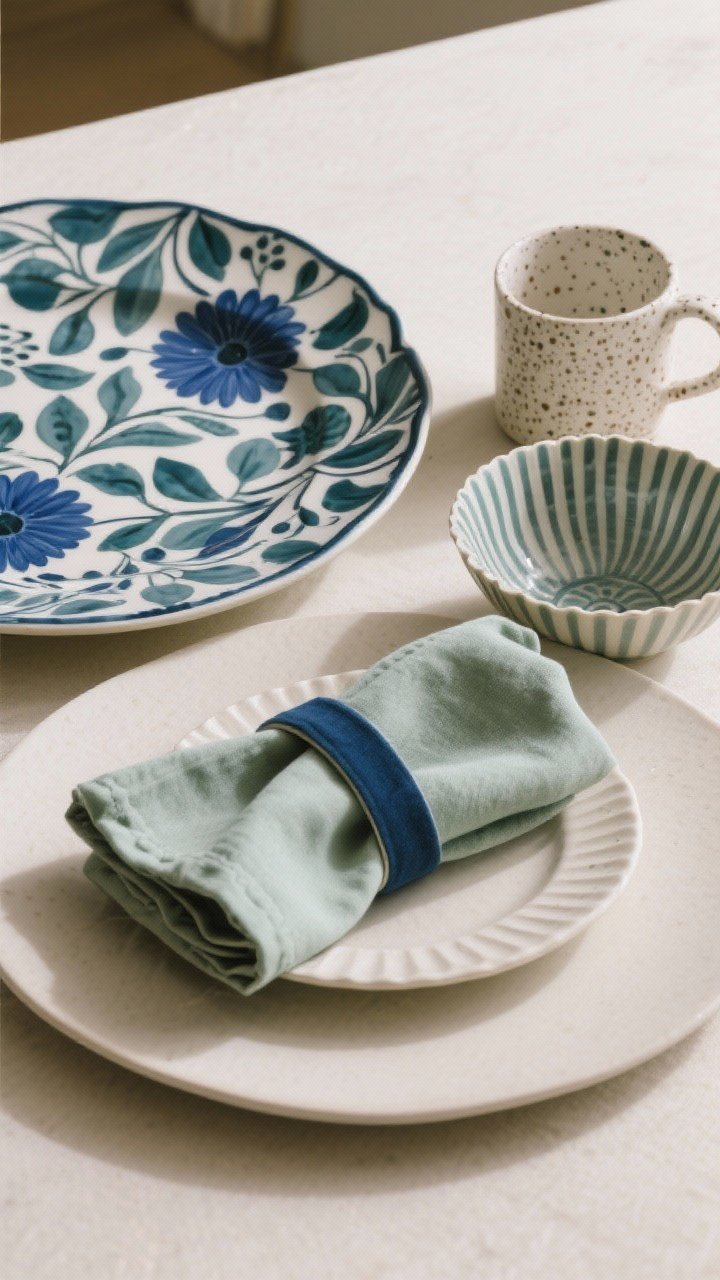
Pattern mixing gets scary fast. Use this foolproof trio: one bold, one medium, one micro. It’s the Goldilocks of table styling.
The Pattern Trio
- Bold: a large floral, modern graphic, or bright motif (salad plate, platter).
- Medium: stripes, scallops, geometrics (bowls or side plates).
- Micro: tiny dots, speckles, or subtle texture (mugs, dipping bowls).
Keep patterns in the same mood (playful, classic, organic) or in a shared color family to avoid the carnival effect. If your bold pattern is loud, pull a color from it and repeat it once elsewhere—instant cohesion.
3. Color Stories That Pop (Without Clashing)
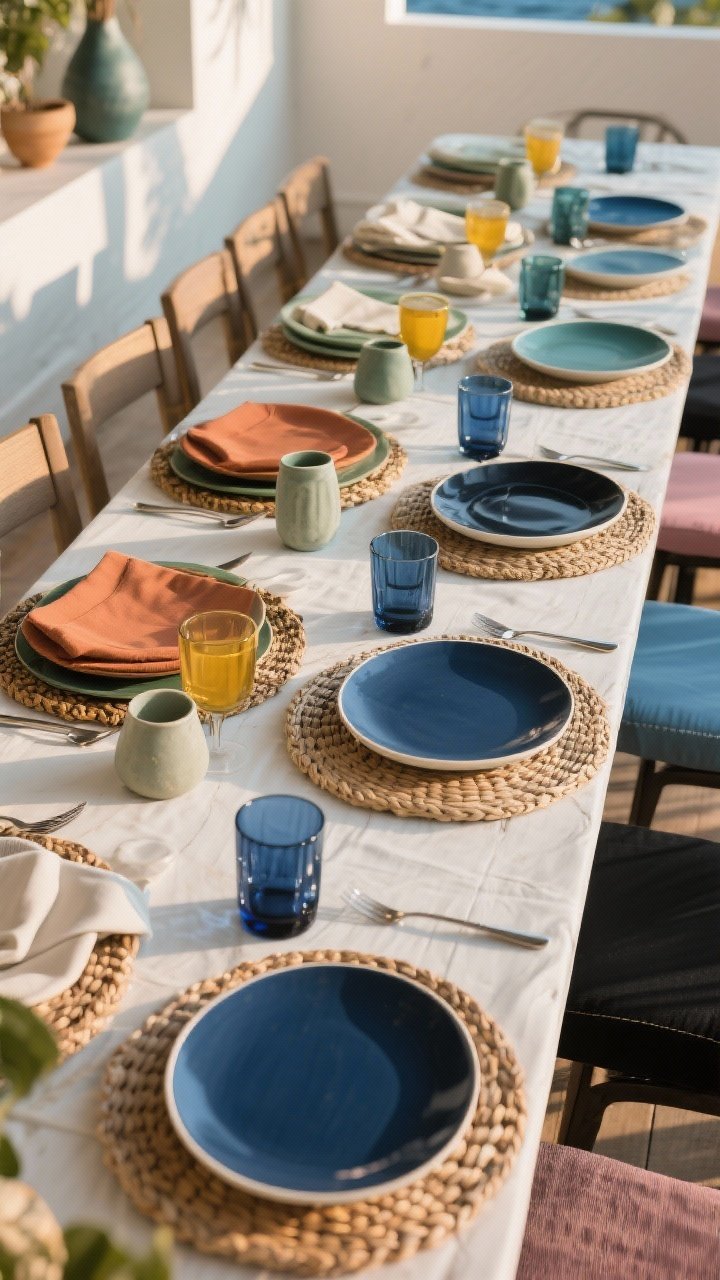
You don’t need to be a color theorist. Just pick a vibe and stick to it. Promise, it’s easier than it looks.
Easy Color Combos
- Coastal Calm: white, navy, sage. Add woven chargers and you’re done.
- Earthy Modern: terracotta, olive, cream. Think matte glazes and stoneware.
- Monochrome Magic: all blues or all greens in different tones—rich and layered.
- High-Contrast Chic: black + white + one accent (mustard, cobalt, or blush).
Pro move: repeat a color in three places (plate rim, napkin, glass). That triangle guides the eye and makes everything feel styled on purpose. IMO, this is the secret sauce.
4. Texture Is Your Silent Show-Off
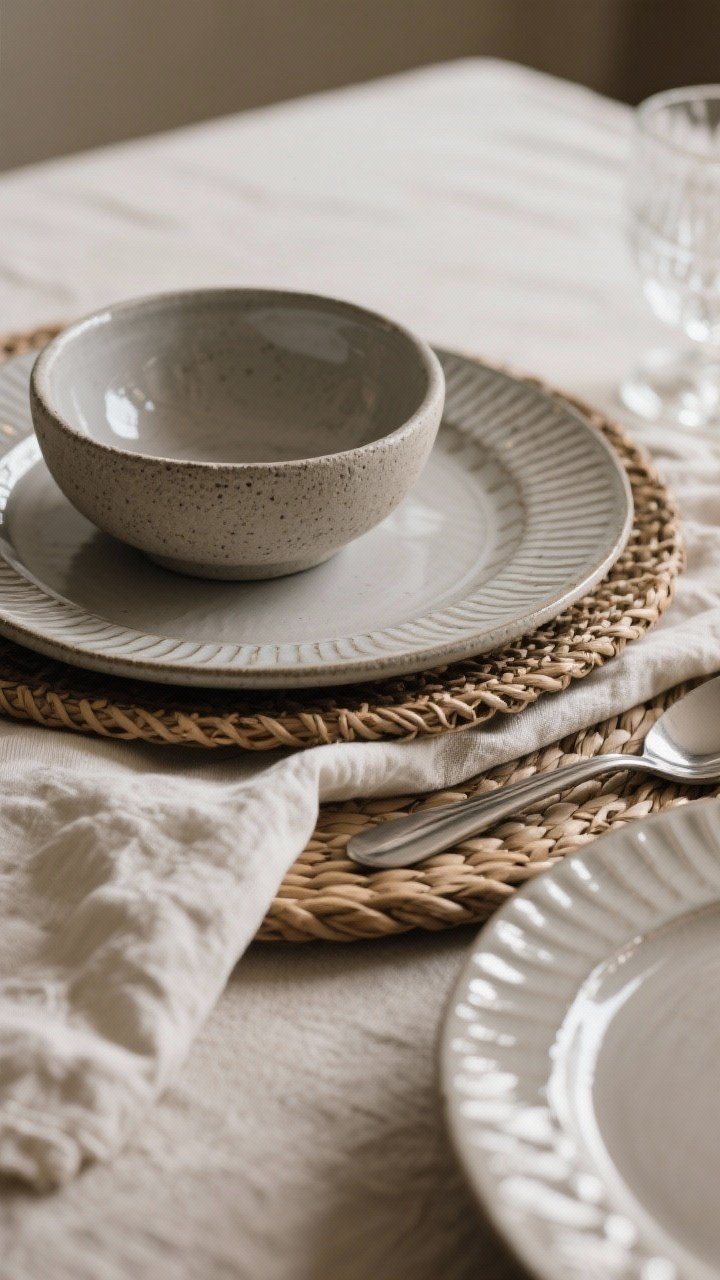
If you’ve got a lot of color or pattern, texture keeps it grown-up. If you’re going neutral, texture keeps it not-boring. Either way: texture wins.
Texture Layering Tips
- Matte + Gloss: stack a matte stoneware dinner plate under a glossy patterned salad plate.
- Rough + Smooth: hand-thrown bowls with sleek flatware or shiny glass.
- Woven Elements: rattan chargers, linen napkins—instant depth and warmth.
- Rim Drama: fluted, beaded, or scalloped rims add subtle dimension without shouting.
Bonus: textured ceramics hide tiny scuffs and chips better. That “perfectly imperfect” look? It’s not just cute—it’s practical.
5. Shape And Scale: Play With Proportions
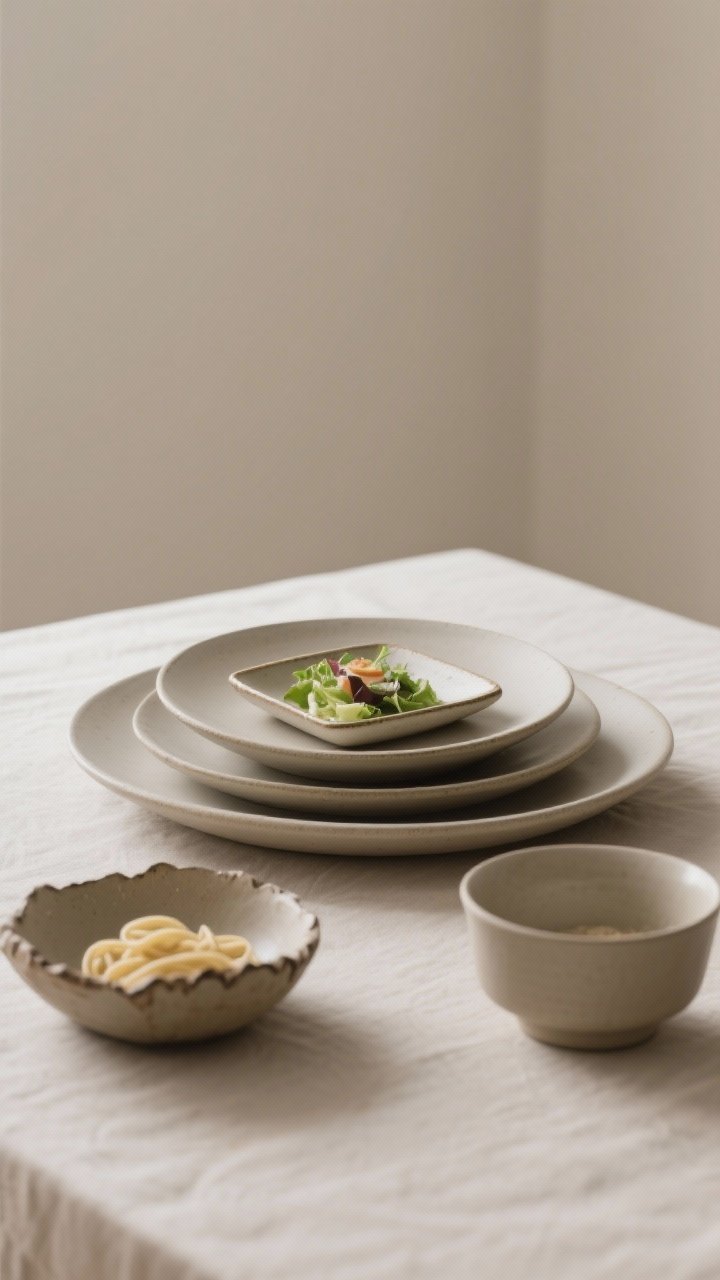
Round plates are classic, but mixing in other shapes gives you visual rhythm. Think of it like music—some bass, some treble, and a killer chorus.
Shape Shifts That Work
- Round + Coupe + Square: a round dinner plate with a coupe salad plate and a square appetizer dish.
- Organic Edges: slightly wonky, handmade-looking pieces add personality to clean-lined sets.
- Vary the Bowl Depth: shallow pasta bowls next to taller cereal bowls keep things interesting.
Scale matters, too. Stack from largest to smallest with visible edges. If your salad plate completely hides the dinner plate, it’s a no from me. Let each layer peek through.
6. Curate By Occasion: Everyday, Dinner Party, And Al Fresco
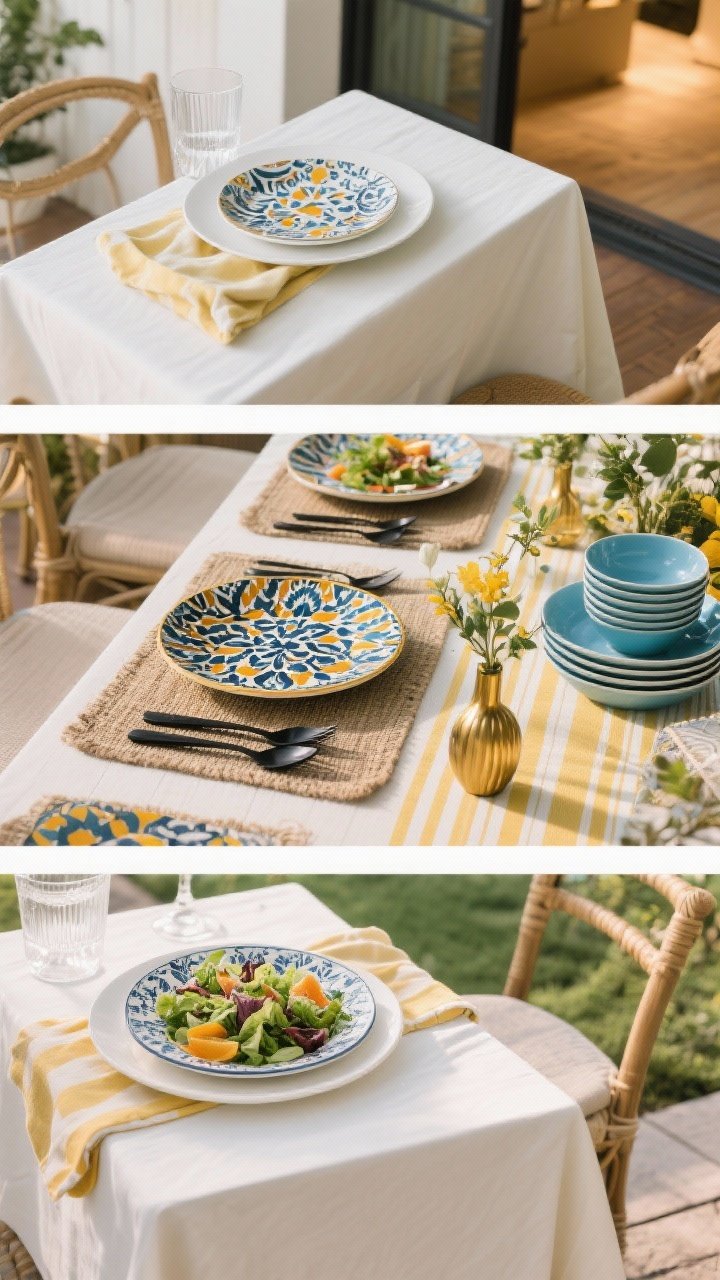
Not all mix-and-match moments are created equal. Tailor your combos to the vibe so you don’t over-style for Tuesday pasta or underwhelm for birthdays.
Everyday Easy
- Base: white dinner plate.
- Accent: one patterned salad plate per setting (rotate designs—fun, not fussy).
- Keep it light: one-color cloth napkin, simple glassware.
Dinner Party Drama
- Layer three deep: charger or placemat, dinner plate, boldly patterned salad plate.
- Anchor with metals: brass or matte black flatware ties disparate pieces together.
- Repeat a motif: if you’ve got a floral plate, echo with a small bud vase.
Al Fresco Feels
- Durable materials: melamine or enamelware mixed with real linen napkins for contrast.
- Color-forward: saturated blues, citrusy yellows, or coral—sunlight loves them.
- Pattern play: stripes + botanicals = summer in a glance.
FYI: you don’t need full sets for each scenario. Build a “capsule collection” and swap pieces in and out like a stylish wardrobe.
7. Finishing Touches That Make It Look Designer

This is where the table goes from “cute” to “did you hire a stylist?” The details matter—just a little.
Small Tweaks, Big Payoff
- Cloth napkins in a contrasting color. Fold loosely or knot for an effortless vibe.
- Mismatched glasses: a colored tumbler with a clear wine glass feels artful, not random.
- Place cards or a handwritten menu—casual but thoughtful (yes, even takeout nights).
- Centerpiece rule: low and simple—a cluster of bud vases, herbs in jars, or a fruit bowl.
- Edit once: remove one thing before you sit. Negative space is chic.
And if you’re wondering whether grandma’s floral plate can sit next to your modern speckled bowl? Absolutely. Pull a shared color (even a tiny one) and carry it through a napkin or glass. Done.
Quick Troubleshooting
- Looks busy? Swap one patterned piece for a solid.
- Too flat? Add texture: linen napkin, rattan charger, fluted glass.
- Color clash? Introduce a neutral buffer between bold layers.
- Uneven stacks? Use thinner plates under thicker bowls so the silhouette feels balanced.
At the end of the day, it’s your table. If it makes you smile, it works. The only “rule” is to repeat an element—color, material, or motif—at least twice so it reads as a choice, not a coincidence.
Final thought: Mix & match dinnerware is basically personality on a plate. Start with a calm base, add a pattern trio, play with color, texture, and shape, then sprinkle on those finishing touches. You’ll nail the look—and yes, your friends will ask for sources. Go ahead and pretend you just “threw it together.”