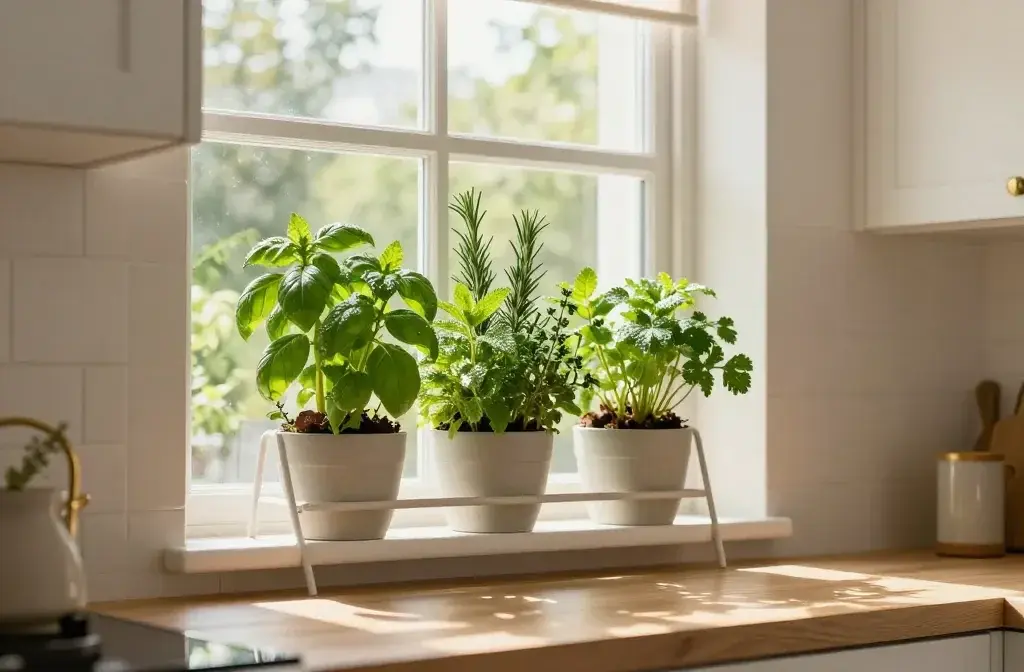
Sun streams through that kitchen window every morning, and your basil keeps giving you the side-eye from a sad pot on the counter. Let’s fix that. A vertical herb garden turns that bright window into a mini produce aisle, minus the coupons and weird background music. You’ll grow more in less space, add instant green vibes, and—bonus—snip fresh flavor while your pasta boils.
Why a Vertical Herb Garden Rocks Your Sunny Window
Small footprint, big harvest. You stack plants up instead of spreading them out. Hello, counter space.
Light where plants want it most. Herbs love sun. A south- or west-facing window gives them prime real estate.
Instant décor upgrade. It’s functional, pretty, and smells amazing. Your kitchen becomes a tiny greenhouse that actually pays rent.
Built-in convenience. You’ll actually use your herbs because they sit at eye level—no “out of sight, out of mind” guilt.
Pick the Right Spot (Sunlight = Everything)
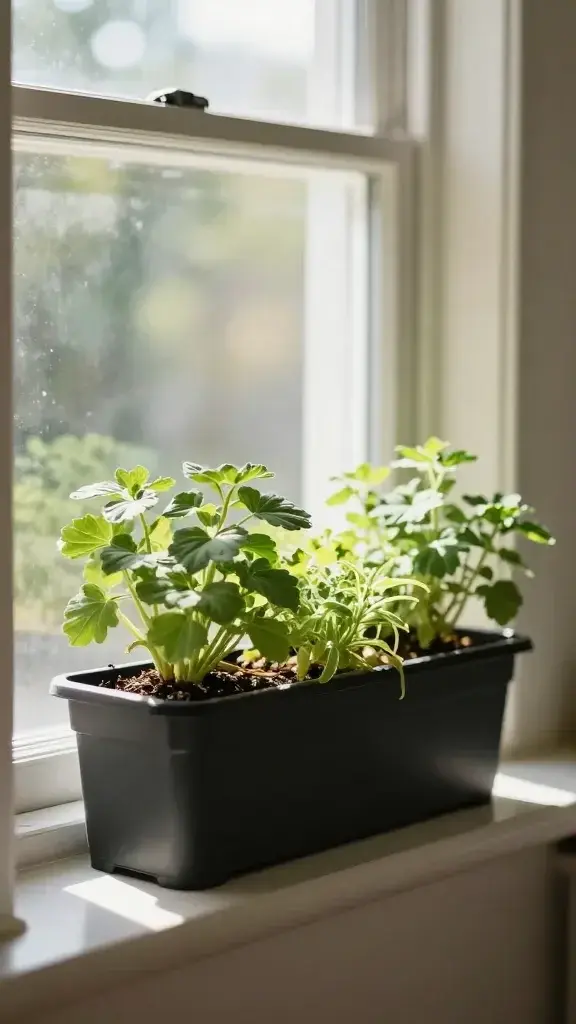
Herbs crave light. Most need 6–8 hours of direct sun to stay lush and not leggy. A south-facing window wins. West works too. East? Decent. North? Tough love—consider grow lights.
Check Your Window’s Microclimate
- Heat from glass: Afternoon sun can toast leaves against hot panes. Keep foliage a few inches off the glass.
- Drafts: Cold winter air near windows can stunt growth. Add a clear barrier or shift plants a bit indoors on frigid days.
- Grease and steam: Mount the garden away from the direct cooking zone. Herbs don’t enjoy oil facials.
Choose a Vertical Setup That Won’t Stress You Out
You’ve got options. Pick what fits your style, budget, and rental situation. IMO, start simple and scale up once your mint stops plotting a takeover.
Great Beginner-Friendly Systems
- Tension rod + hanging pots: Two curtain rods or a shower tension rod with hook-on planters. No drilling. Looks minimal.
- Tiered suction-cup shelves: Sticks to glass if your window’s strong and clean. Test with weight first—herbs shouldn’t BASE jump.
- Wall-mounted rails: Drill a rail above or beside the window and hang pots with S-hooks. Sturdy and modular.
- Pocket planters: Felt or canvas pockets on a frame. Choose versions with plastic liners so you don’t water your floor.
What to Look For
- Drainage: Pots need holes. Always. No exceptions.
- Water catch: Add saucers or a drip tray to save your sill and sanity.
- Adjustability: You’ll shuffle plants based on growth and sun. Make moving them painless.
The Best Herbs for a Sunny Window (No Divas Allowed)
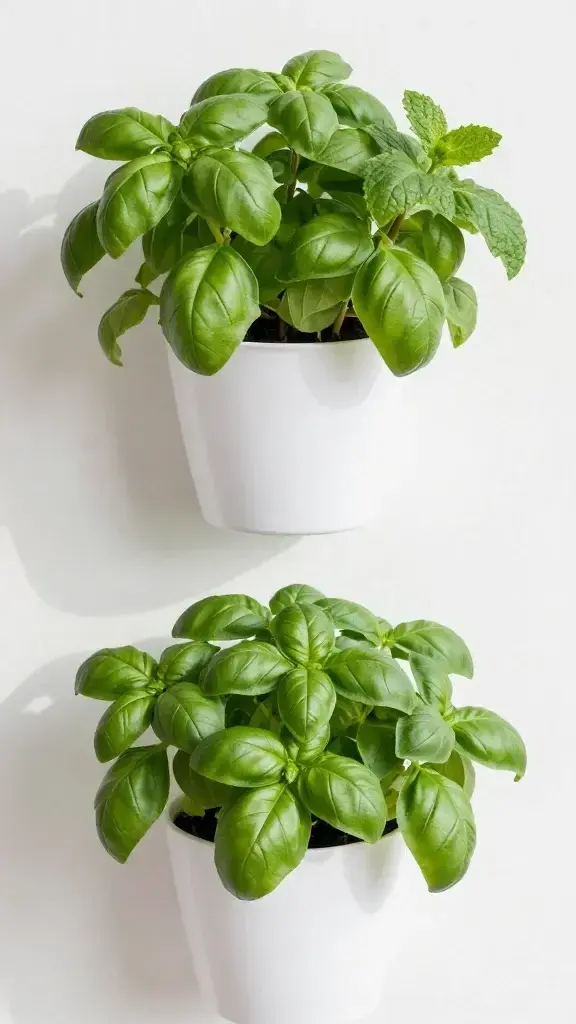
You can grow tons, but some herbs play extra nice indoors. Mix fast-growers with slow-and-steady types.
- Basil: Sun worshipper. Pinch often. Hates cold drafts. Reward: pesto-on-demand.
- Mint: Tough and thirsty. Keep it in its own pot so it doesn’t bully neighbors.
- Parsley: Curly or flat-leaf both work. Grows slower but tastes bright and clean.
- Thyme: Low-maintenance, loves heat, stays compact. Great for vertical setups.
- Oregano: Easygoing and fragrant. Trim often so it doesn’t sprawl.
- Chives: Cut-and-come-again champ. Mild onion note = breakfast eggs MVP.
- Cilantro: Finicky indoors. Grows fast, bolts fast. Plant new seeds every few weeks for a steady supply.
- Rosemary: Woody and Mediterranean. Give it top-shelf sun and don’t overwater.
Seed vs. Starter Plants
- Starters: Instant gratification. Great for basil, mint, thyme, and rosemary.
- Seeds: Cheaper long-term. Best for cilantro and parsley. Start 2–3 pots at staggered times for continuous harvests.
Soil, Pots, and Water: Don’t Overthink It, But Don’t Wing It
Set yourself up right and your herbs will practically do the work for you. FYI, most plant drama starts with bad soil and soggy roots.
Potting Mix
- Use a light, well-draining mix: Choose potting mix labeled for indoor plants or herbs, not garden soil.
- Boost drainage: Add a handful of perlite for airiness.
- Fertilizer: Go gentle. Mix a slow-release organic pellet into the top inch or feed with a diluted liquid fertilizer every 3–4 weeks.
Pots and Drainage
- Size sweet spot: 4–6 inch pots for most herbs. Small enough for shelves, big enough for roots.
- Material: Terra cotta breathes (less root rot), but it dries fast. Glazed ceramic holds moisture longer—good for forgetful waterers.
- Drainage layer myth-busting: Skip rocks at the bottom. They don’t help drainage, they raise the water table. Just use good soil and a hole.
Watering Without Guesswork
- Finger test: Stick your finger 1–2 inches down. If dry, water. If damp, wait.
- Technique: Water thoroughly until it drains out. Empty saucers. Herbs hate wet feet.
- Climate check: Sunny windows dry pots fast. You may water 2–3 times a week in summer and once a week in winter.
Layout and Light: Stack Smart
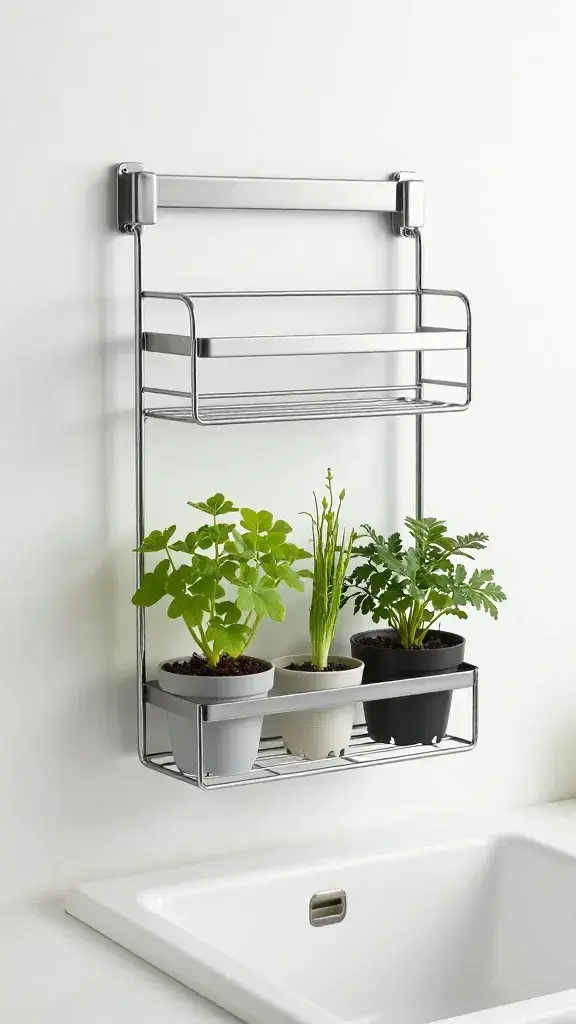
Place sun-thirsty herbs up top where light is strongest. Tuck shade-tolerant or young plants a shelf lower. Easy.
Sample Layout
- Top row: Basil, rosemary, thyme.
- Middle row: Oregano, chives, parsley.
- Bottom row: Mint (in its own pot), cilantro (succession planted).
Grow Lights, If Needed
- Type: Full-spectrum LED bar or strip.
- Distance: 6–12 inches above foliage.
- Schedule: 12–14 hours on gloomy days. Use a timer so you don’t babysit.
Plant Care Rhythm: Snip, Feed, Repeat
Routine beats perfection. Keep it simple and consistent.
- Prune weekly: Pinch basil at leaf pairs, trim thyme and oregano lightly, and harvest chives by cutting from the base.
- Rotate pots: Turn them a quarter turn every few days to prevent lopsided growth.
- Clean leaves: Dust and kitchen grease block light. Wipe with a damp cloth every couple weeks.
- Fertilize lightly: Every 3–4 weeks, half-strength liquid feed. More isn’t better—herbs taste best when slightly underfed, IMO.
Common Problems (And Fast Fixes)
- Leggy, floppy stems: Not enough light. Move higher or add a grow light.
- Yellow leaves: Overwatering or poor drainage. Let soil dry, check pot holes.
- Brown, crispy tips: Underwatering or heat stress against glass. Water more consistently and pull back from the window.
- Tiny bugs (ugh): Rinse leaves, then mist with diluted neem or insecticidal soap. Quarantine the plant if needed.
Harvesting Like a Pro
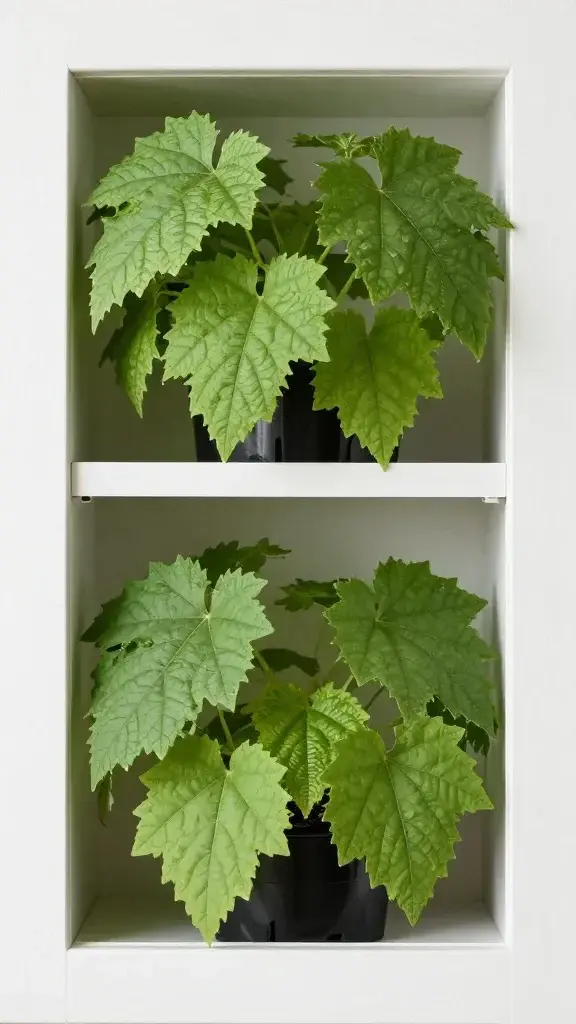
Here’s the fun part. Harvest often to keep plants compact and productive. Think “haircut,” not “scalp.”
- Basil: Pinch just above a leaf pair. Never strip a whole stem bald.
- Chives: Cut outer leaves to 1 inch above soil. They regrow fast.
- Thyme/oregano: Snip sprigs from the tips. Avoid woody bases.
- Parsley: Take outer stems at the base; let the inner crown keep pushing new growth.
- Mint: Harvest generously but leave some growth so it rebounds.
Storage Tips
- Short-term: Stand stems in a glass of water like a bouquet (basil at room temp, others in the fridge).
- Long-term: Freeze chopped herbs in olive oil in an ice cube tray. Instant flavor bombs.
FAQ
Can I grow herbs from grocery store cut herbs?
Sometimes. Mint, basil, rosemary, and oregano cuttings can root in water, then move to soil. Change water every couple days, and pot them once roots hit 1–2 inches. Success rates vary, but hey, it’s basically free.
How do I stop basil from turning bitter?
Give it strong light, steady water, and regular pruning before it flowers. If it does flower, pinch blooms ASAP. Mild feeding helps, but don’t overdo nitrogen or you’ll get watery flavor.
What if my window doesn’t get enough sun?
Add a slim LED grow bar and set it on a timer. Even a basic light can turn a mediocre window into a herb powerhouse. Position it close and run it 12–14 hours on dark days.
Do I need to repot my herbs?
Yes, eventually. If roots circle the pot or water runs straight through, bump up one pot size. Refresh the soil at least twice a year for nutrients and structure.
How much should I water in winter?
Less than summer. Indoor heat dries air, but shorter days slow growth. Use the finger test and water when the top 1–2 inches feel dry. Overwatering in winter causes most herb drama, FYI.
Is hydroponics better than soil for windows?
Hydro can grow fast and clean, but it adds equipment and monitoring. Soil wins for simplicity and that earthy, garden-y vibe. If you love tinkering, hydro’s fun; if you love pesto with minimal fuss, stick to pots.
Conclusion
A sunny kitchen window plus a smart vertical setup equals fresh herbs on repeat—and a kitchen that looks like it knows things. Start with a couple easy plants, dial in your watering, and prune with confidence. Before long you’ll snip basil with one hand while stirring sauce with the other. That’s not just gardening; that’s main-character energy, IMO.