Your living room deserves better than plastic chaos disguised as “fun.” Good news: you don’t have to pick between grown-up style and kid wonderland. You can blend both with smart design, a little strategy, and a few sneaky storage tricks. Ready to create a play area that looks intentional and actually works? Let’s build it.
Start With Zones, Not Walls
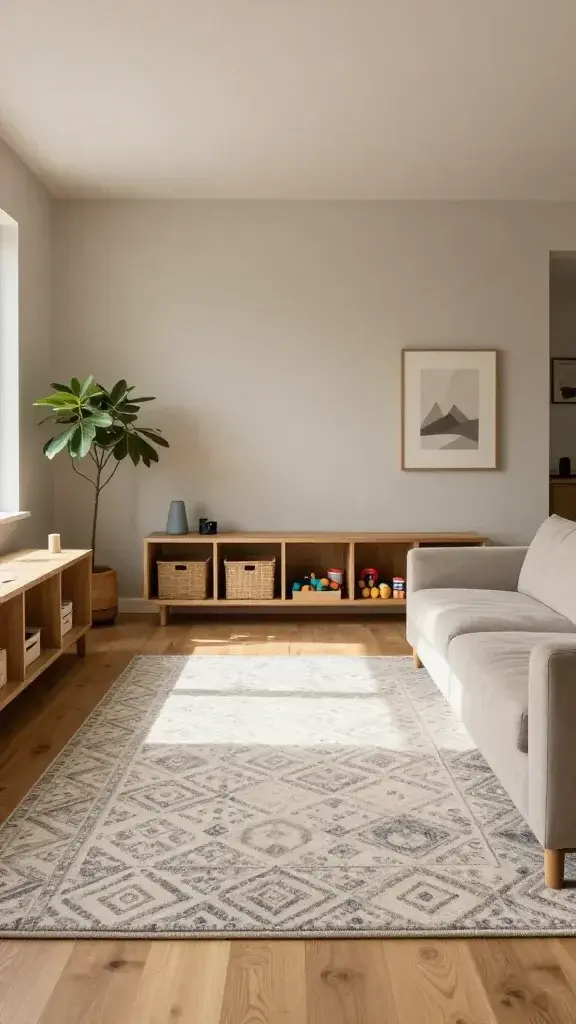
Open concept spaces make everything… visible. Instead of erecting a toddler fortress, define a compact play zone that flows with the room.
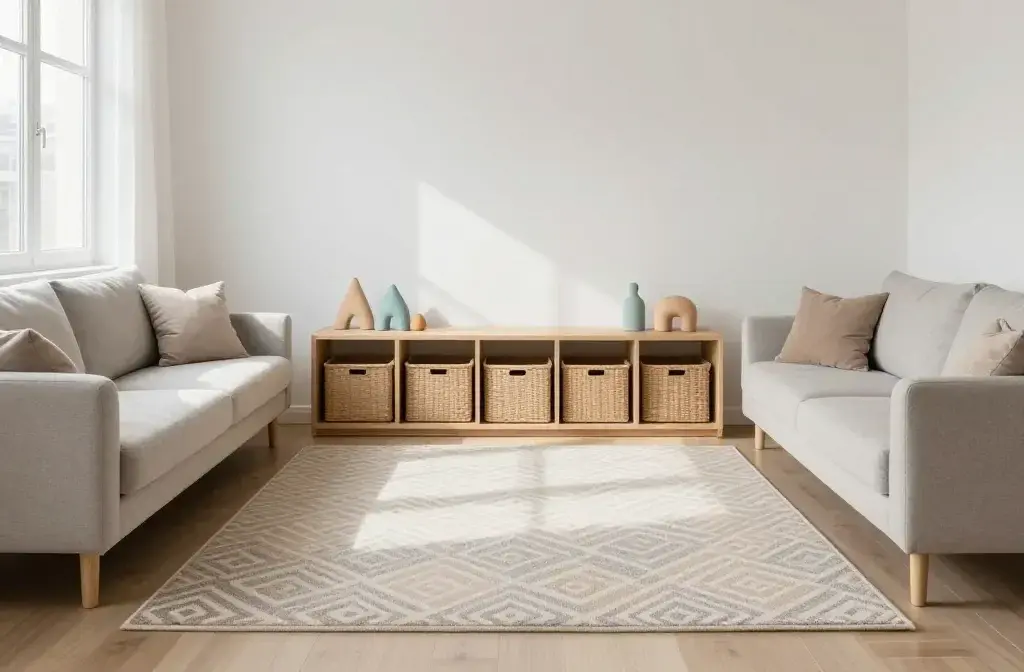
- Use rugs as boundaries. A soft, durable 5×7 rug signals “kid territory” without shouting. Choose a pattern that hides crumbs and crayon marks. Because, reality.
- Float furniture to frame the area. Angle a chair or place a narrow console behind the sofa to create a subtle “edge” around the play zone.
- Keep line of sight. You want to supervise from the couch without moving your neck like an owl. Low shelves and open bins help.
Pro tip: The “landing pad” rule
Keep the play zone small enough that toys can’t migrate into every corner. If a piece doesn’t fit within the rug boundaries at clean-up time, it doesn’t live in the living room. Period.
Choose Toys That Double as Decor
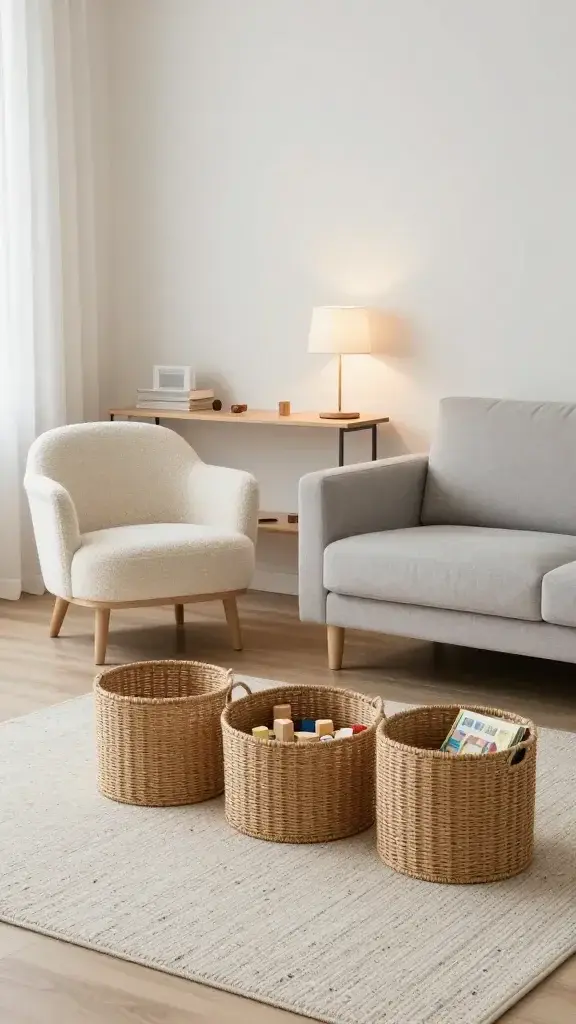
You don’t need everything to match perfectly, but a considered palette helps. Think of toys as tiny sculptures that rotate weekly.
- Stick to 3-4 colors that echo your room. Wood tones, soft blues, charcoal, or whatever’s already in your space. Bright primary toys still work—just corral them in neutral bins.
- Pick “display-worthy” pieces. A wooden train, stackable arches, or a fabric play tunnel that folds flat. FYI: you can buy toy pianos that don’t look like clown cars.
- Swap in and out like a gallery. Rotate toys every 1-2 weeks to reduce clutter and spark fresh interest.
Curate by activity, not by brand
Group toys into categories: building, pretend play, art, and cozy reading. Keep one bin for each. You’ll streamline cleanup and cut down the “where’s the green dinosaur” drama.
Make Storage Do the Heavy Lifting
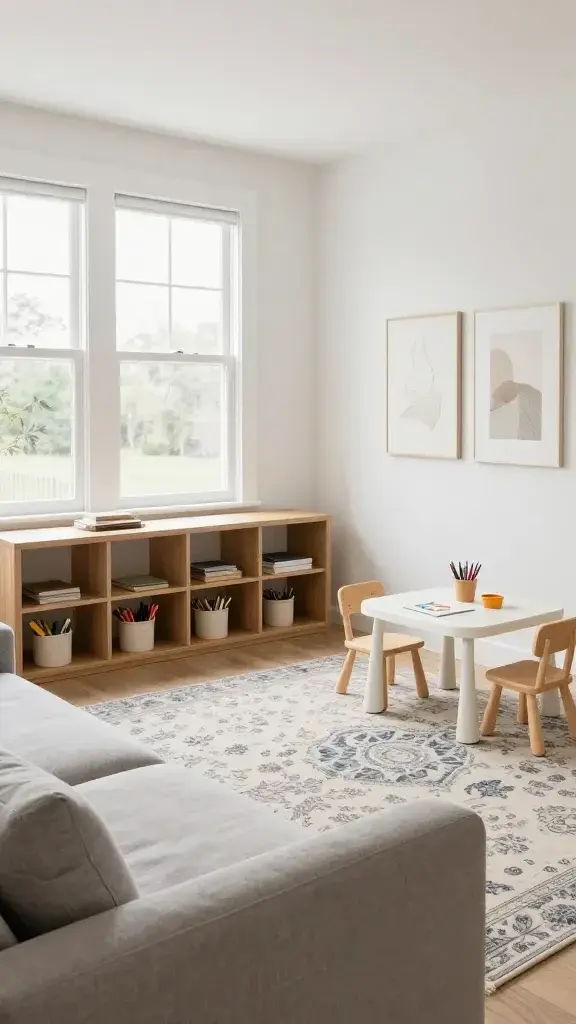
If you design the storage right, the room can go from “playtime explosion” to “adulting chic” in under five minutes. Yes, really.
- Closed storage is your MVP. Credenzas with doors, storage ottomans, and lidded baskets hide the chaos. Choose sturdy materials and rounded corners.
- Use a mix of heights. Low shelves for kid access. Higher cabinets for messy art supplies or toys with a million microscopic pieces (I’m looking at you, beads).
- Label everything—visually. Picture labels (blocks, dolls, cars) help kids help themselves. Words for early readers, icons for toddlers.
- Lean into furniture with secret superpowers. A coffee table with drawers, a bench with compartments, or a side table with a hidden shelf.
Bins: Size and Material Matter
– Small bins (shoebox size) for sets—blocks, animals, puzzles.
– Medium bins for soft toys and dress-up.
– Woven or felt bins blend with adult decor and won’t scream “daycare.”
Design for Real Life (AKA: Spills, Crumbs, and Flying Markers)
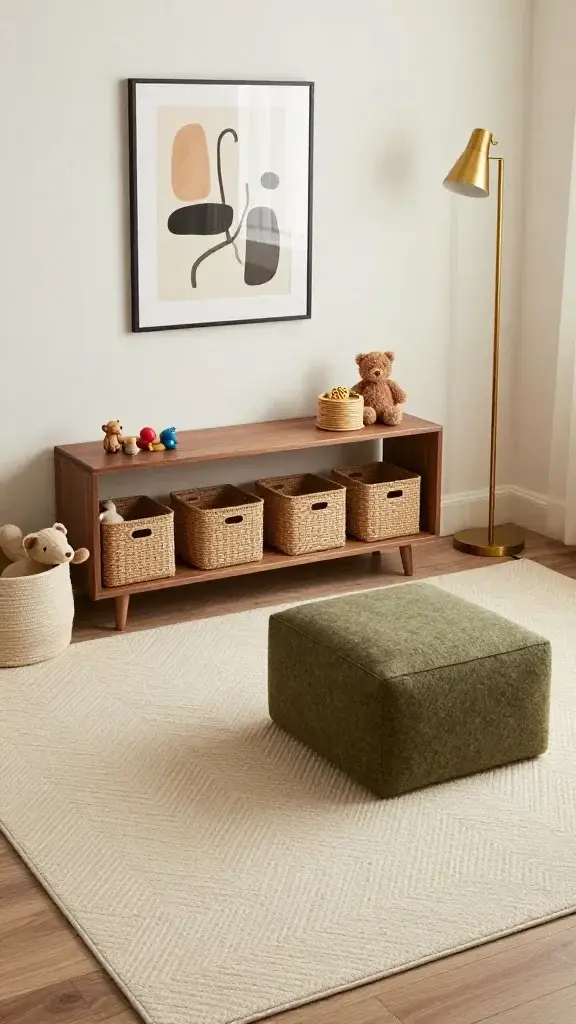
Let’s be honest: sticky fingers will happen. Build your space with wipe-friendly surfaces and fabrics that forgive.
- Rug choice matters. Low-pile, patterned, indoor-outdoor, or washable rugs handle the chaos. Avoid shag unless you love vacuuming glitter.
- Choose performance fabrics. Stain-resistant slipcovers on sofas and chairs keep the peace. Darker neutrals hide more sins, IMO.
- Rounded edges save knees. Look for curved coffee tables and soft poufs. Your shins will thank you.
- Wall finishes that work. Semi-gloss or satin paint wipes clean. If you love white walls, add a wainscot panel or washable wallpaper in the play zone.
Contain the Art Attack
Set up a mini art cart with locking wheels. Stock it with washable markers, water-based paints, and a roll of kraft paper. Slide it behind the sofa when you’re done. Magic.
Style It Like a Grown-Up Space (Because It Still Is)
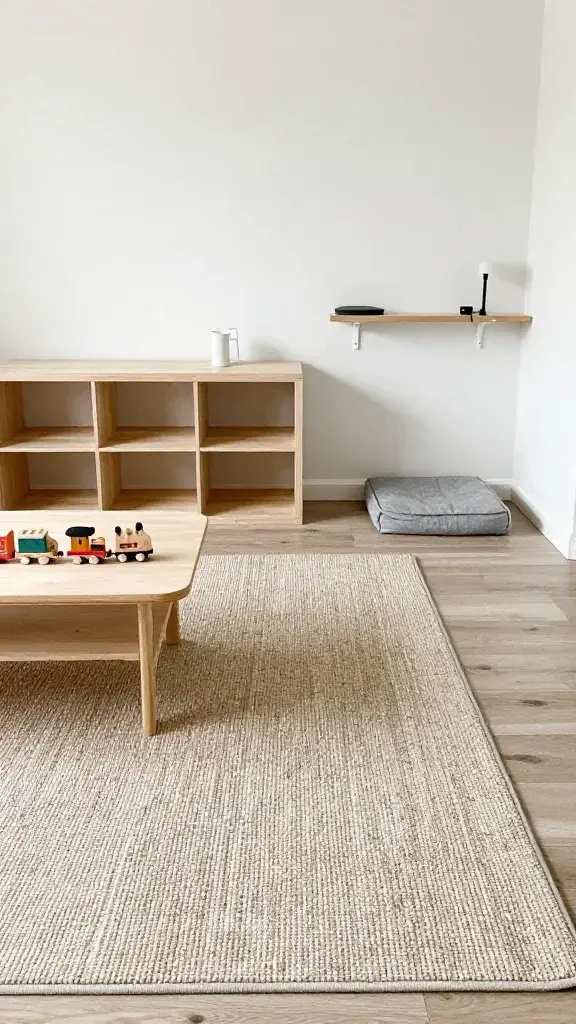
You want harmony, not theme park. Treat the play area as part of your living room’s design.
- Repeat materials. If your room uses light oak, grab a toy shelf in a similar wood tone. Match metals (black, brass) on bins or hooks.
- Layer lighting. Floor lamps and a plug-in sconce over the reading nook feel cozy and intentional. Soft bulbs set the vibe for wind-down.
- Add textiles for warmth. A floor cushion, a chunky throw, and a kid-sized beanbag in your palette tie it all together.
- Art that grows up well. Mix framed kid art with simple prints. Swap out masterpieces seasonally—instant gallery wall upgrade.
Hide the Bright Stuff (Strategically)
Keep the neon and noisy toys in baskets with lids or in the credenza. When they’re out, they shine. When they’re away, your room breathes.
Create Micro-Zones Kids Actually Use
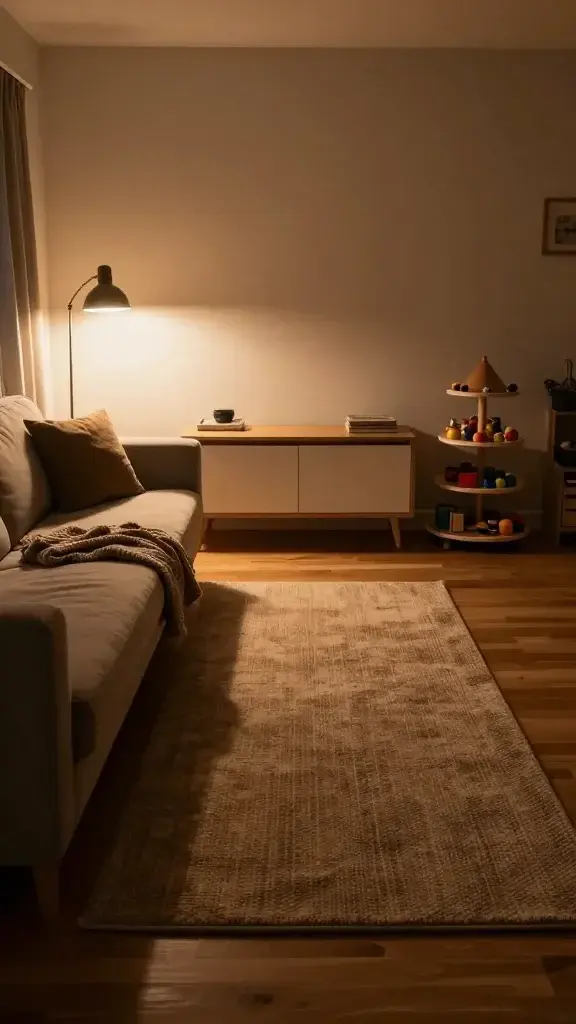
Structure helps kids play longer and clean faster. Think cozy nooks and clear invitations.
- Reading nook. A small bookshelf, a floor cushion, and a lamp. Toss in a blanket. Instant calm corner.
- Building zone. A low table or washable mat for blocks and tracks. Add a shallow tray so tiny pieces don’t escape.
- Pretend corner. A fabric play canopy or a simple clothing rack for dress-up. Hooks beat drawers for quick cleanup.
- Movement spot. A foldable foam play couch or a yoga mat keeps wiggles contained when the weather traps you inside.
Rotate, Refresh, Repeat
Keep two-thirds of the toys stored elsewhere. Bring out a “new” bin every week. It feels exciting, and your floors feel less like a minefield. Win-win.
Teach the Five-Minute Reset
You don’t need perfection—just a routine. Make cleanup a game and end every day with a quick room reset.
- Set a timer for 5 minutes.
- Everyone returns toys to the rug first.
- Sort toys into labeled bins (fast, not fussy).
- Slide bins into shelves, toss blankets into baskets, high-five.
Make it frictionless
– Bins should live inches from where kids play.
– Shelves should be open and reachable.
– Nothing should require precision to put away. Lids optional, not mandatory.
FAQ
How do I keep the play area from taking over the whole room?
Define a clear boundary with a rug and furniture placement, then set a capacity rule. If it doesn’t fit on the rug or in the assigned bins, it rotates out. Consistency beats nagging—kids adapt fast when the system stays the same.
What storage works best in a small living room?
Go vertical and multifunctional. A narrow, tall cabinet hides a ton. Pair it with a storage ottoman and under-sofa bins. Choose pieces with doors to keep visual noise low and stick to materials that match your existing furniture for a seamless look.
How can I keep it stylish without spending a fortune?
Invest in a few key items—one good closed cabinet, a washable rug, and decent bins. Then DIY the rest: frame your kid’s art, thrift a wooden toy shelf, and use a rolling cart for art supplies. FYI: paint and great lighting can make even budget pieces look intentional.
What’s the best way to handle noisy or bright toys?
Designate a “high-energy” basket with a lid and store it inside a credenza. Pull it out for play sessions, then tuck it away. Out of sight means your living room keeps its vibe, and you still keep the fun stuff in rotation.
How do I pick a color palette that works for both adults and kids?
Start with your living room’s existing palette—maybe warm neutrals with navy and brass. Add one playful accent that repeats in small doses (a mustard pillow, a teal bin). Keep the big pieces neutral and let toys supply pops of color without overwhelming the room.
What about safety without making it look like a daycare?
Choose furniture with rounded edges, anchor tall units to the wall, and use soft-close hinges. Skip outlet covers that scream “industrial” and use low-profile ones. Keep breakables above kid height. Subtle tweaks keep the room calm and safe without visual clutter.
Conclusion
You don’t need a separate playroom to keep your sanity. With smart zones, beautiful-yet-practical storage, and a few style moves, your living room can serve everyone without feeling like a toy catalog exploded. Keep it simple, rotate often, and design for real life. The goal isn’t perfection—it’s a space where adults relax, kids thrive, and cleanup takes five minutes. IMO, that’s the dream.