Shoes multiply overnight. Hats breed in the dark. And somehow your winter duvet refuses to live anywhere but the chair. If your bedroom looks like a yard sale, your under-the-bed area just became prime real estate. Let’s turn that dusty no-man’s-land into a sleek storage powerhouse—without ruining your vibe.
Measure First, Dream Later
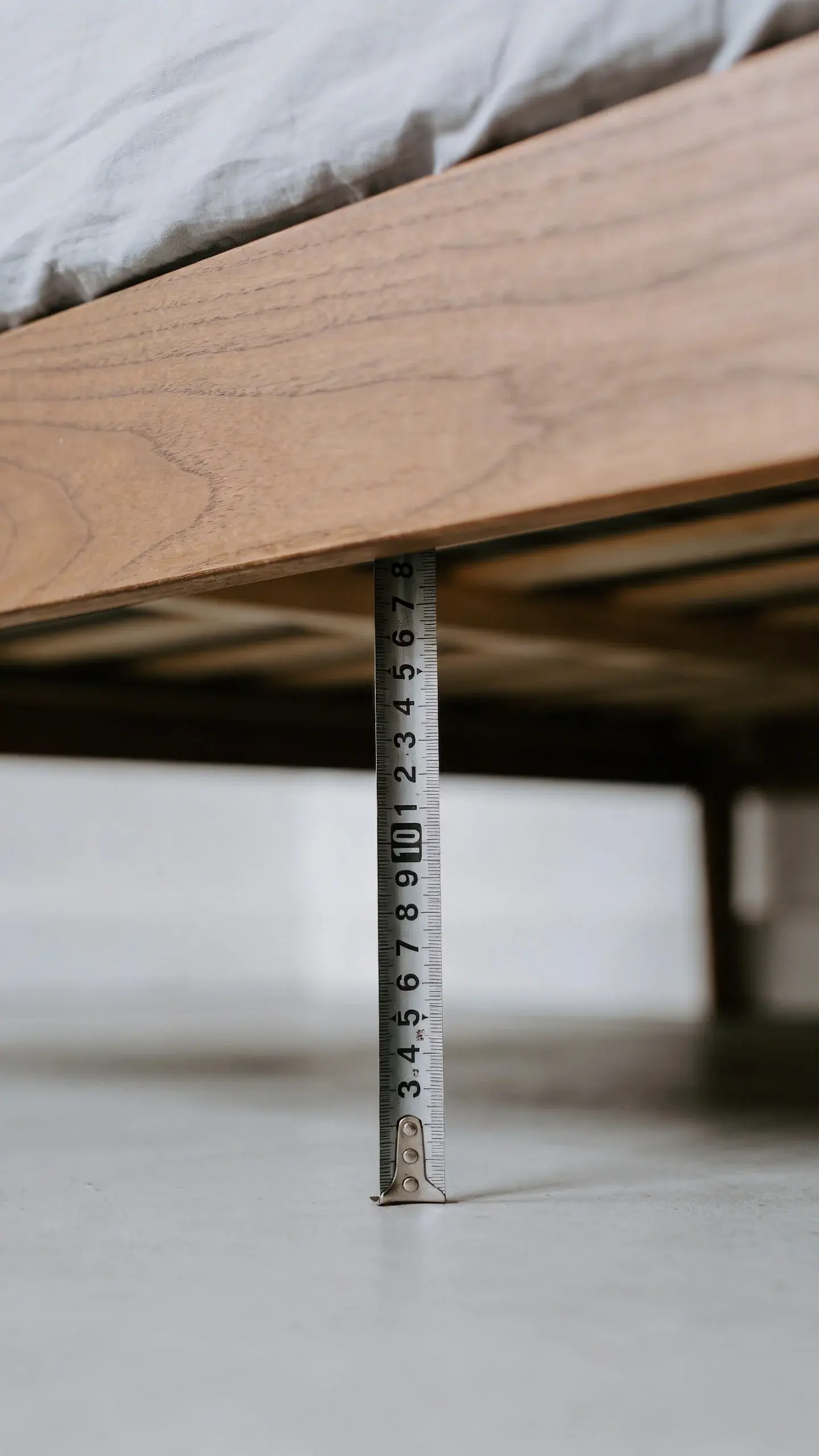
Before you buy anything cute, grab a tape measure. You need the height from the floor to the bottom of the bed frame, the width, and the length. Why? Because that “perfect” rolling bin won’t fit when the lip of your bed frame steals half an inch. Ask me how I know.
- Height sweet spot: 6–8 inches works for most low-profile frames; 10–14 inches gives you way more options.
- Mind the slats: If your bed has crossbars or center support, measure the clear zones so you don’t buy a bin that jams.
- Plan access: Drawers need open space to pull out; lift-up frames need ceiling clearance; side tables might block one side.
Roll-Out Bins That Don’t Suck
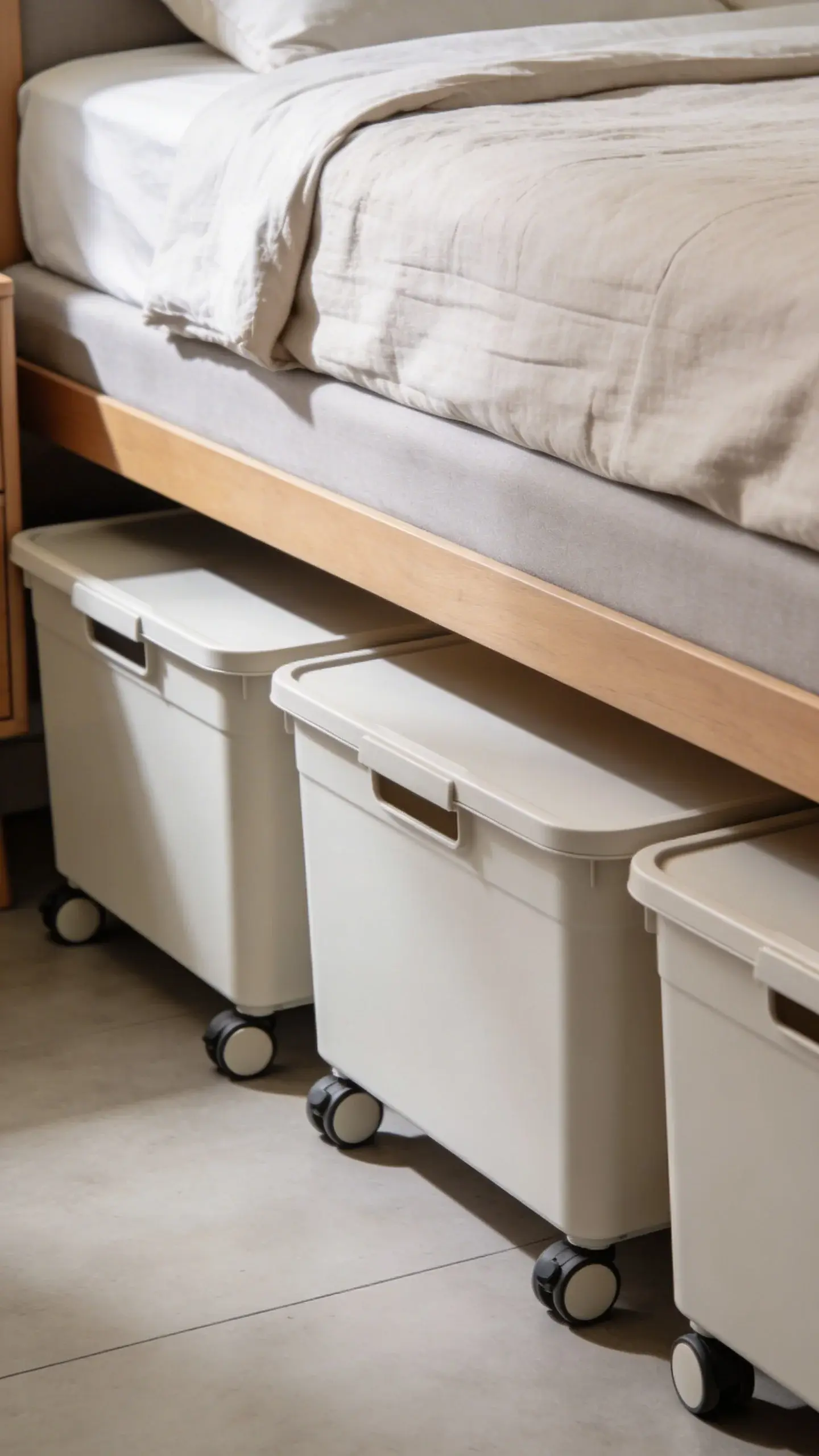
Wheels make everything easier. Roll-out bins keep dust bunnies away and save your back. Go for rigid sides so they don’t collapse when full, and pick lids with snapping edges so nothing escapes.
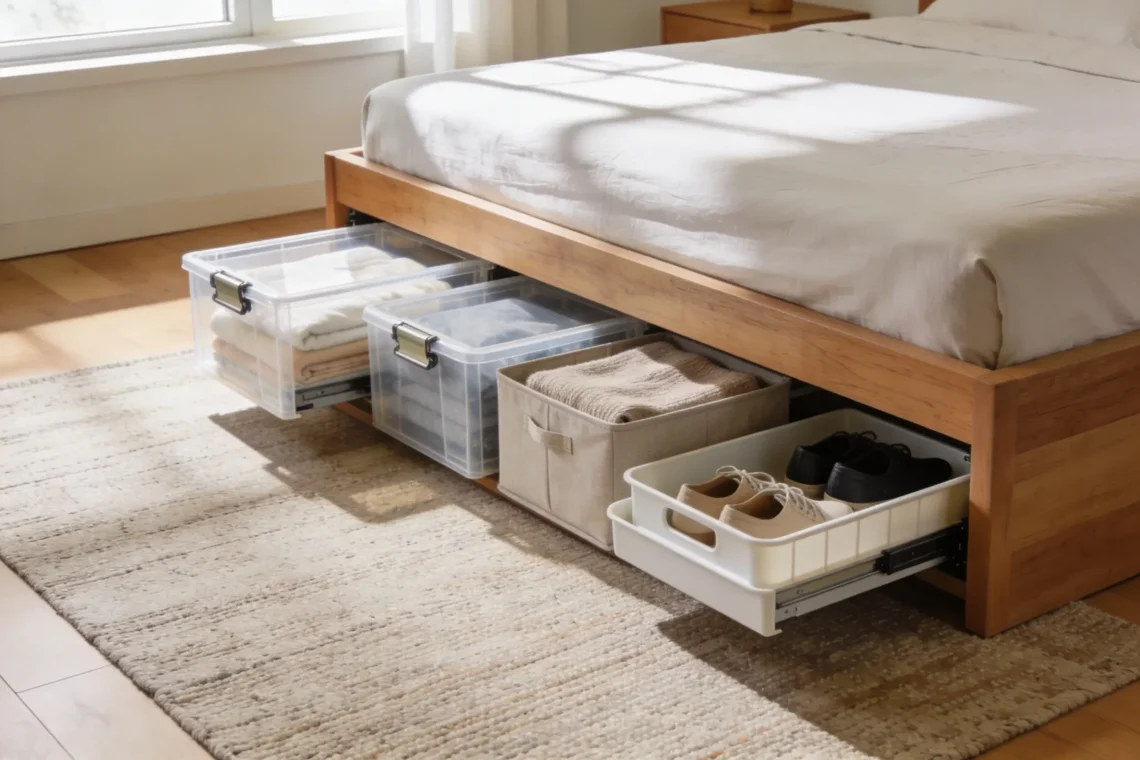
- Clear plastic with latching lids: See what’s inside without playing archaeologist. Great for off-season clothes and spare bedding.
- Fabric bins with reinforced frames: Softer edges, nicer look, still sturdy. Choose ones with front handles so you can grab-and-go.
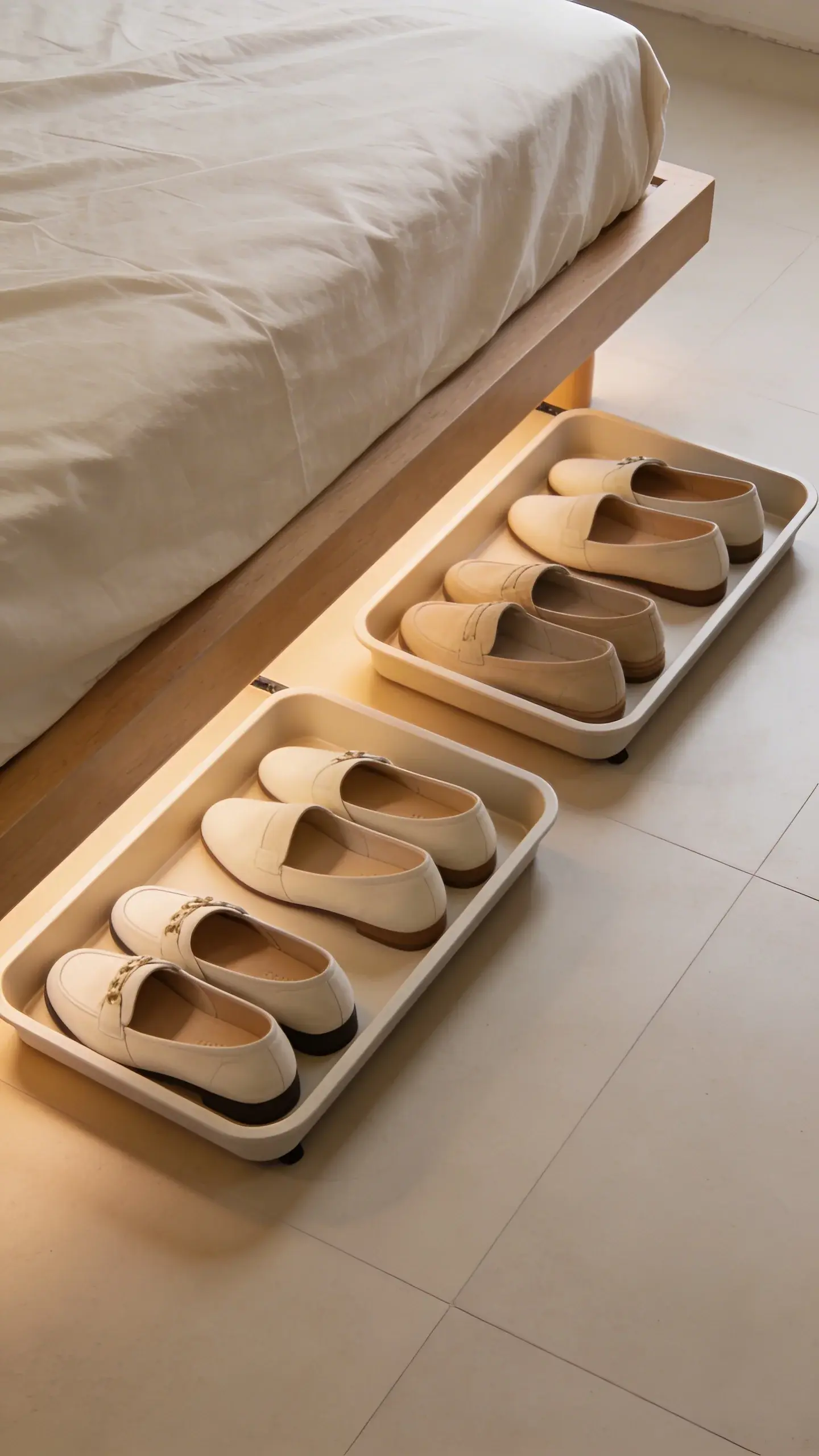
- Under-bed shoe carts: Dividers stop shoes from becoming a tangle of laces and regret. Bonus points if the lid zips.
What to Store Here
– Bulky-but-light items: duvets, throw pillows, sweaters
– “I use this monthly” stuff: gift wrap, craft kits, travel gear
– Shoes you rotate by season
Drawer Beds and DIY Drawer Hacks
If you love the clean look of furniture with built-in storage, drawer beds deliver. They cost more, but they work like magic. Not buying a new bed? You can still fake it with old dressers.
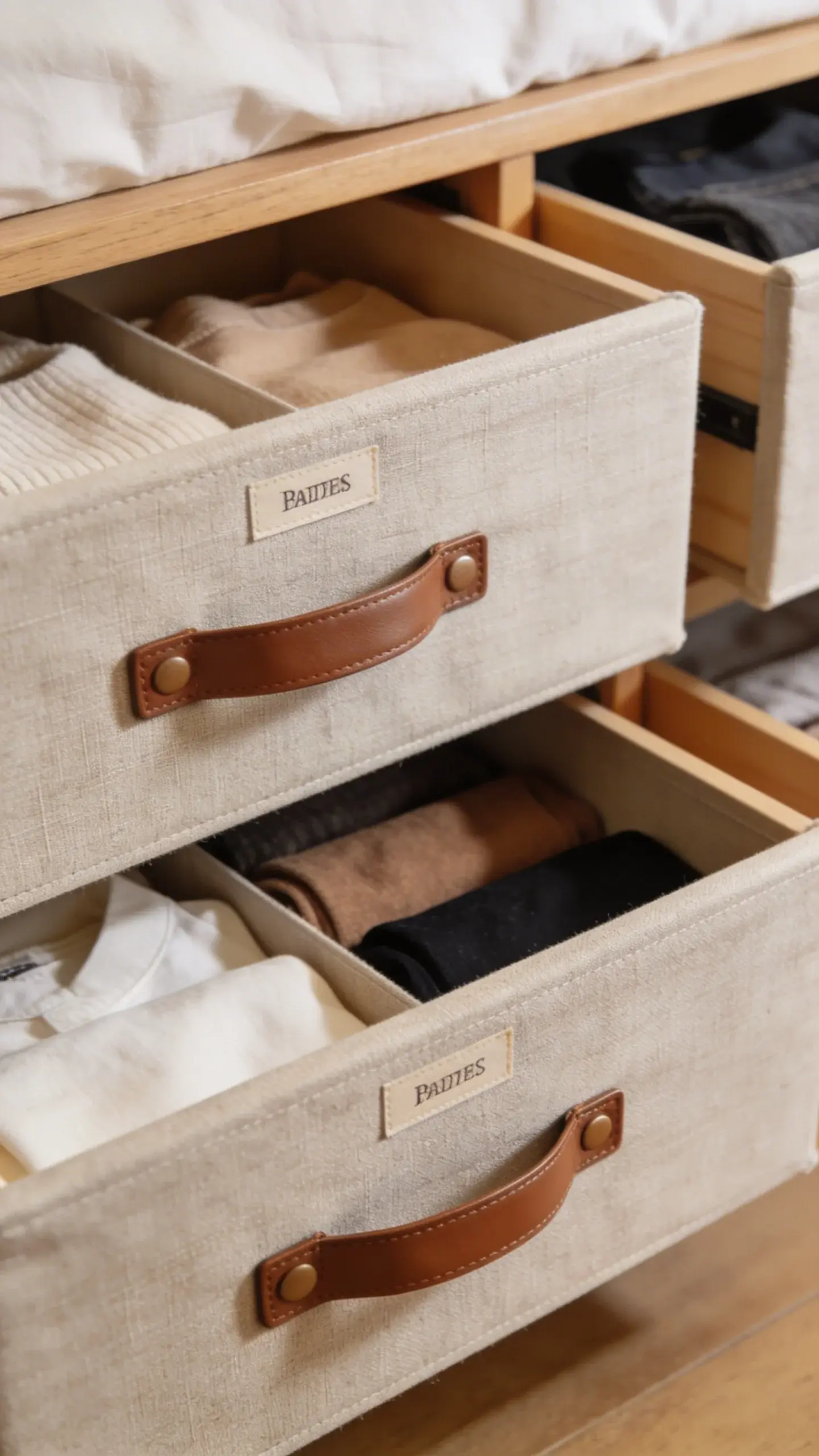
- Built-in drawers: Perfect for folded clothes, linens, or kids’ toys. They stay dust-free and always look tidy.
- DIY dresser drawer hack: Salvage old dresser drawers, add caster wheels, attach a front pull, and boom—instant chic drawers.
- Label the fronts: Keep life simple and future-you happy.
Pro Tips for Smooth Pull-Outs
– Stick felt pads or low-profile sliders on the bottom if your floor hates wheels
– Leave 1–2 inches of breathing room so drawers don’t scrape the frame
– Use shallow bins for the side with the nightstand
Vacuum Bags for the Space-Hungry Stuff
I love vacuum bags for comforters, puffer jackets, and spare pillows. Suck out the air, flatten the fluff, and instantly win back half the height. Just don’t use them for delicate knits unless you like permanent creases. IMO, they’re clutch for seasonal wardrobe flips.
- Get dual-zip bags with valve locks: Cheap ones leak—don’t bother.
- Slide them in sleeves: Put flattened bags into fabric totes to protect the plastic and keep things uniform.
- Label by size and season: “Queen duvet—winter” beats “mystery marshmallow.”
Containers That Breathe (Because Mold Isn’t a Hobby)
Some items need airflow. Leather shoes, natural fibers, and sentimental textiles prefer breathable containers. You can keep them under the bed and still avoid funky smells.
- Cotton or linen zip bags: Ideal for sweaters and heirloom quilts. Add a cedar block for freshness.
- Mesh bins with lids: Great for everyday shoes. Air circulates; dust stays out.
- Silica packets: Toss in a few if your space runs humid. FYI: they make a bigger difference than you think.
Fighting Dust (Without Constant Cleaning)
– Use a bed skirt with a tailored edge to hide bins and block dust
– Or try an elastic dust barrier cover that wraps the frame
– Quick vacuum pass once a month = bins stay clean, you stay smug
Divide and Conquer: Organize Inside the Bins
You can’t just toss 47 scarves into a bin and call it a system. Create order inside your storage so you find things fast.
- Insert small organizers: Use drawer dividers, shoe boxes, or zip pouches inside larger bins.
- Sort by frequency: Keep “grab often” items closest to the edge; stash “rarely used” in the deepest zone.
- Color-code labels: Blue = bedding, green = workout gear, red = holiday stuff. Easy on the brain.
Smart Labeling That Looks Good
– Minimal text, big font, high contrast
– Labels on the short end so they face you when pulled out
– Consider QR labels that link to an inventory list if you’re type-A (respect)
No-Storage Bed? Raise It (Just a Bit)
If your frame sits tragically low, bed risers can fix it. A 3–5 inch lift can unlock tall bins and drawers. Choose risers that match your frame type and weight rating so your bedtime doesn’t involve jump scares.
- Solid wood risers: Stable, looks decent, won’t crack.
- Stackable plastic risers: Adjustable height, budget-friendly. Check anti-slip pads.
- Lift-up platform storage: Gas-lift frames open like a trunk—huge capacity, cleaner look.
Safety Check
– Verify weight limits (bed + mattress + humans + storage)
– Keep the floor level and secure; wobble = no-go
– Test with a partial load first, then go full Tetris
What to Store vs. What to Skip
Not everything belongs under the bed. Some items thrive there; others… not so much.
- Great fits: Off-season clothes, spare linens, shoes, board games, photo albums (in acid-free boxes), gift wrap, travel bags.
- Maybe, with care: Electronics and cables (in sealed bins with desiccant), craft supplies (clear bins + labels), kids’ toys (soft bins they can pull themselves).
- Avoid: Food (crumb city), important documents (fire-safe box instead), super-heavy items (back strain and scuffed floors), anything you need daily at 7 a.m.
Under-the-Bed Setup: A Quick Game Plan
Sometimes you just want the TL;DR. Here’s a fast five-step setup that works in most rooms.
- Measure everything: Height, depth, weird frame bits.
- Pick containers: One style per zone to keep it clean visually.
- Create categories: Bedding, shoes, seasonal clothes, hobbies.
- Add labels and dividers: Future-you will high-five you.
- Schedule a 10-minute refresh monthly: Quick tidy, quick vacuum, done.
FAQs
How do I keep dust from getting into under-bed storage?
Choose bins with tight lids, or fabric zip cases with rigid tops. Add a tailored bed skirt or dust barrier cover to block airflow under the sides. Do a quick vacuum swipe monthly and you’ll stay ahead of the fuzz.
What’s the best way to store shoes under the bed?
Use low-profile carts with dividers and a clear lid so you can spot pairs instantly. Keep everyday shoes in breathable mesh bins to avoid odors. Rotate seasonally and toss in cedar or charcoal deodorizing sachets for freshness.
Can I store books or photos under the bed safely?
Yes, if you protect them. Use acid-free boxes with snug lids and add silica gel packs to fight humidity. Keep them off exterior walls if possible to avoid temperature swings, and don’t stack heavy stuff on top.
Are vacuum bags bad for clothes?
They work great for bulky items like coats and duvets. For delicate knits, wool suits, or structured pieces, skip them—compression can crease or warp fibers. Use breathable fabric bags with cedar if you care about long-term shape.
What if my floor scratches easily?
Pick bins with soft wheels and add a low-pile rug runner beneath the pull-out path. Felt sliders on wood bins or DIY drawers also help. And don’t overload—lighter bins glide; heavy bins gouge.
How do I keep things organized long term?
Limit categories, label clearly, and store by frequency of use. Set a recurring reminder to reassess every season—quick in, quick out. IMO, consistency beats complexity every time.
Wrap-Up: Hide the Chaos, Keep the Calm
Under-bed storage doesn’t need to look like a secret bunker. With the right bins, a little airflow strategy, and labels that make sense, you can stash a ton without inviting clutter back in. Start with a tape measure, pick a system you’ll actually maintain, and enjoy your floor again—FYI, it’s a nice feature when you can see it.