You don’t need a sprawling loft to nail a modern vibe. You just need smart moves, a good eye, and maybe a tape measure you actually use. Ready to make your tiny place look sleek, airy, and way more expensive than it is? Let’s do it.
1. Edit Ruthlessly, Then Add Intentionally
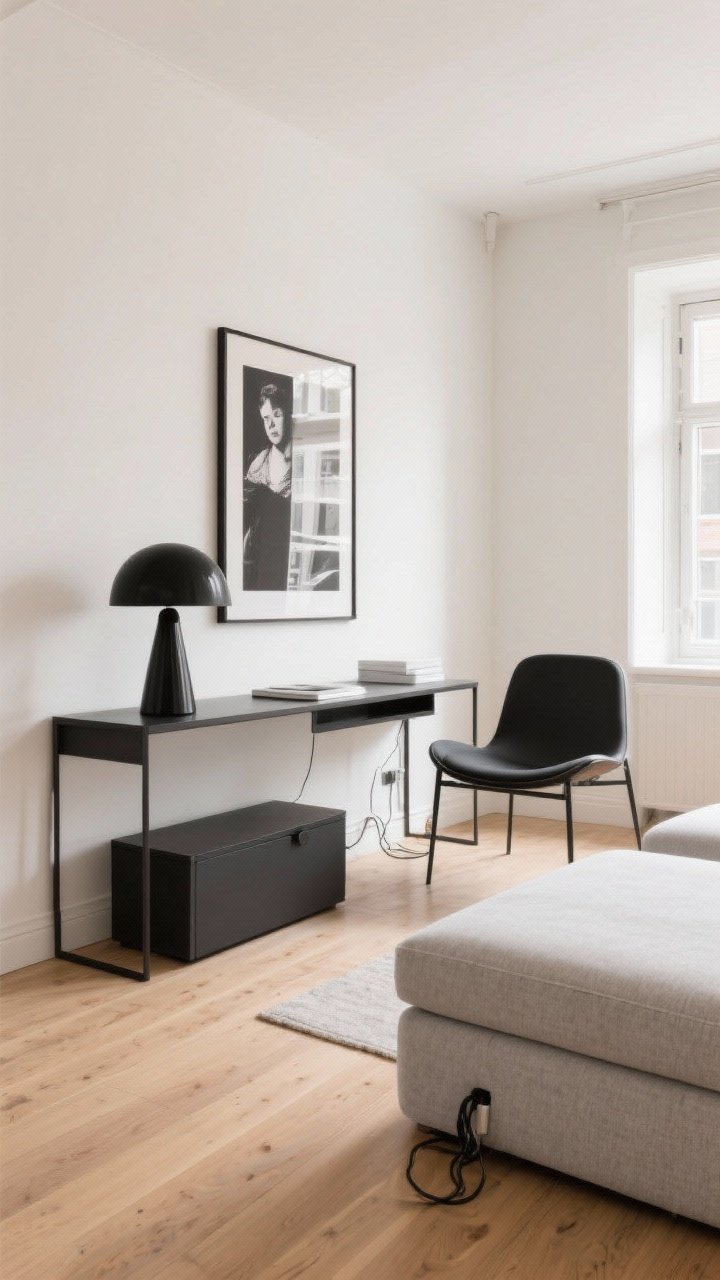
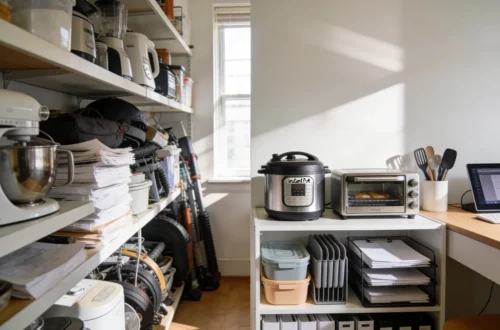
Modern style starts with fewer, better things. If it doesn’t serve a purpose or make you ridiculously happy, it’s taking up space—period. Clear surfaces, open floors, and clean lines make small homes feel bigger instantly.
Keep What Matters
- Choose multifunctional pieces (a storage ottoman, a console that becomes a desk).
- Limit decor “extras” to 1–2 standout accents per surface.
- Hide visual noise with baskets, lidded boxes, and a cable management kit. FYI, cords are the enemy.
Once you’ve edited, add back a few bold items: a sculptural lamp, an oversized art print, or a statement chair. The contrast feels intentional, not cluttered.
2. Nail the Modern Color Game
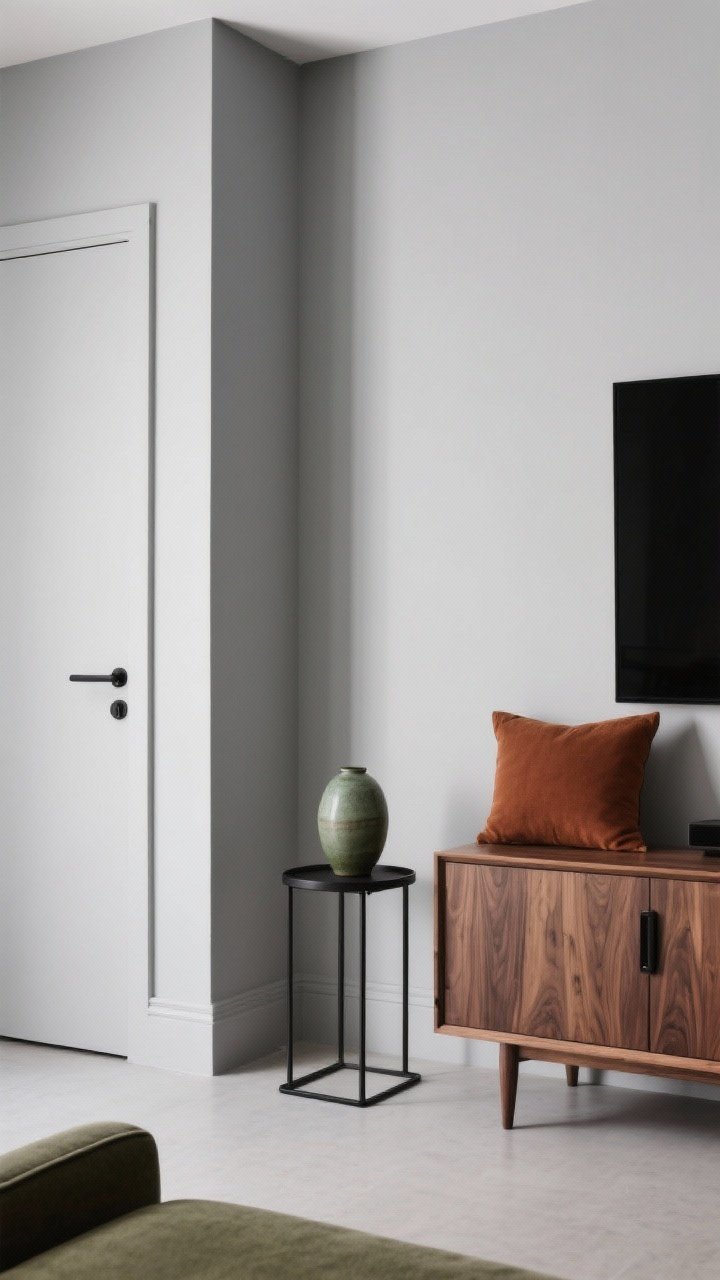
A modern palette is calm, coordinated, and a little dramatic. Think warm whites, soft greige, charcoal, and hits of black. Then add one accent color to keep it interesting, not chaotic.
Winning Palettes
- Soft Base: Warm white walls + light oak + matte black hardware.
- High Contrast: Pale gray walls + black metal + walnut wood + rust or olive accents.
- Moody Minimal: Deep charcoal feature wall + linen beige + brass touches.
Small space tip: paint doors, baseboards, and walls the same color for a seamless look. It blurs edges and makes everything feel larger (like magic, but with paint).
3. Furniture With Slim Lines And Smart Scale
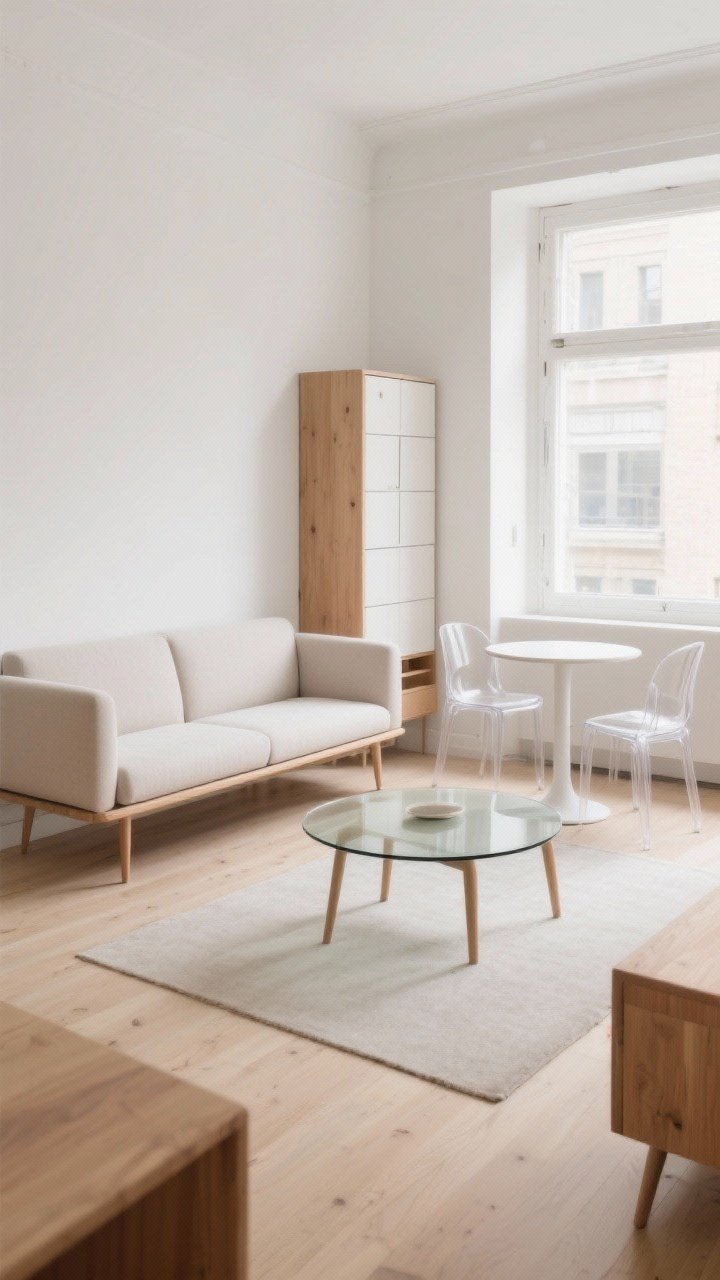
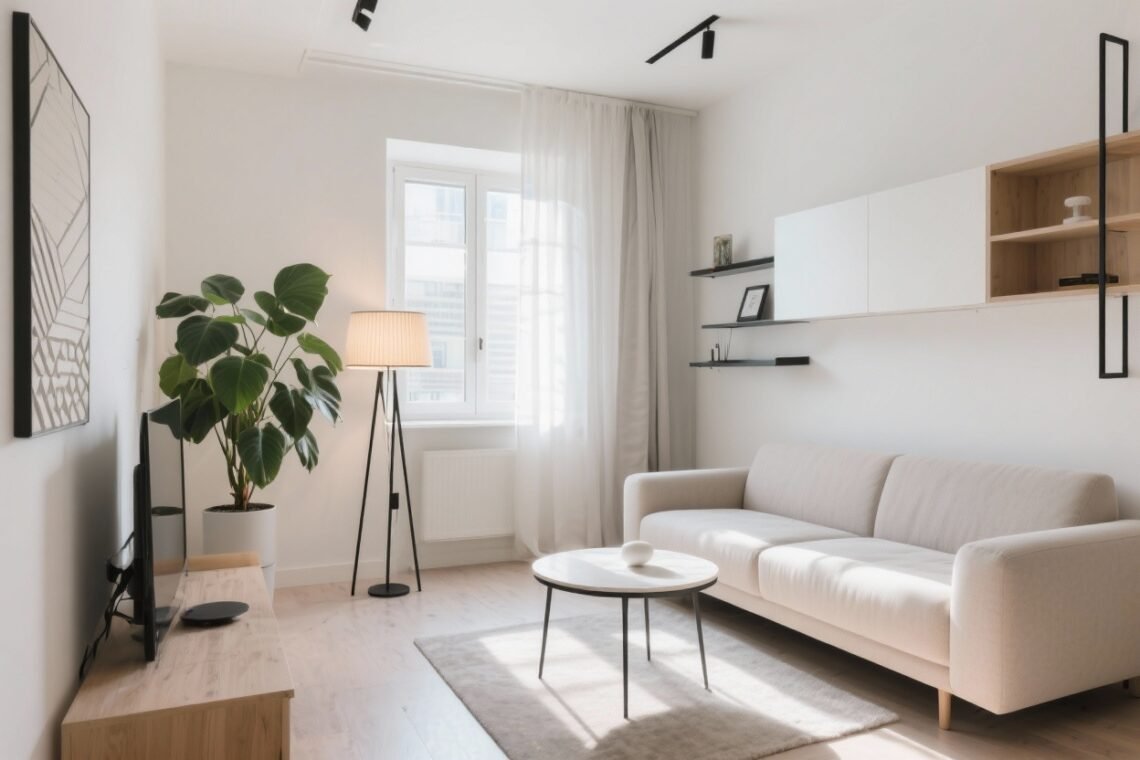
Chunky furniture shrinks a room faster than you can say “sectional regret.” Choose pieces that are raised on legs, with slim profiles and clean shapes. Curves help too—they soften tight corners and add flow.
What To Look For
- Sofa: 72–80 inches, bench seat, tight back, raised legs.
- Coffee Table: Round or oval to improve traffic flow; glass or light wood keeps things airy.
- Dining: A round bistro table + stackable or clear chairs (hello, ghost chair).
- Storage: Tall, narrow units rather than deep, wide ones. Vertical > horizontal in small spaces.
And please measure. Twice. Doorways, elevator, wall width—your future self will thank you.
4. Layer Lighting Like You Mean It
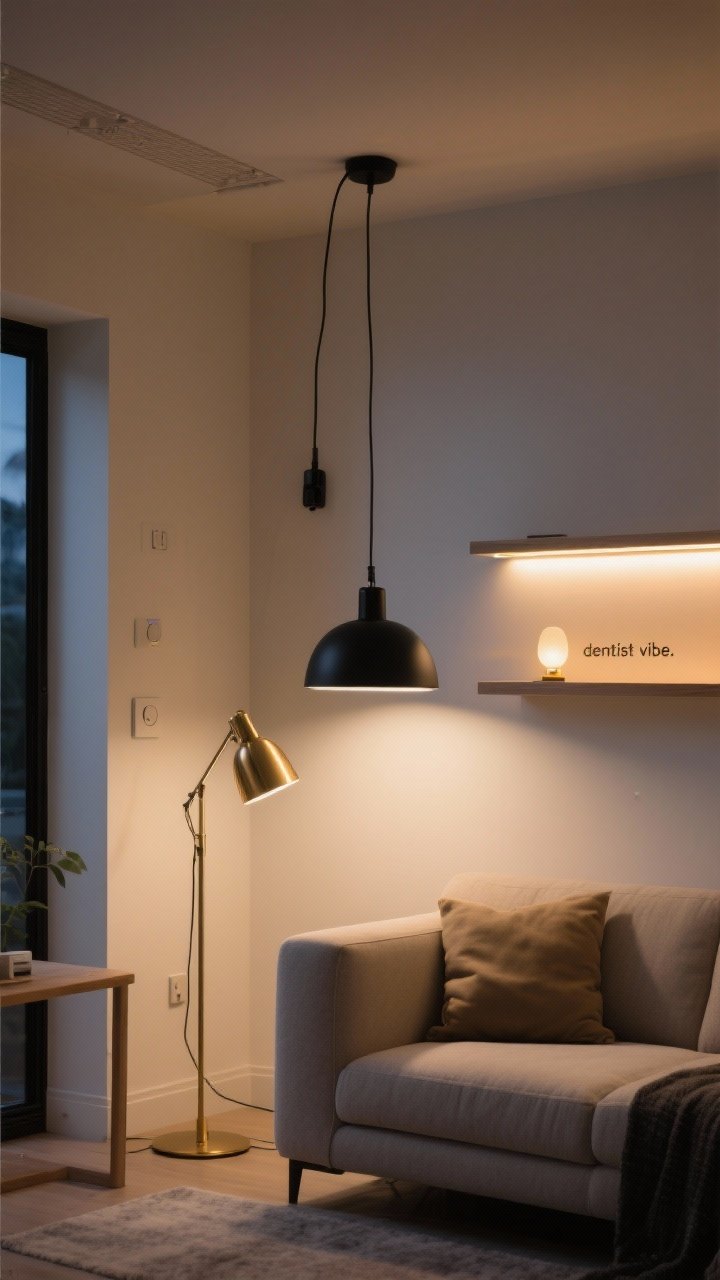
Overhead lighting alone = dentist vibe. You want layers: ambient, task, and accent. This is where a tiny apartment can feel extra luxe.
The Three-Layer Strategy
- Ambient: A ceiling fixture or plug-in pendant (matte black or brass reads modern).
- Task: A sleek floor lamp by the sofa and a swing-arm by the bed or desk.
- Accent: Picture lights, LED strips on shelves, or a small uplight to highlight plants.
Switch to warm LEDs (2700–3000K) for cozy-modern, and put lights on dimmers. IMO, dimmers are the secret sauce that makes everything look designer.
5. Textures Over Trinkets
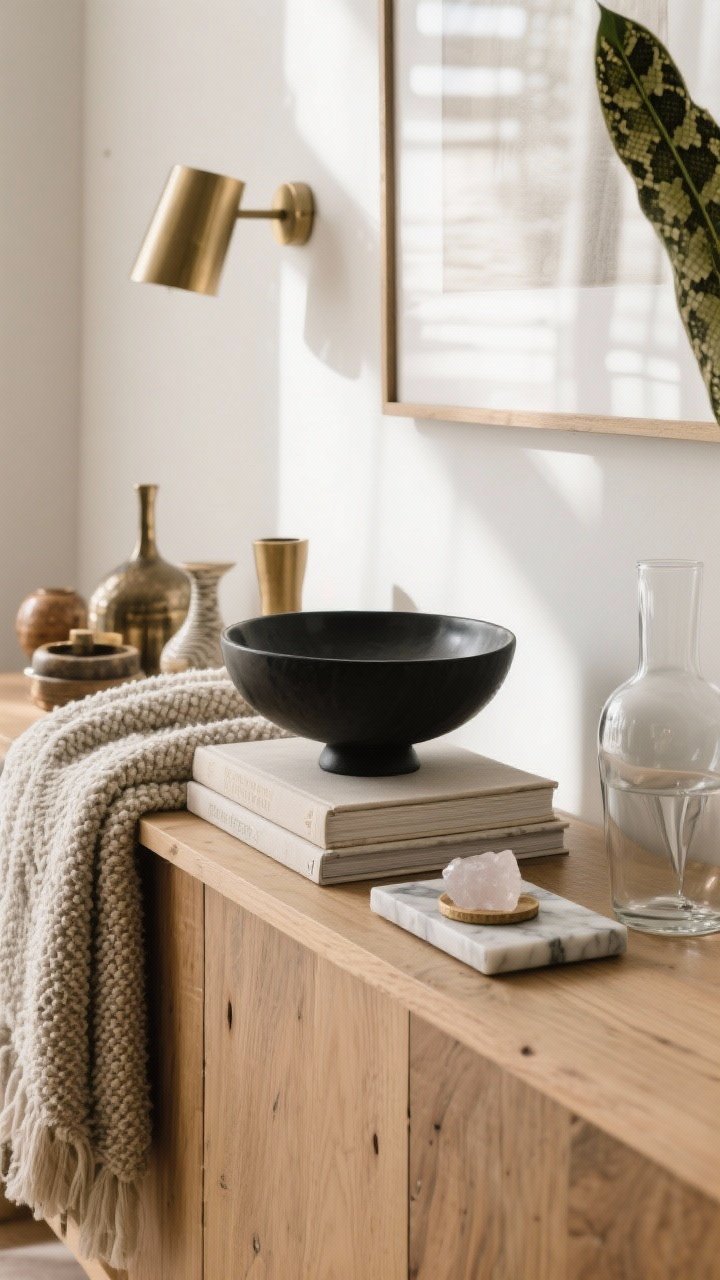
Modern doesn’t mean cold. It just means fewer objects, more texture. When you layer materials, the room feels rich without feeling busy.
Mix These Like A Pro
- Wood: Light oak or walnut for warmth.
- Metal: Matte black or brushed brass for contrast.
- Textiles: Bouclé, linen, and chunky knits for softness.
- Stone: Marble or quartz trays/coasters for a little glam.
- Glass: Keeps surfaces light and reflective.
Swap out five small knickknacks for one sculptural bowl or vase. Bigger, bolder, simpler—that’s modern. Add greenery (snake plant, monstera) for life and height without visual clutter.
6. Make Walls Work Overtime
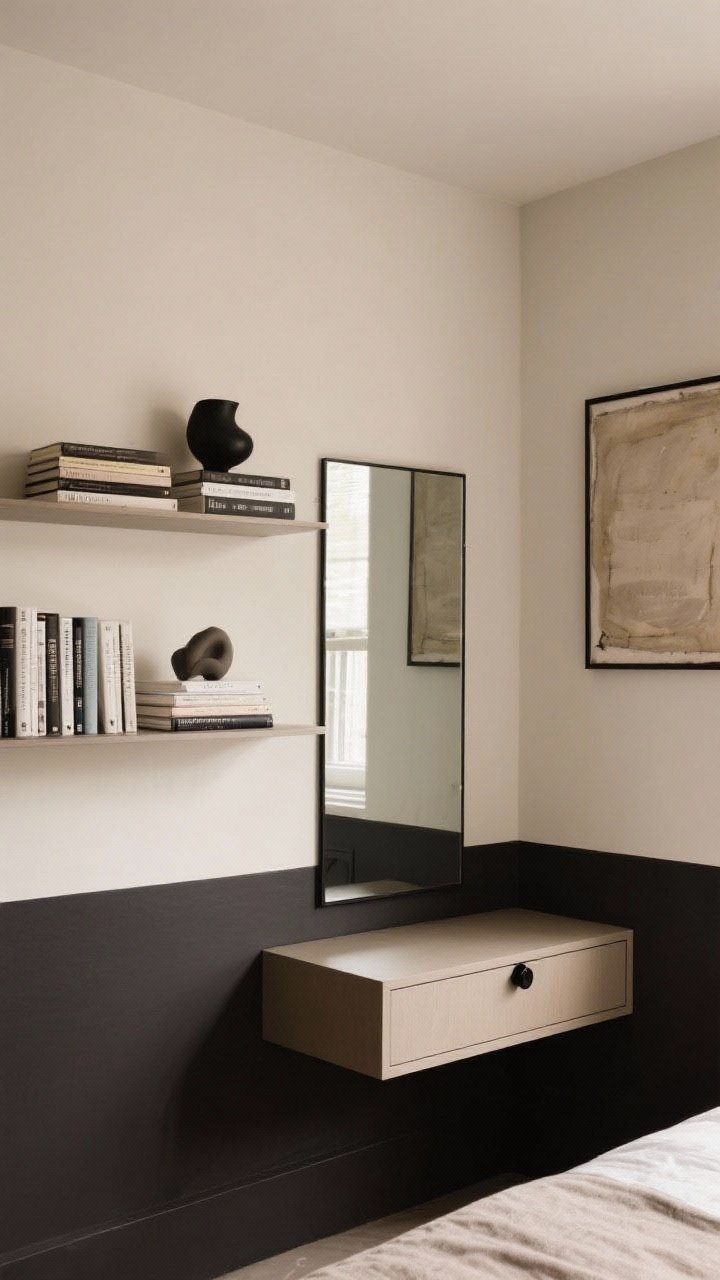
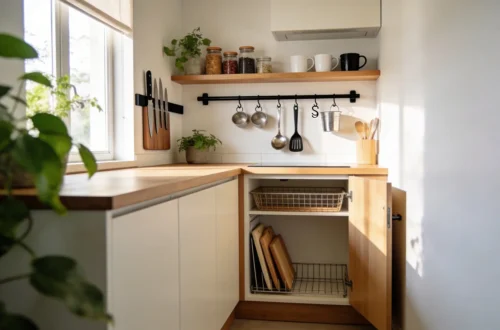
When floor space is precious, your walls need a job. Mount it, hang it, lean it—just don’t waste that vertical real estate.
Wall Power Plays
- Floating Shelves: Style with books horizontally + one bold object per shelf. Leave breathing room.
- Wall-Mounted Nightstands: Floating tables visually expand the floor and look very “custom.”
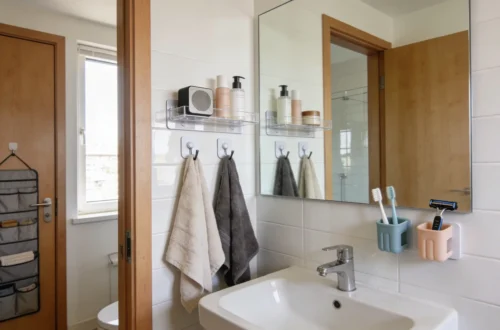
- Peg Rails Or Slim Hooks: Entryway storage that actually looks cool.
- Oversized Art: One large piece beats a busy gallery wall in tiny spaces (less visual noise).
- Mirrors: Place across from a window to bounce light. Tall mirrors pull the eye upward.
Want instant architecture? Add a half-height contrast wall (paint or peel-and-stick paneling). It adds structure without closing the room in. FYI: paint arches are cute, but keep lines crisp for a modern edge.
7. Zone Like A Designer (Even In A Studio)
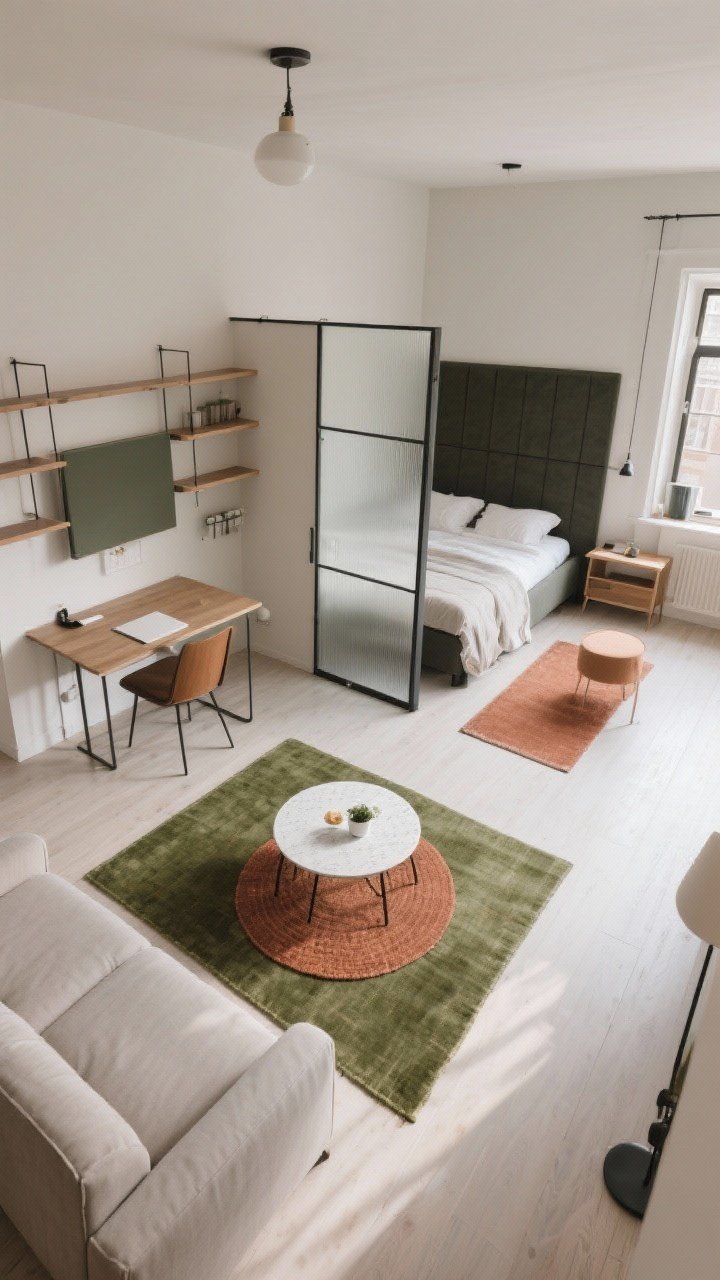
Modern spaces are calm because they’re organized. Create zones for living, dining, sleeping, and working—yes, even in one room. It’s about visual cues, not walls.
Smart Zoning Tricks
- Rugs: Use a large rug to anchor the sofa area; a smaller one under the dining table.
- Screens Or Open Shelving: Divide the bed from the living area without blocking light.
- Color Coding: Keep your base palette consistent, but assign each zone a subtle accent (olive in living, rust in dining).
- Headboard Wall: A dark headboard or painted panel behind the bed creates a “room” in a studio.
- Foldaway Desk: A wall-mounted drop-leaf table works as a workstation by day, bar by night—multitasking for the win.
And keep pathways clear. If you have to shimmy sideways to get to your bed, the layout needs a rethink.
Practical Mini-Checklist
- Pick a cohesive palette with one accent color.
- Choose slim, elevated furniture with storage baked in.
- Layer lighting and switch to warm bulbs on dimmers.
- Use textures and bigger, fewer decor pieces.
- Use walls for storage, art, and mirrors.
- Define zones with rugs, shelving, and color cues.
- Declutter weekly. Yes, weekly. Tiny spaces need maintenance.
You’ve got this. A small apartment can absolutely look modern, elevated, and super livable—it just needs intention and a few style power moves. Edit, elevate, and let that clean-lined magic work. Now go measure that sofa (seriously).