You’ve got a narrow, galley-style closet and two full wardrobes battling for a sliver of space? Same. The good news: you don’t need a walk-in to make it work—you need a plan. We’re talking zones, smart containers, ruthless editing, and a few tricks that feel like cheating. Ready to transform your “ugh” hallway into a tiny powerhouse? Let’s go.
Start by Defining Real Estate (a.k.a. Draw the Line)
If two people share one long, skinny closet, you need boundaries—literal ones. Split the closet into clear zones so nobody “accidentally” migrates into the other side.
- Left vs. Right: The simplest split. Each person gets one rod side or one half of the rod length.
- Top vs. Bottom: If you have double hanging rods, give each person one tier.
- Front vs. Back: Use the front half (closest to the door) for daily wear, and the back half for off-season. Share this zone logically.
Label shelves and bins—subtle labels keep the peace. FYI, “mystery bins” just become junk storage, and then it’s chaos again by Thursday.
Edit Like Your Space Depends on It (Because It Does)
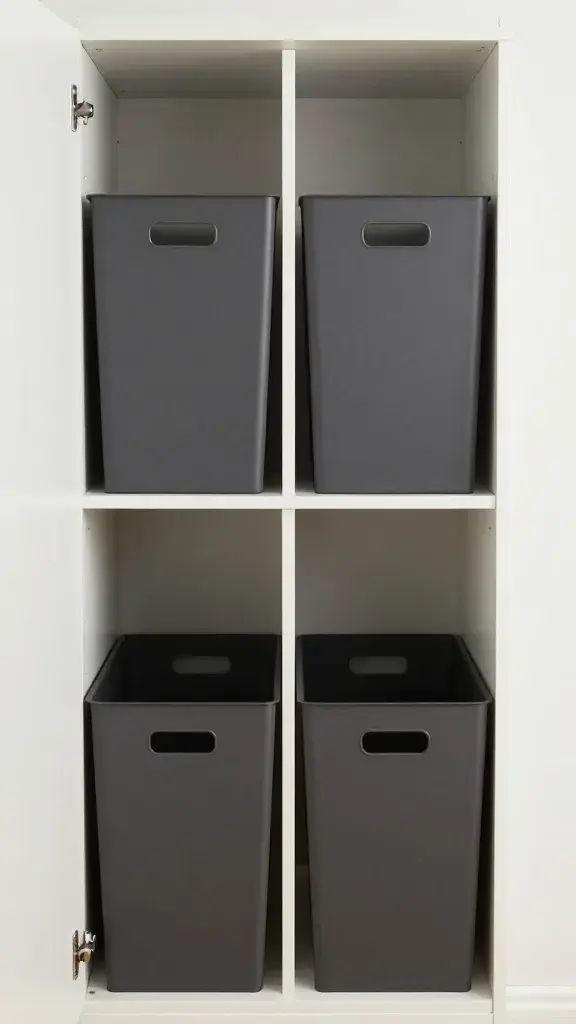
A galley closet punishes clutter. You need to purge, then purge again, and then—surprise—purge seasonal stuff.
Use the One-Year Rule (With Exceptions)
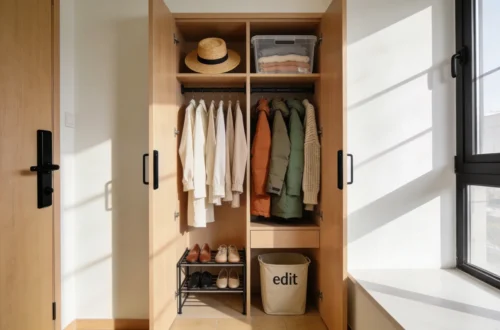
If you haven’t worn it in a year, out it goes. Exceptions: true occasion wear, classic staples, and sentimental items. Even then, cap sentimental pieces so you don’t end up housing your high school hoodie museum.
Make Quick “Keep” Categories
Try this system on the bed or floor:
- Daily Wear: Workhorse stuff you grab constantly.
- Sometimes Wear: Trend pieces and “once a week” items.
- Seasonal: Off-season sweaters, swimsuits, etc.
- Repair/Alter: Missing buttons, too-long hems—give these a two-week deadline, IMO.
- Donate/Sell: Bag it immediately and put it by the door. No second-guessing.
Build a Vertical Game Plan
Narrow closets reward height. If yours goes up, you go up.
Double the Hanging Space
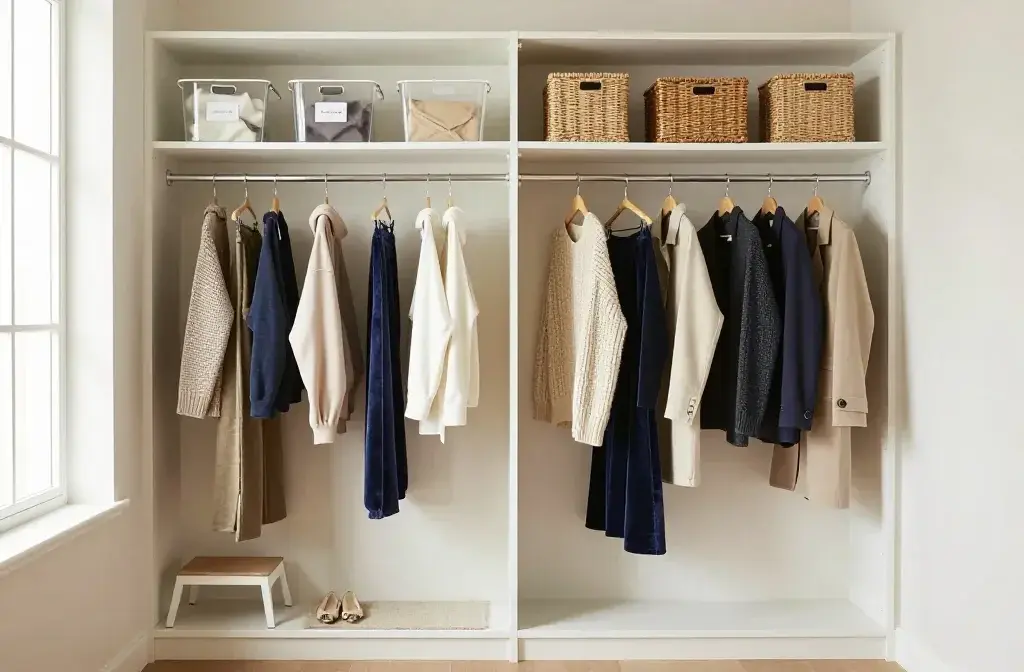
Install a second rod below the main one on either side. Use the top for shirts/jackets and the bottom for pants/skirts. For long items like dresses, cluster them on one end to keep the lower rod usable elsewhere.
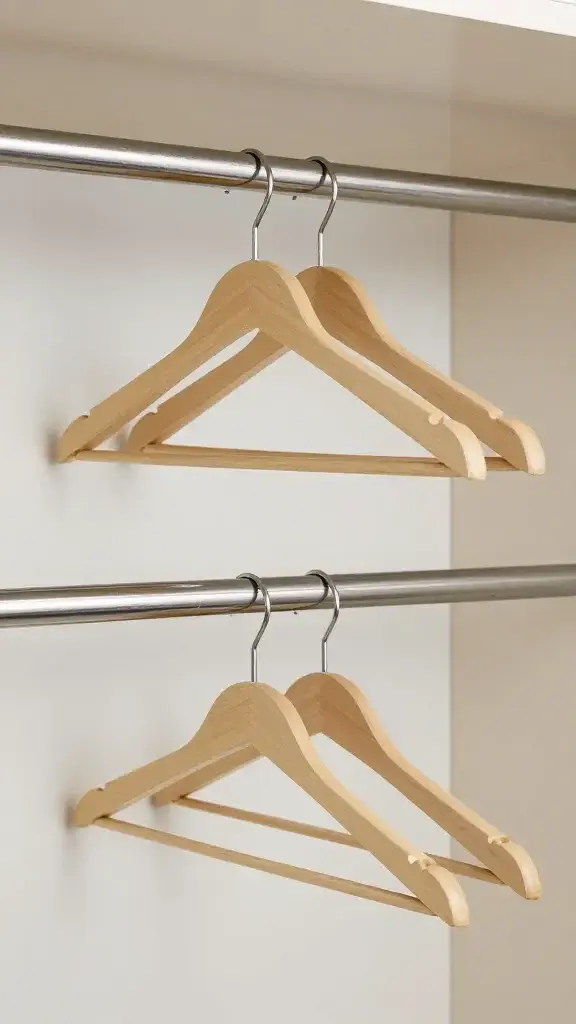
Use Slim, Matching Hangers
Velvet slim hangers reduce slippage and save inches. Matching hangers also make a small closet look neat instantly. It’s visual magic.
Add a High Shelf and Use It Right
That unreachable top shelf? Don’t waste it on daily stuff.
- Clear bins with labels: Off-season clothing, sentimental pieces, travel gear.
- Soft bins: Bulkier sweaters you don’t need weekly.
Use a small, foldable step stool nearby. If you can’t reach it, you won’t use it.
Divide and Conquer the Floor
Your floor is prime real estate. Treat it like waterfront property, not a shoe avalanche site.
Shoes: Pick a System and Commit
Choose one:
- Tiered rack: Great for visibility, fits 8–12 pairs.
- Stacking shoe drawers: Keeps dust off, especially for heels or sneakers you love.
- Under-hanging shelf: A shallow shelf under the lower rod for flats and sandals.
Pro tip: Store bulky boots off-season in vacuum bags or boot boxes on the top shelf.
Drawers or Bins for Small Stuff
If you don’t have built-in drawers, add narrow rolling drawers or a stacked cube unit. Use them for:
- Undergarments and socks (dividers keep the peace)
- Workout gear
- Accessories (belts, scarves, beanies)
Assign Micro-Zones for Each Person
You each need a tiny command center—no cross-contamination of belts and beanies, please.
- Hooks or rails on the side walls: One set per person for hats, bags, or tomorrow’s outfit.
- Door organizers: Over-the-door racks or pocket organizers—split pockets evenly, label once, and win forever.
- Accessory trays: One slim tray per person for watches, sunglasses, and random pocket things. This prevents the dreaded “junk bowl.”
Belts, Ties, and Jewelry
Keep small items visible, or they’ll vanish.
- Belt/tie hooks: Mount on the inside wall or the back of the door.
- Jewelry organizers: Velvet-lined trays or hanging boards. If you can’t see it, you won’t wear it—IMO, visibility wins.
Create a Smart Layout You Can Maintain
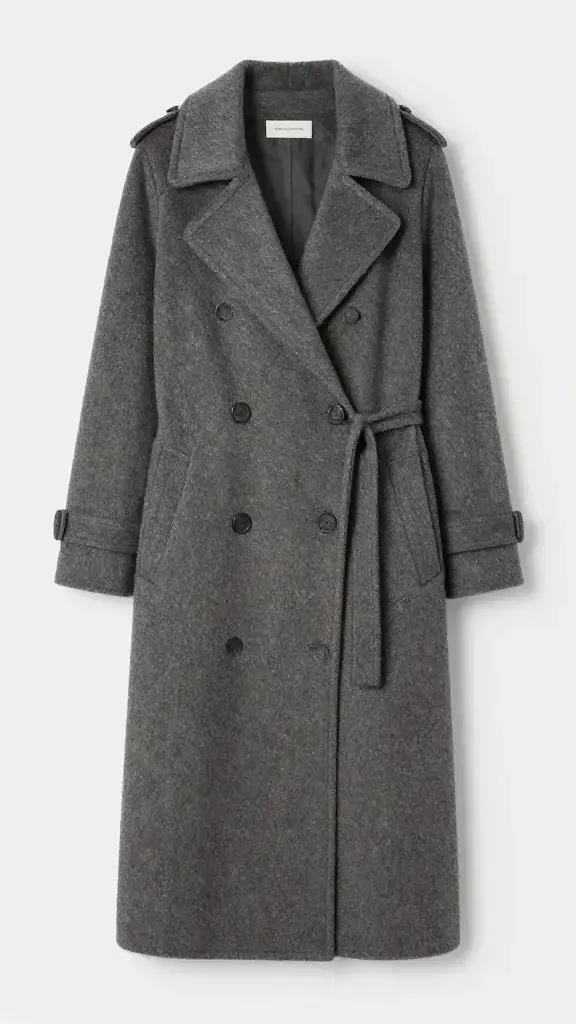
A narrow closet only works if you can find stuff fast and put it away just as fast.
Sort by Category, Then Color
Group shirts, pants, skirts, dresses, outerwear. Then color within each group. You’ll dress faster and pack more in with less rummaging.
Use Shelf Dividers
Clear acrylic or wire dividers keep sweater stacks from toppling. Label the front edge of each stack. Future you will thank present you.
Rotate Seasonally Without the Drama
At the start of each season:
- Move off-season items to the top shelf bins.
- Bring current-season items down to the easy-reach zone.
- Donate anything you didn’t touch last season. Brutal? Yes. Effective? Also yes.
Light It Up and Make It Pretty
You don’t need chandeliers, but you do need to see what you own.
- Battery LED puck lights or light bars: Stick them under shelves or along the door frame.
- Mirror on the inside of the door: Narrow, full-length if possible.
- Small scent sachet: Keeps things fresh. Avoid strong candles—fire hazard city.
A cute color palette for bins and labels makes the closet feel intentional. It’s not just storage—it’s a mini boutique you own.
Rules of Engagement for Two People
Let’s set expectations so no one becomes the Closet Gremlin.
- One-in, one-out: Every new item means one exits. Non-negotiable in tight spaces.
- Weekly five-minute reset: Rehang strays, fold stacks, return accessories.
- Monthly micro-purge: Pull five items you don’t wear. Reassess and donate.
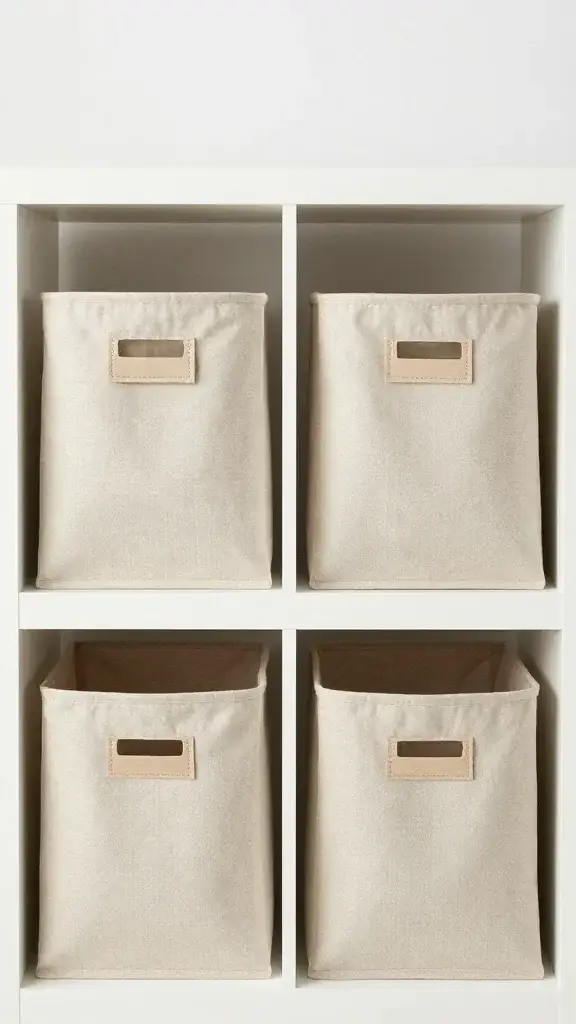
- Shared bin for laundry-day chaos: Toss “not dirty, not clean” clothes here. Empty it every Sunday.
FAQ
How do we handle very different clothing types (suits vs. athleisure) in one narrow closet?
Create category-based zones on each side so both wardrobes fit without overlap. For example, hang suits and dress shirts on the top rod, keep joggers and tees in drawers or bins below, and reserve one end for long garments. Use garment bags for suits and breathable bins for workout gear to prevent fabric drama.
What’s the best way to store bulky sweaters without eating all the space?
Fold sweaters and stack them on a mid-height shelf with shelf dividers. For true bulk (think ski knits), use vacuum-seal bags on the top shelf during off-season. Avoid hanging sweaters—they stretch and hog rod space.
We don’t have built-in shelves. What should we add without remodeling?
Go modular. Try a narrow cube system or a stacked drawer tower on the floor, add clip-on hanging shelves from the rod, and mount adhesive hooks on side walls. None of these require power tools, and you can reconfigure as your wardrobe changes.
How do we stop shoes from taking over?
Limit each person to a set number of “in-closet” pairs—say, 8–10—and store extras elsewhere (entry bench, under-bed boxes). Use a tiered rack or stackable drawers so every pair has a slot. If a new pair enters, an old pair retires—shoe math keeps the peace.
Any hacks for tiny accessories like socks and underwear?
Use shallow drawers with grid dividers or small fabric bins side by side. Roll items instead of folding so you can see everything at a glance. Label the bin fronts—yes, even for socks—and you’ll never dig for a matching pair again.
What if our closet has a sliding door that blocks half the space?
Work with it. Place daily-wear categories in the most reachable section, and stash low-use items behind the “blocked” panel zones. Add over-the-door storage on the interior if clearance allows, and use pull-out bins so you can access back areas without contortion Olympics.
Conclusion
A narrow, galley-style closet for two doesn’t need magic—just smart zones, ruthless editing, and vertical upgrades. Keep categories tight, visibility high, and rules simple. Do a five-minute reset every week, and stick to one-in, one-out. Before long, you’ll open that door and think, “Wow, look at us—organized and cute.” FYI: your future mornings just got 10x easier.