Open shelves can look magazine-level gorgeous or like you forgot to unpack after moving. The difference? A few smart styling moves and a willingness to edit. If you’ve ever stared at a blank shelf and a pile of mugs wondering where to start, good news: you don’t need a design degree. You just need a plan, a vibe, and a little restraint (yes, even for your mug collection).
Start With a Clean Slate and a Clear Intent
Before you style, strip everything off your shelves. Wipe them down. Then decide what these shelves actually need to do. Do you want everyday dishes within reach? Or are you treating them like a mini gallery?
- Pick a purpose: Display, daily use, or a hybrid. Decide once, style accordingly.
- Choose a vibe: Minimal and airy? Rustic and collected? Colorful and fun?
- Set a palette: Limit to 2-3 main colors plus neutrals. You’ll thank yourself later.
Pro tip: Create a “staging zone”
Lay everything on your counter. Group by color, height, and function. You’ll see what you have too much of (mugs) and what you need more of (contrasting textures).
Edit Like a Ruthless Curator
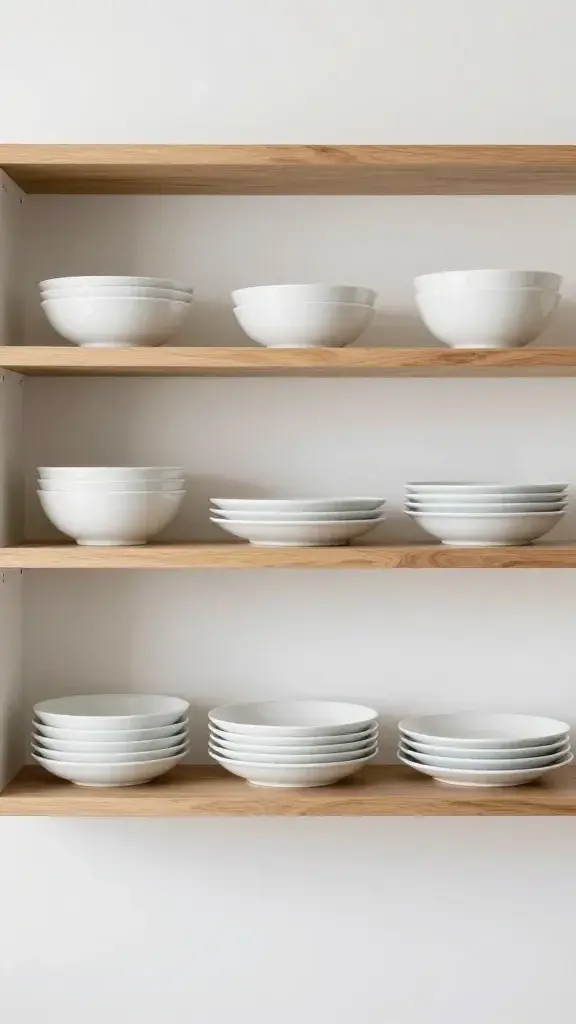
You can’t style clutter. You can style a tightly edited collection. Keep only what you love, use, or what makes the shelf story better.
- Lose packaging: Decant dry goods into matching (or coordinating) jars.
- Retire the freebies: Chipped logo mugs, cracked ramekins—bye.
- Keep multiples tight: Sets look intentional. Random singles look accidental.
What actually earns shelf space?
– Beautiful everyday dishes
– Matching glasses or a neat mix (think vintage coupes + simple tumblers)
– Cookbooks, but only a few favorites
– Sculptural pieces: a wooden bowl, a ceramic pitcher, a plant
Build a Visual Framework: Heights, Layers, and Anchors
Let’s talk strategy. You want rhythm—tall and short, light and heavy, pushed back and pulled forward. This creates that curated look you keep saving on Pinterest.
- Start with anchors: Place your largest items first: a stack of plates, a cutting board leaning against the wall, a tall vase.
- Create layers: Lean boards or art at the back, then add medium items, then smalls in front. Depth = interest.
- Balance the weight: Distribute darker or chunkier items left to right and top to bottom so one side doesn’t feel “heavier.”
- Play with odd numbers: Groups of three typically look best. It’s weirdly reliable, like a good zipper.
Stacking 101
– Stack plates or bowls to add height without chaos
– Top a stack with a small bowl or a salt cellar for personality
– Use a tray to corral small items so they read as one “unit”
Color and Texture: Your Secret Weapons
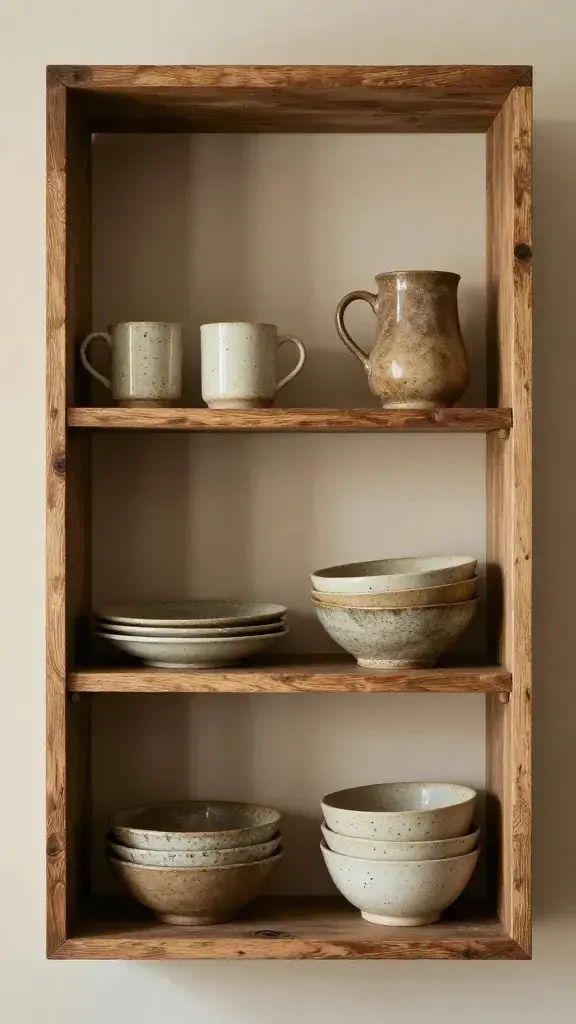
A tight color palette transforms shelves fast. Think of your dishes and decor as a capsule wardrobe.
- Limit bold colors: Let one or two shades sing. Ground the rest with white, wood, clear glass, or matte black.
- Mix textures: Pair glossy ceramics with raw wood, glass with woven baskets, linen with metal. Texture keeps neutrals from feeling blah.
- Repeat on purpose: Echo a color or material on each shelf so the eye moves smoothly.
Color rules that actually help (IMO)
– If your dishes are colorful, keep jars and accents simple.
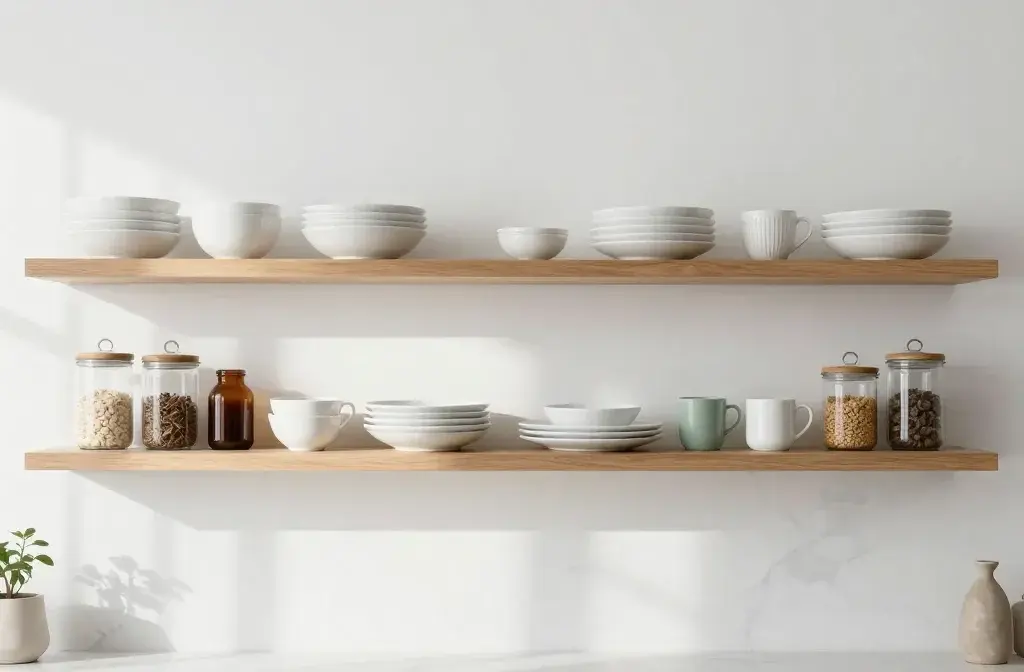
– If your dishes are white, bring in color via art, textiles, or plants.
– Choose one “pop” piece per shelf: a cobalt pitcher, a terracotta pot, a citrus bowl.
Function First: Style the Things You Actually Use
Pretty is nice. Pretty and practical wins the game. Keep daily grab-and-go items where your hand naturally reaches.
- Everyday zone: Middle shelves for plates, bowls, glasses you use daily.
- Pretty-but-occasional: Top shelves for cookbooks, pitchers, and display pieces.
- Corral smalls: Use a tray or low basket for oils, salts, or tea bags—looks tidy, cleans easy.
Decanting done right
– Choose airtight jars in 2-3 sizes only (visual consistency = calm).
– Label simply: a label maker, paint pen, or hang tags.
– Store messy items (powdered sugar, I’m looking at you) behind doors if possible.
Add Life: Art, Greenery, and Personal Touches
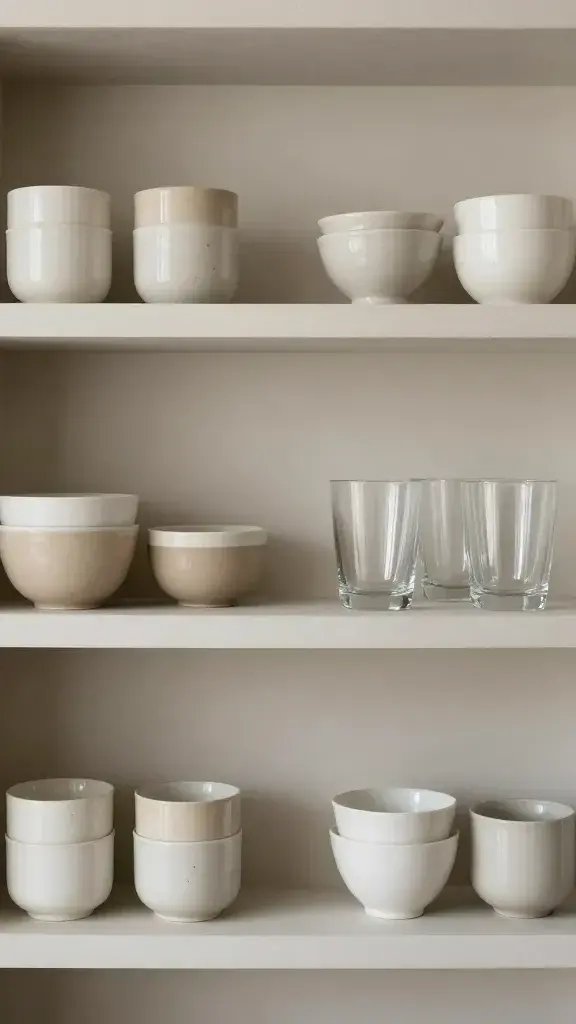
This is the difference between “nice shelves” and “who styled your kitchen?” Bring in personality without tipping into tchotchke territory.
- Layer small art: Lean a framed print or vintage recipe card behind plates for low-key charm.
- Use fresh elements: A small plant, a vase with herbs, or a bowl of lemons adds instant energy.
- Tell a story: Display one travel mug, your grandma’s pie server, or a handmade bowl—not all of them at once.
What to skip (FYI)
– Too many words: if every piece says “EAT,” “COFFEE,” or “HOME,” your shelf feels like a billboard.
– Oversized plants that swallow the shelf.
– Fragile heirlooms where you’ll definitely knock them down grabbing a plate.
Tune the Composition: Step Back, Edit, Repeat
Styling = micro-adjustments. Move. Step back. Adjust. Repeat. It’s basically shelf yoga.
- Vary negative space: Leave some breathing room. Packed shelves read as clutter instantly.
- Check sightlines: Look from the room entrance. Does one shelf scream “overstuffed?”
- Photograph it: A quick phone pic shows imbalances our eyes ignore.
Common fixes in 60 seconds
– Remove one item per shelf. Magic.
– Swap two items between shelves to balance color or height.
– Elevate a short object on a small stack of saucers or a riser.
– Rotate handles outward on mugs and pitchers for a clean line.
Keep It Looking Good: Maintenance Without the Drama
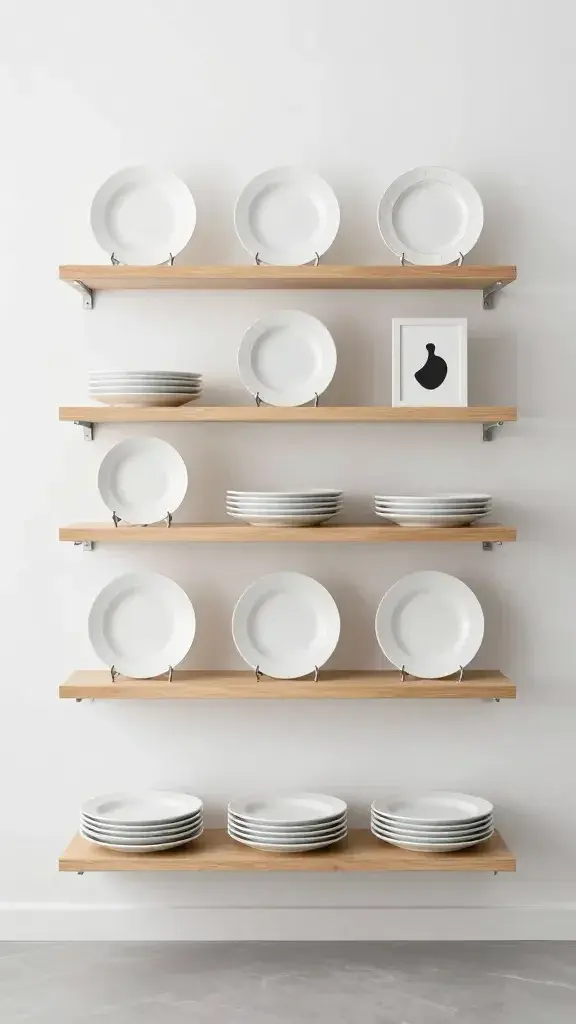
Open shelves collect dust. Reality check. But a tiny routine keeps things fresh without eating your weekend.
- Weekly quick wipe: Dampen a cloth, swipe surfaces while your coffee brews.
- Monthly edit: Remove what drifted in (random jar lids, mail—why?).
- Seasonal switch: Swap citrus for pinecones or switch book spines for a color refresh.
When life gets messy
– Keep a small “overflow bin” in a cabinet for the extra mugs or seasonal bits.
– If something constantly looks sloppy (tea packets), hide it in a drawer. Form follows function, and sanity.
FAQ
How do I prevent open shelves from looking cluttered?
Edit hard, limit your color palette, and style in grouped “units” instead of singletons. Use trays, stacks, and repeated materials to create cohesion. Then leave negative space—your shelves need to breathe like the rest of us.
What should I actually put on open kitchen shelves?
Mix useful and beautiful: everyday dishes, coordinated glassware, a couple of cookbooks, a plant, a wooden board, and one or two sculptural pieces. Keep small pantry items in matching jars or a tray. Avoid random gadget graveyards.
Do I need matching sets for everything?
Nope. Harmony matters more than perfection. If your items share a palette or texture (white ceramics, clear glass, warm wood), they’ll play nicely. Mix vintage with new—just repeat each element a couple of times so it feels intentional.
How high should I style shelves?
Focus your heaviest visual weight on the lower or middle shelves: stacks of plates, darker items. Keep lighter, airier pieces up top: glass, small art, plants. This anchors the arrangement and keeps it from feeling top-heavy.
How do I style around a messy everyday life?
Designate one shelf as the “daily zone” with plates and glasses you reach for constantly. Corral loose items in a tray so cleanup takes two seconds. If an item creates perpetual chaos, relocate it behind a door—no guilt.
What lighting helps open shelves look better?
Under-shelf LEDs or a small sconce nearby add warmth and shadow play that make textures pop. Choose a soft, warm temperature (2700–3000K) so whites stay creamy and wood looks rich.
Conclusion
Open shelves shine when you give them a job, a palette, and room to breathe. Start with anchors, layer thoughtfully, repeat colors and textures, and keep only what earns its keep. Edit often, style with personality, and don’t be precious—these are shelves, not a museum. With a few tweaks, you’ll go from clutter to curated, IMO, faster than your kettle can boil.